OTC 2026: Teledyne’s seismic streamer recognized for closing a critical UUHR data gap
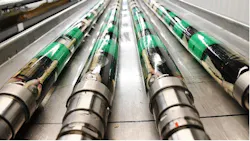
Teledyne Geophysical Instruments’ eXtreamer seismic streamer has earned a 2026 OTC Spotlight on New Technology Award for addressing the challenge in marine seismic of delivering ultra‑high‑resolution (UHR) and ultra‑ultra‑high‑resolution (UUHR) data at scale without sacrificing reliability, efficiency or cost.
Designed with a small‑form‑factor, gel‑filled construction and scalable electronics, the streamer was developed to bridge what Teledyne describes as a longstanding mismatch between operator expectations for dense, broadband seismic imaging and the limitations of legacy streamer systems.

“Operators want ultradense, broadband data at shallow depths, but legacy streamer systems were never engineered to deliver that resolution reliably, repeatedly and economically,” Holli Sims, vice president and general manager of Teledyne Geophysical Instruments, explained to Offshore in a pre-OTC interview.
At the core of the technology is its ability to support tight channel spacing (down to 1 m) while maintaining broadband performance beyond 6 kHz using Teledyne’s T6 hydrophones. According to Sims, this eliminates the traditional tradeoff between streamer length and resolution that has historically forced contractors to choose between dense but short arrays or longer arrays with compromised imaging fidelity.
“This is not incremental performance—it directly enables UUHR‑class imaging in production survey environments, not just pilot or academic campaigns,” she added.
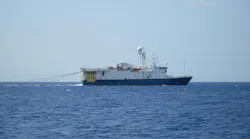 offshore seismic vessel
From an acquisition standpoint, the system is designed to support single‑pass, multi‑objective surveys. Variable channel spacing can be configured within one system, enabling operators to simultaneously capture HR, UHR and UUHR datasets, which aims to reduce the need for remobilization, repeat passes or multiple streamer spreads.
“The small form factor is not about convenience—it is what enables dense, broadband geometries to be deployed where surveys actually need to happen, not just where big vessels can operate,” Sims said.
Near‑term demand is being driven by applications where traditional oil and gas streamers are increasingly viewed as over‑engineered or insufficient. Sims pointed to offshore wind site characterization, shallow hazard identification, carbon storage projects and nearshore surveys as areas where higher‑frequency fidelity and tighter spacing are becoming non‑negotiable.
“Operators now want HR, UHR and UUHR simultaneously, with fewer passes and a lower environmental footprint,” she said, adding that contractors also need systems that can be reconfigured quickly and scaled without replacing hardware.
Offshore is an official media partner of the 2026 Offshore Technology Conference (OTC) taking place in Houston this week. Teledyne Marine is exhibiting at OTC booth 1601.
 OTC 2026 Opening Ceremony
About the Author
 Ariana Hurtado
Ariana Hurtado
Editor-in-Chief
With more than a decade of copy editing, project management and journalism experience, Ariana Hurtado is a seasoned managing editor born and raised in the energy capital of the world—Houston, Texas. She currently serves as editor-in-chief of Offshore, overseeing the editorial team, its content and the brand's growth from a digital perspective.
Utilizing her editorial expertise, she manages digital media for the Offshore team. She also helps create and oversee new special industry reports and revolutionizes existing supplements, while also contributing content to Offshore's magazine, newsletters and website as a copy editor and writer.
Prior to her current role, she served as Offshore's editor and director of special reports from April 2022 to December 2024. Before joining Offshore, she served as senior managing editor of publications with Hart Energy. Prior to her nearly nine years with Hart, she worked on the copy desk as a news editor at the Houston Chronicle.
She graduated magna cum laude with a bachelor's degree in journalism from the University of Houston.