ABB VP outlines how AI and electrification are reshaping FPSO design
Key highlights:
-
Integrated power, automation and digital systems are becoming foundational design considerations during FPSO FEED studies.
-
While AI is expected to improve maintenance, reliability and asset performance, human expertise will remain essential for operational decision-making.
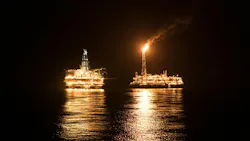
Designers are increasingly aiming to build future-ready FPSOs through integrated power and digital technologies. AI, electrification and integrated digital architectures are reshaping FPSO design from the FEED stage onward, according to Khaleef Khan, vice president for Offshore Energy Solutions, Energy Industries, Asia at ABB. He recently explained to Offshore how FPSO design requirements are evolving as operators seek to improve efficiency, reduce emissions and enable more digitalized operations.
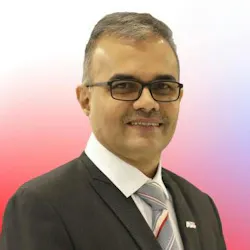
“Compared with five years ago, FEED increasingly needs to account for how AI, advanced automation, electrification and remote operations will function as part of an integrated architecture throughout the asset's lifecycle,” he added.
Khan noted that these technologies create new dependencies that must be addressed earlier in project development, including data availability for AI applications, secure connectivity for remote operations, and closer integration between power and process-control systems. He added that operators are increasingly prioritizing minimally manned operations, lower carbon footprints and digitalization strategies from the earliest engineering stages.
“Major oil and gas operators are increasingly incorporating these requirements into project designs, with dynamic digital twins becoming a more established part of the design approach,” he said.
He also noted that digital twins are expanding beyond process systems to include electrical systems and power-network performance monitoring.
Power architecture becomes a strategic design priority
Khan believes the design decisions that have the greatest long-term impact on FPSO performance and costs are those related to power distribution, system redundancy, electrical protection, and the integration of automation, control and safety systems. These choices influence production availability, operational reliability and how effectively an asset can respond to disruptions throughout its life.
Khan also emphasized the importance of interoperability and clear interface management during FEED, noting that resolving system dependencies early can reduce engineering changes, commissioning delays and future modification costs while simplifying maintenance and upgrades.
“Over the operating life, well-integrated architecture also supports more effective maintenance, system upgrades and asset performance management, helping operators protect the long-term value of their investment,” he said.
He added that operators are increasingly adopting AI-based and machine-learning condition monitoring technologies as part of broader asset performance management strategies.
Operators are also placing greater emphasis on power-system architecture as FPSOs become more electrified and data-intensive.
Khan said electrification is becoming increasingly important as FPSOs incorporate more electrically driven equipment and advanced automation systems. As a result, decisions around power generation, distribution, load management and system protection are having a greater influence on reliability, efficiency and emissions performance.
He added that integrated power and process engineering is critical during the FEED stage. A reliable electrical distribution architecture is an essential design priority as electrification increases onboard power generation requirements, he explained.
"The architecture needs to accommodate the vessel’s power requirements from the earliest conceptual design stage," Khan said.
Many FPSOs are expected to operate for decades, so designers need to future-proof assets for technologies and operational requirements that may not yet be fully defined. Khan said designers can future-proof FPSOs through flexible, modular architectures and interoperable communication standards that make it easier to incorporate future monitoring, analytics and automation technologies without disrupting critical operating systems.
Over the years, designers should expect changes in power requirements, connectivity, cybersecurity and remote operations.
"Adopting AI-based engineering tools, adaptable workflows and continuous learning models can further strengthen asset performance and reliability over time," he said. "These approaches can help operators respond to evolving technologies, energy demands and emission requirements as vessels age, while maintaining the flexibility needed for ongoing modernization."
AI adoption will advance incrementally
According to Khan, over the next five years, AI and advanced analytics are expected to deliver the greatest value in predictive maintenance, anomaly detection and asset performance management, helping operators identify issues earlier, reduce downtime and improve energy efficiency through greater integration of power, process and equipment data.
However, Khan cautioned that AI's effectiveness depends on reliable data, interoperable systems and well-defined operational workflows, with human expertise remaining essential for decision-making. He noted that industry expectations for fully autonomous FPSOs may outpace what can be deployed safely and reliably in the near term.
“Engineers and operators remain central to this, using AI-generated insights alongside their own expertise to assess operating conditions and decide when to intervene,” he said.
Khan expects adoption to progress incrementally, beginning with targeted applications that deliver measurable improvements in availability, maintenance efficiency and safety. He also sees significant opportunities in digital twins, AI-enabled condition monitoring and retrofit projects that extend advanced digital capabilities across existing FPSO fleets.
About the Author
 Ariana Hurtado
Editor-in-Chief
With more than a decade of copy editing, project management and journalism experience, Ariana Hurtado is a seasoned managing editor born and raised in the energy capital of the world—Houston, Texas. She currently serves as editor-in-chief of Offshore, overseeing the editorial team, its content and the brand's growth from a digital perspective.
Utilizing her editorial expertise, she manages digital media for the Offshore team. She also helps create and oversee new special industry reports and revolutionizes existing supplements, while also contributing content to Offshore's magazine, newsletters and website as a copy editor and writer.
Prior to her current role, she served as Offshore's editor and director of special reports from April 2022 to December 2024. Before joining Offshore, she served as senior managing editor of publications with Hart Energy. Prior to her nearly nine years with Hart, she worked on the copy desk as a news editor at the Houston Chronicle.
She graduated magna cum laude with a bachelor's degree in journalism from the University of Houston.
Related
 FPSO in the North Sea