Digital technologies reshaping FPSO operations and offshore asset management
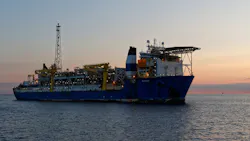
Offshore operators are under rising pressure to improve performance, reduce downtime and enhance safety, often while managing complex, aging floating production systems in deepwater environments. In response, digital technologies are increasingly being applied across the FPSO lifecycle to improve visibility, decision-making and execution.

A key starting point is at the engineering stage, where integrated digital models are reshaping how offshore facilities are designed and modified.
“Digital automation and BIM [building information modeling] act as practical enablers across the FPSO lifecycle, right from design through operations,” Tarik Siqueira, vice president of upstream, midstream and power at Radix North America, told Offshore.
By consolidating structural, piping, electrical and instrumentation data into unified 3D environments, these models create a single source of truth for engineering information. This is particularly valuable in brownfield FPSO projects, where incomplete legacy data and tight space constraints can complicate upgrades.
"This approach improves design quality through early clash detection, more accurate weight and space management, and faster design iteration capabilities that are especially valuable in brownfield FPSO modifications,” Siqueira added.
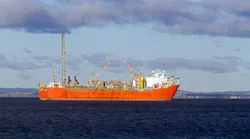 offshore FPSO operations
Data integration drives predictive maintenance
Beyond design, digitalization is increasingly focused on integrating operational, maintenance and inspection data into unified environments to provide better visibility into equipment health and performance, he explained, supporting real-time decision-making.
This integration underpins asset performance management strategies, where analytics tools identify patterns in large volumes of data. These insights support a shift toward predictive maintenance.
“AI-enabled analytics help identify patterns and anomalies in large volumes of operational data, supporting early detection of degradation and potential failures,” Siqueira said.
Automation and remote operations gain traction offshore
Experiences from Brazil’s deepwater sector illustrate how these technologies are being applied at scale. “FPSO modernization projects in Brazil demonstrate how deepwater developments are increasingly evolving beyond traditional upgrades toward digitally enabled and more autonomous operations,” he said.
A notable trend is the growing use of automation, robotic systems and remote operations to perform inspection, monitoring and routine operational tasks, which Siqueira said reduces offshore exposure and improves consistency. Combined with digital twins and remote operations centers, these capabilities are helping lay the groundwork for more autonomous offshore assets. Several applications are already being deployed in day-to-day operations. Digital platforms that integrate operational and maintenance data are improving coordination across FPSOs, while drilling operations are increasingly adopting condition monitoring of critical equipment to enable condition-based maintenance and improve reliability.
 remote operations concept
AI tools expand into offshore safety and monitoring
In safety, AI-enabled video analytics is emerging as a practical tool for hazard detection. “AI-based video analytics [are applied] to existing camera systems to detect unsafe behaviors and restricted-area access, resulting in earlier hazard detection and a shift from reactive to proactive safety management,” Siqueira explained.
Legacy systems and workforce shifts pose challenges
However, significant challenges remain. Offshore assets often rely on legacy systems that were not designed for digital integration.
“Integrating new digital solutions with legacy systems, ensuring data quality and managing cybersecurity risks remain significant hurdles,” he added.
Addressing these issues requires alignment between engineering, operations and IT teams as well as a focus on practical, field-proven use cases.
At the same time, the workforce is evolving alongside these technologies. “Engineers and operators increasingly need hybrid skill sets that combine strong domain expertise with digital and data literacy,” Siqueira said. This includes the ability to interpret real-time data, interact with automated systems and operate in more remote and digitally connected environments.
 three offshore workers
Key takeaway
As offshore operations grow more complex, digital technologies are moving from isolated tools to integrated systems that support decision-making across the asset lifecycle. Their continued adoption will depend on the industry’s ability to scale proven applications, integrate them with existing infrastructure and align them with real-world operating conditions, particularly in mature FPSO fleets where incremental gains in reliability and efficiency can deliver significant value, Siqueira concluded.
Want more content like this?
2025 FPSO Series:
- Review of global FPSO inventory reveals deployment trends
- FPSOs have evolved to handle more volatile crudes, gassier fields
- Dimensions, deadweight key factors in determining FPSO hull size and shape
- FPSO fleet correlations: examining storage vs deadweight
- FPSO fleet correlations: calculating topsides weight vs. processing capacity
About the Author
 Ariana Hurtado
Ariana Hurtado
Editor-in-Chief
With more than a decade of copy editing, project management and journalism experience, Ariana Hurtado is a seasoned managing editor born and raised in the energy capital of the world—Houston, Texas. She currently serves as editor-in-chief of Offshore, overseeing the editorial team, its content and the brand's growth from a digital perspective.
Utilizing her editorial expertise, she manages digital media for the Offshore team. She also helps create and oversee new special industry reports and revolutionizes existing supplements, while also contributing content to Offshore's magazine, newsletters and website as a copy editor and writer.
Prior to her current role, she served as Offshore's editor and director of special reports from April 2022 to December 2024. Before joining Offshore, she served as senior managing editor of publications with Hart Energy. Prior to her nearly nine years with Hart, she worked on the copy desk as a news editor at the Houston Chronicle.
She graduated magna cum laude with a bachelor's degree in journalism from the University of Houston.