Engineering judgement remains critical in offshore digitalization
Key highlights:
-
Digital tools and AI can improve offshore asset management, but engineering judgement remains essential for validating results and managing risk.
-
Successful applications in pipeline integrity, floating offshore wind and CCS depend on combining advanced analytics with domain expertise.
-
As offshore operations become more complex, the greatest value comes from integrating digitalisation with experienced engineering decision-making.
By Alessio Tarantini, RINA
Digital technology is changing the way offshore assets are designed, inspected, monitored and operated. Automated analysis can process information far more quickly than traditional methods, while sophisticated models can help engineers understand asset behavior and identify potential risks.
The attraction is obvious in an industry dealing with complex assets, difficult operating environments and growing volumes of engineering and operational data. The challenge is to turn that information into reliable decisions.
Turning engineering knowledge into digital capability
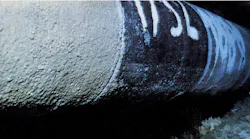
Offshore pipelines are exposed to internal and external corrosion, dragging anchors, nearby vessels, seismic events, currents and waves. Evaluating these threats requires an understanding of both the hazard and the response of the asset.
Data describing an external event can be incorporated into a digital tool that performs calculations and helps determine whether the pipeline remains within safe operating parameters. Automating this process can make assessments faster and more consistent.
For pipelines that cannot be inspected using in-line inspection (ILI) tools, direct assessment combines heterogeneous information to identify locations most likely to require further examination. Compared with assessments based on ILI data, the information is often limited and indirect.
Digital tools can integrate information, apply corrosion and flow models, and prioritize investigations, provided they represent the asset’s specific degradation mechanisms.
Metocean information similarly supports the design and assessment of fixed offshore platforms, pipelines and offshore wind installations. Software can make processing this information more efficient, but engineers must determine what environmental conditions mean for the asset being designed or assessed.
 Offshore oil and gas operations and the digital workflow
Floating wind adds another layer of complexity
Floating offshore wind adds interactions because the structure is no longer fixed to the seabed. Engineers must consider the relationship between wind loading and wave-driven movement as part of a complex dynamic system, with structural, marine, electrical and environmental disciplines working together.
Integrated load analysis is used to understand how the complete floating system will behave. Similar challenges arise with floating offshore substations, where a structure performing many of the functions of a fixed offshore platform must also behave more like a vessel. Dynamic cables introduce another element whose behavior must be considered within the overall system.
 Offshore Wind Turbine Maintenance Vessel at Sea
Repurposing offshore infrastructure requires multiple disciplines
Repurposing infrastructure for hydrogen and carbon capture and storage (CCS) brings materials behavior and process conditions into the assessment. Engineers must consider the medium being transported alongside pipeline design and operation.
Hydrogen embrittlement, for example, can affect whether an existing pipeline is suitable for hydrogen service.
In a recent offshore CCS project, RINA assessed existing offshore pipelines for future CO2 transportation. The challenge was to understand how trace water and other impurities within the captured CO2 stream could influence corrosion mechanisms and cracking risks, potentially affecting long-term integrity. The assessment covered different pressure, temperature and fluid composition conditions.
RINA combined thermodynamic modeling with expertise in materials, corrosion, pipeline integrity and process engineering. Simulations examined acid formation and conditions most susceptible to liquid acid dropout, including interactions involving SO2, NO2, H2S, oxygen and water. Comparing impurity concentrations across a wide operating envelope helped identify critical scenarios requiring further investigation.
The team recognized that thermodynamic models alone cannot fully capture real material behavior. Some mechanisms also depend on reaction kinetics, and operational experience in emerging CCS applications remains limited. Targeted experimental investigations and specialist materials assessments complemented the modeling to validate findings, improve confidence in predictions and explore sensitivity to process conditions.
The combined approach provided a more robust basis for integrity assessment and decisions about the suitability of existing assets for CO2 service.
Validating digital outputs
Artificial intelligence presents a similar challenge: a technically plausible output may still be wrong. Engineers must be able to interrogate a calculation or recommendation in the context of the asset and its operating conditions.
In safety-critical applications, digital technologies should be incorporated into established hazard identification and risk assessment processes. Potential failure modes must be understood, assumptions challenged and appropriate safeguards put in place before outputs inform operational decisions.
For offshore operators, the priority is to connect digital capability with the disciplines needed to test its assumptions and interpret its results. Multidisciplinary teams can turn faster analysis into a sounder basis for decisions about asset integrity, new technologies and future service.
About the Author
 Alessio Tarantini
Alessio Tarantini is executive director of innovation proposal and project management at RINA. He leads innovation and R&D initiatives focused on combining engineering expertise with digital technologies to address complex challenges in the engineering sector. His experience includes multidisciplinary engineering assessments of existing pipeline systems for hydrogen and CO2 transportation as well as the development of digital solutions that embed engineering knowledge into more efficient, consistent and robust assessment processes.
Related
 offshore_platform