New PDC bit technologies target faster, more reliable drilling
Key Highlights
- Manufacturers are advancing PDC cutters and bit architectures for complex, abrasive and extended-reach drilling.
- Offshore case studies include a run offshore Australia that had an 18% ROP increase; and other deployments in Abu Dhabi and the Norwegian Sea.
- Simulation-driven design and instrumented bits are improving customization and visibility into downhole drilling dynamics.
- Intelligent/instrumented bits have been engineered for extreme HP/HT conditions that are common in deepwater and ultra-deep wells.
- Higher tungsten prices are prompting manufacturers to increase steel-body production where formation conditions allow.
Bruce Beaubouef, Managing Editor
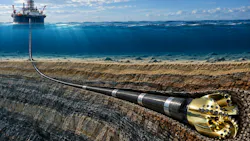
Polycrystalline diamond compact (PDC) bits remain the dominant technology in oil and gas drilling. Manufacturers continue to refine cutters, body materials, hydraulics, and overall architectures to improve rate of penetration (ROP), durability, and stability—particularly in complex, interbedded, or abrasive formations where traditional designs often force trade-offs between speed and bit life.
These incremental and architectural advances are lowering well-construction costs through fewer trips, smoother drilling dynamics, and better directional performance, even as raw-material pressures reshape production strategies. A review of some of the recently introduced drill bit technologies, along with some examples of use offshore, is presented below.
Baker Hughes introduced the PermaFORCE Elite PDC line in 2025 to deliver simultaneous gains in ROP and durability, reducing the historical compromise between the two. The bits are engineered for complex intervals, challenging formation transitions, extended laterals, and applications with powerful bottomhole assemblies (BHAs). Key benefits include expanded operating envelopes, improved stability with reduced vibrations and smoother torque response, better hydraulic efficiency, and more predictable performance.
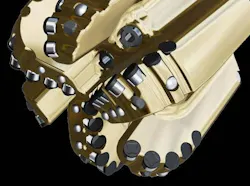
In early 2026, Baker Hughes launched the PermaFORCE-TRU variant specifically optimized for rotary-steerable systems (RSS). It features specialized cutting structures and shankless matrix technology that boost ROP potential while reducing damaging dynamics such as high-frequency torsional oscillations (HFTO) and lateral vibrations. Three-dimensional drilling simulations help widen the smooth drilling window, improving steering response and protecting the RSS and broader BHA. The bit is designed to pair especially well with Baker Hughes’ TRU-Steer RSS but has also shown strong results with other systems. Field examples include higher curve ROP and time savings relative to pad offsets.
NOV’s contribution in recent years has been its Ion+ Premium Cutters and the related Evolve Platform. The Ion+ premium cutters are said to maintain sharpness longer, supporting higher sustained ROP and durability. In extended-reach applications they have contributed to record-low sliding times (examples include 2.5% in long laterals) alongside high ROP. These cutters integrate with the ReedHycalog Evolve performance product line, which combines advanced cutter technology (including shaped geometries such as Eclipse and intermediate-size Intrepid cutters), proprietary design and modeling software, optimized cutting-structure layouts, enhanced hydraulics, and durability features such as improved matrix materials and gauge designs.
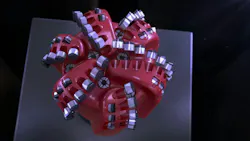
The platform emphasizes customized bit designs that maximize depth of cut in hard or abrasive formations while balancing stability and steerability. Early results have included record footage and ROP in demanding laterals, along with reduced nonproductive time.
SLB’s EnduroBlade 360 incorporates rolling diamond elements that distribute wear around the full circumference of the cutter, improving thermal management and longevity compared with fixed cutters. A North Sea case study with Harbour Energy (Brodgar Field) demonstrated the technology’s ability to drill a challenging 13½-inch section in a single run through high-compressive-strength carbonates. Combined with SLB’s drill bit optimization system and design/analysis platforms, the run reduced on-bottom drilling hours substantially and cut overall rig time by eight days versus offsets. Additional North Sea applications have shown single-run performance and multi-day rig-time savings in abrasive or extended sections.
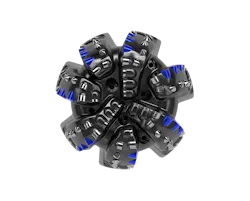
Meanwhile, Ulterra has expanded its Maverick line of shaped-cutter PDC bits. These designs move beyond traditional cylindrical cutters and round pockets by using fully shaped cutters and matching precision-cut shaped pockets. The approach improves cutter orientation control, engagement, and overall cutting efficiency, supporting higher ROP and better performance across a range of applications. The architecture aims to extract more consistent performance from shaped-cutter geometry while enhancing durability and impact resistance.
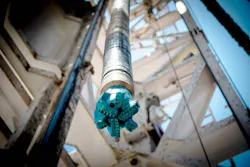
Material shifts and tungsten prices
Surging tungsten prices—driven by supply constraints, Chinese export curbs, and other demand factors—have pushed prices from roughly $600 per metric ton to around $3,000. Because tungsten can constitute a large share of matrix-body PDC bits (up to ~75% in some designs), manufacturers have accelerated the shift toward steel-body bits. Steel-body designs can offer substantial cost savings (industry estimates point to roughly 25% lower prices in some cases) while remaining suitable for many applications.
Companies including Varel and Ulterra have adjusted production mixes. Varel has moved 15–20% of global production toward steel bodies in recent months; Ulterra has shifted from a roughly even steel/tungsten split to about 65–70% steel. Tungsten-heavy matrix bits retain advantages in the hardest and most abrasive conditions, so the transition is selective rather than universal. Overall manufacturing costs have risen sharply, reinforcing the economic incentive for the steel shift where performance allows.
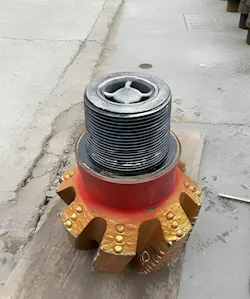
Intelligent drill bits
Digital simulation and proprietary design software have become standard for customizing cutting structures, hydraulics, and bit layouts to specific formations and BHAs. This enables faster iteration and more precise matching of bits to operating envelopes. Intelligent and instrumented bits with near-bit sensors continue to advance, providing higher-resolution data on dynamics, temperature, and rock interaction.
At OTC 2026, CNPC USA’s UltraSense UHTHP Bit Intelligence technology received a Spotlight on New Technology award. The system embeds sensors, electronics, and data storage directly in the bit to capture real-time measurements at the rock-bit interface under ultra-high-temperature/high-pressure conditions (reported capability to 215°C/207 MPa and high shock levels). It supports better diagnosis of dysfunctions such as stick-slip, whirl, and vibration in extreme environments, including ultra-deep wells. Collectively, these developments—refined cutters and geometries, RSS-optimized designs, rolling elements, shaped-cutter architectures, adaptive material choices, simulation-driven customization, and near-bit intelligence—are enabling operators to drill faster and farther with fewer trips and more stable dynamics. In an environment of rising material costs and longer laterals, the emphasis remains on maximizing footage per run and minimizing total well-construction time and expense.
Case studies
There are several documented offshore cases of use for these new drilling technologies. This is particularly true in the North Sea, with additional cases in offshore Australia, the Middle East, and other regions. The strongest and most detailed public case studies are for SLB’s EnduroBlade 360; the others have more limited but relevant offshore applications or related deployments.
The SLB EnduroBlade 360, with rolling diamond elements, has the clearest and most extensive offshore track record, especially in the UK Central North Sea:
- Harbour Energy (Brodgar Field): Used the EnduroBlade 360 (with DBOS and IDEAS platforms) to drill a challenging 13½-inch section through high-compressive-strength carbonates in a single run. It reduced on-bottom drilling hours significantly and saved about 8 days of rig time versus offsets.
- Petrofac/NEO Energy (Leverett field): Drilled a 12¼-inch section from casing shoe to total depth in one run — 8,387 ft at 76.1 ft/h (well above the 40 ft/h target) in an abrasive environment, reducing trips and costs.
- Additional Central North Sea examples include a 12¼-inch section drilled shoe-to-TD in a single run (saving a minimum of 10 days of rig time) and other single-run successes from whipstock windows through abrasive intervals while staying within AFE budgets.
There is also an offshore Netherlands example with improved durability and ROP in hard/abrasive formations.
Elsewhere, an operator offshore Australia recently used an optimized 8½-inch PermaFORCE Elite PDC bit with Prism shaped-cutter technology on an RSS BHA through cemented sandstone with large compressive-strength swings. It drilled the entire interval in a single run, delivered an 18% ROP increase, and saved an average of 29 hours of rig time versus offset wells.
Baker Hughes is heavily active in deepwater and other key offshore markets, including work with Petrobras in the Santos Basin, in pre-salt wells with related Dynamus bits and AutoTrak RSS; plus North Sea work with Equinor. The PermaFORCE line is positioned for complex/ interbedded and high-energy environments typical of many offshore developments. Public case studies for the newest Elite/TRU variants have so far been more common on land (e.g., U.S. shale), but the Australia example confirms offshore use.
Meanwhile, NOV’s Ion+ technology has been deployed in a number of offshore arenas. One such case was offshore Abu Dhabi, where an 8.5-inch lateral using ION+ Stealth shaped cutters achieved the highest on-bottom ROP in the application (240.9 ft/hr) and came out in “excellent dull condition,” according to NOV.
Another recent field use was in the Norwegian Sea, at the Fenja field in the Haltenbanken area. Here, NOV’s Predator bits with ION+ cutters were said to have significantly improved performance in the challenging Melke reservoir (hard calcite stringers, quartz, pebbles), increasing run length by ~223% and ROP by ~150% versus prior offsets in development drilling.
Additional examples include extended-reach work in the Central Graben area and historical ReedHycalog Tektonic bits on long ERD wells for ADNOC Offshore. Evolve and Ion+ technologies are designed for hard/abrasive and extended-reach applications that overlap with many offshore challenges.
Separately, Ulterra has a documented multi-well success in a demanding North Sea HP/HT environment (temperatures to ~190°C/375°F requiring MPD). Through iterative design and parameter optimization across four wells on the critical 12.25-inch section, the team achieved record performance, highest ROP, longest sections drilled, manageable vibration, and (on the final well) zero tool failures. While the public summary does not explicitly name the Maverick shaped-cutter line for these specific runs, it illustrates Ulterra’s offshore capability in extreme conditions, and the company supports global operations including the North Sea.
Other notes
Intelligent/instrumented bits (such as CNPC USA’s UltraSense UHTHP technology recognized at OTC 2026) are engineered for extreme HP/HT conditions that are common in deepwater and ultra-deep wells. Public field examples so far emphasize ultra-deep onshore applications (e.g., China), but the capabilities align with offshore needs.
Steel-body shifts driven by tungsten prices are more of a manufacturing/cost trend than a formation-specific technology; applicability depends on the specific offshore formation (matrix bodies still preferred in the hardest/most abrasive settings).
Bottom line – the North Sea stands out for multiple published successes for these new bits, especially SLB’s EnduroBlade 360, with supporting examples from Baker Hughes, NOV, and Ulterra. These technologies are being applied in complex offshore development drilling to improve ROP, reduce trips, and handle abrasive or interbedded lithologies. Specific public case studies for the absolute newest variants (e.g., PermaFORCE-TRU or Ulterra Maverick) are still emerging and are more limited offshore than onshore so far, as is typical with recent launches.
About the Author
 Bruce Beaubouef
Senior Lead Reporter / Managing Editor
Bruce Beaubouef is Managing Editor for Offshore magazine. In that capacity, he plans and oversees content for the magazine; writes features on technologies and trends for the magazine; writes news updates for the website; creates and moderates topical webinars; and creates videos that focus on offshore oil and gas and renewable energies. Beaubouef has been in the oil and gas trade media for 25 years, starting out as Editor of Hart’s Pipeline Digest in 1998. From there, he went on to serve as Associate Editor for Pipe Line and Gas Industry for Gulf Publishing for four years before rejoining Hart Publications as Editor of PipeLine and Gas Technology in 2003. He joined Offshore magazine as Managing Editor in 2010, at that time owned by PennWell Corp. Beaubouef earned his Ph.D. at the University of Houston in 1997, and his dissertation was published in book form by Texas A&M University Press in September 2007 as The Strategic Petroleum Reserve: U.S. Energy Security and Oil Politics, 1975-2005.