Systematic late-life data acquisition can improve well abandonment outcomes
Key takeaways:
-
Gather P&A-related subsurface data before cessation of production.
-
Address overburden uncertainties while drilling and producing operations continue.
-
Integrate subsurface and wells teams early in abandonment planning.
-
Use field-level risk assessments to optimize barrier placement and remediation strategies.
-
Evaluate opportunities for data acquisition during late-life drilling and intervention campaigns.
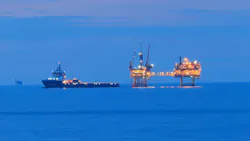
By Jeremy Beckman, Editor, Europe
As operators grapple with growing backlogs of decommissioning activity across mature offshore basins, the industry is facing increased pressure from stakeholders and regulators to reduce subsurface uncertainties, manage costs and improve the outcome of plug and abandonment (P&A) projects.
In the “Use it or Lose it: Optimising Late Life Data Acquisition for P&A” presentation at this year’s EAGE conference and exhibition in Aberdeen, Susan Moloney, senior petroleum engineer at Elemental Energies, addressed the need for concerted action long in advance of cessation of production (CoP).
Late-life drilling, surveillance and well interventions can all be opportunities to close gaps in historical well and overburden data, she suggested. Other unknowns such as shallow gas, zones of limited flow potential and whether naturally sealing formations might form part of the permanent well barrier arrangement, can be resolved by measures such as fluid sampling, annulus pressure monitoring, formation tests and petrophysical logs. The information can be used, for example, to improve barrier placement, reduce annulus remediation, and to potentially lower operational cost and complexity.
Moloney explained to Offshore that Elemental engages with a range of operators, but typically they fall into two categories:
- Those with limited experience of P&A, either because they are a newer operator that has acquired a legacy field or because this is their first time tackling field-level abandonment and decommissioning; or
- Mature E&P-focused operators that have moved the majority of their resource off an asset in late life and prefer to outsource much of the P&A work while they focus on optimizing production or bringing new fields online.
“In general, operators’ use of specialist consultants tends to be driven more by how they restructure towards the end of field life than by the need to keep pace with the latest technology solutions," Moloney said. "The UK and Norwegian continental shelves offer varying examples of how different decommissioning models can be constructed, ranging from high to low levels of operator engagement with specialist consultants.”
Addressing the overburden
Knowledge gaps are not limited to fields that have changed ownership through mergers and acquisitions. According to Moloney, operators that originally developed assets during the industry's expansion in the 1970s through 1990s can face many of the same challenges when planning abandonment programs decades later.
“The knowledge gap is present in some form or another in both scenarios,” Moloney said. “Historically, the emphasis has been on the ‘race to the reservoir,' with limited attention paid to the overburden apart from potential secondary targets and/or data refinement to optimise future drilling.
Mergers and acquisitions have compounded the challenge in some cases, she explained, particularly when legacy records were never digitized or have become difficult to locate. While operators can sometimes recover missing information through alternative sources, data gaps often remain.
“The problem is not limited to wells from the 1970s and 1980s either," she said. "While there is an improved understanding of how P&A fits into the overall lifecycle, there are still barriers to data acquisition that do not directly impact development decisions or optimization. In some projects, the accounting process and economics can also make it difficult to place sufficient value on incorporating long-term P&A and decommissioning costs into ongoing operations, meaning costs can be deferred and potentially become much higher later.”
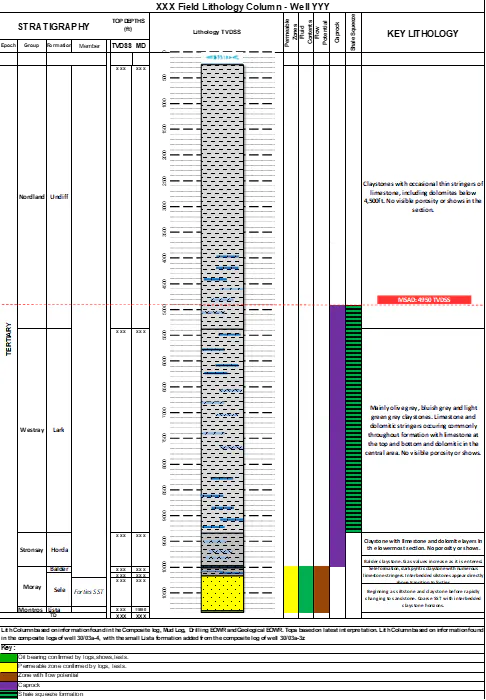
Most of the overburden data required for subsurface abandonment workflows, Moloney continued, is taken from historical end-of-well reports, including drilling, geology, mud reports and surveys that had a different primary focus at the time of recording.
“The challenge is meticulously sifting through those reports, extracting the data of interest and identifying any gaps that could impact abandonment decisions," she added. "Some operators are improving their record keeping and data management so that the data is in a more ‘ready’ or ‘P&A focused’ state, but this is not consistent across the industry."
Regulators have long required wells to be designed with eventual abandonment in mind, but Moloney says opportunities still exist to integrate P&A considerations earlier in the well lifecycle.
For example, identifying zones of flow potential (ZOFP), caprocks and preliminary abandonment depths during drilling could help inform well design decisions and cement placement strategies while operations are underway. Although those considerations may at times compete with other operational priorities, incorporating them early can help operators better understand the long-term implications of design choices.
“Knowing this upfront at least allows the conversation to be had and a conscious decision to be made about whether spending $X now could save $10X later," she said.
Moloney also noted that some operators are taking a more lifecycle-focused approach by acquiring abandonment-related data during infill drilling campaigns and other field activities. Recognizing those opportunities before they are lost can help reduce uncertainty later in the field's life, although commercial arrangements and decommissioning liability structures can influence how individual operators approach long-term P&A planning.
Risks/remedial actions
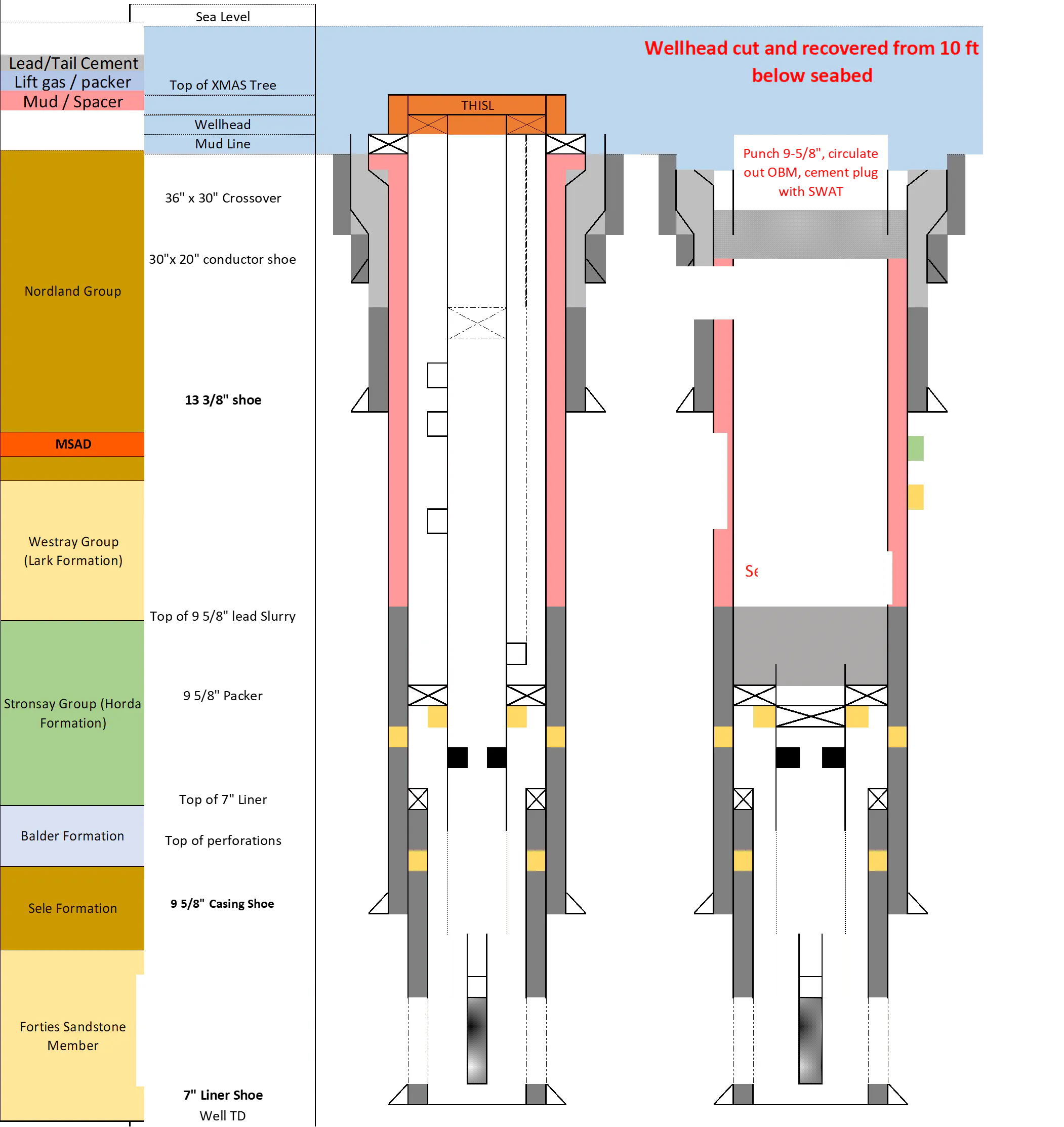
Elemental Energies provides independent advisory, consultancy and engineering services across subsurface, wells, facilities, production technology, geochemistry and decommissioning. Within this scope, the company can engage with specialists in niche areas, depending on the project’s requirements.
“The company is also currently providing engineering input into the update of Offshore Energies UK (OEUK) guidelines for legacy well assessment for carbon capture, utilization and storage (CCUS)," she said. "While there are slight differences in how risks are defined when it comes to CCUS, legacy well abandonment is essentially a common challenge.”
Assessing the risks for each well and remedial actions that might be needed, in order to help companies take the optimum abandonment decisions, typically involve the following procedures, Moloney explained.
First, an integrated cross-disciplinary team performs the subsurface work, followed by delivery of a Subsurface Basis of Design for Abandonment (SSBoDA), which includes a field-level abandonment strategy. This involves:
- Data mining using historical reports/studies, alongside regional knowledge;
- Creating a "plumbing diagram" to identify any legacy wellbores with non-compliant or absent barriers that could increase risk of leakage from the field or lead to unplanned long-term cross flow between zones;
- Defining permeable zones, fluids, pressures, caprocks, formation strength, and ZOFP;
- Crossflow the assessment and define ZOFP groups;
- Revising the plumbing diagram and legacy well assessment;
- Defining geologically relevant "barrier windows" to pass on to the wells team; and
- Providing field-level SSBoDA to the wells team.
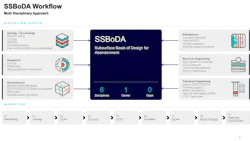
The wells team builds on the SSBoDA process by applying the subsurface assessment to individual wells and developing field-specific abandonment strategies, Moloney explained. In relatively simple fields, a common approach may be suitable across most wells, while more complex developments often require wells to be grouped according to factors such as construction design, reservoir location and variations within the overburden.
Teams then evaluate potential barrier locations against well construction details, including the condition and quality of annular cement, while weighing the cost and operational implications of logging or remediation activities. The assessment also considers emerging technologies and opportunities for through-tubing abandonment methods.
"Where high operational cost or risk is identified, this is fed back to the subsurface team to determine whether further subsurface work could reduce these issues," she said.
The resulting insights can help operators optimize well sequencing, personnel deployment, equipment requirements and contingency planning, while identifying work that can be completed before the main P&A campaign to reduce rig time and overall abandonment costs.
North Sea case study
Elemental Energies recently supported a major operator with P&A and decommissioning planning for a platform in the North Sea, involving 42 wells and more than 170 wellbores. The field is still producing after decades of service, with drilling, production and injection from two other platforms set to continue after the facility has been removed.
Moloney said the project includes a number of technical and operational challenges:
- An accelerated work scope, with multiple work packages being carried out in parallel rather than linear/overlapping due to tight deadlines;
- An undefined future production and injection strategy across the field. P&A on one part of the field cannot compromise production or injection for the remainder of field life, while this also has to be balanced against time, cost and complexity;
- The operator is willing to fill data gaps where a business case can be made;
- The scale of the project and performing P&A on a live asset with a clear glidepath to CoP require high levels of communication between multiple teams and moving parts, with new workflows being developed; and
- Multiple ZOFP, some of which have evolved over the years. The current understanding is very different from when the first well was drilled and there was only one ZOFP. These now include:
- The main reservoir.
- A secondary producing zone in the overburden that became economic years later.
- Buffer sands that have been used for highly complex well-integrity issues. Further work is required to understand potential hydrocarbon migration across the field and establish an as low as reasonably practicable (ALARP) approach to barriers for these intervals.
- Shallow gas that was not previously considered an issue but now affects both the P&A strategy and operational risk during final severing of casing strings.
She added, “Other work includes assessing zones of limited flow potential and the associated risks; transferring knowledge and experience from the UK Continental Shelf and Norwegian Continental Shelf into other regions while adhering to local regulations and cost requirements; and applying knowledge across P&A and CCUS projects in areas such as legacy well reviews, risk approaches and leak-rate modeling.”
About the Author
 Jeremy Beckman
Jeremy Beckman
Staff Writer / Editor, Europe
Jeremy Beckman has been Editor Europe, Offshore since 1992. Prior to joining Offshore he was a freelance journalist for eight years, working for a variety of electronics, computing and scientific journals in the UK. He regularly writes news columns on trends and events both in the NW Europe offshore region and globally. He also writes features on developments and technology in exploration and production.