Subsea well condition shapes intervention strategy for late-life P&A
By Steven Scobbie, Oil States
As operators plan subsea plug and abandonment (P&A) campaigns for mature assets, the first question shouldn’t be which equipment is available but what condition the well and subsea infrastructure are in after decades of service.
Across mature offshore regions, including the North Sea, operators are facing a growing requirement to decommission wells that may have been installed up to 50 years ago.
End-of-life wells present a different risk profile when it comes to intervention. Over time, wells and subsea trees experience repeated interventions, fatigue damage accumulation, corrosion and mechanical damage that affect the risk-based evaluation for decommissioning tasks and plug and abandonment (P&A).
Aging wells introduce new intervention risks
A conventional intervention system may be suitable for wells with low uncertainties and strong integrity records, limited fatigue concerns and subsea architecture that can support standard operations. However, when fatigue life has been consumed or the condition of the wellhead, conductor/cementing or tree is uncertain, the additional loads associated with conventional systems can become a limiting factor.
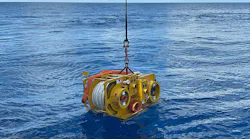
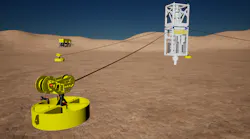
In these instances, operators often evaluate supplemental wellhead load relief systems such as tethering systems. These can help manage detrimental loading, but they also add complexity, vessel time and cost to offshore operations. Tethering systems require pre-deployment and recovery prior to and after operations are completed, and their effectiveness can depend on a narrow set of field conditions and operational parameters. In congested subsea field layouts, wells may be positioned too closely together for tethering to be practical.
Balancing conventional systems, tethering and field constraints
A high-level decision framework can help operators screen options early:
- Review the well's history: age, prior interventions, known fatigue exposure, corrosion records and any mechanical damage;
- Evaluate the subsea configuration: tree type, available access, well spacing and whether tethering or load relief systems can be deployed;
- Consider the operating model: whether the campaign involves one or two isolated wells or a larger batch of wells that can be addressed in sequence; and
- Compare more than equipment costs: vessel days, rig movement, offline testing, installation time, retrieval time and contingency requirements.
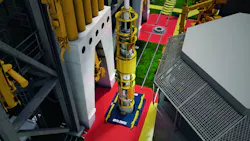
One alternative approach involves a low-impact workover package (LIWP). The system integrates a lower riser package, emergency disconnect package and workover riser interface in a single configuration designed to operate without tethering. The system design is designed to reduce wellhead loading compared with conventional intervention systems, and it supports emergency disconnect under a range of operating conditions. The system also can interface with different subsea tree types, which can be important for fields containing a mix of vertical, horizontal, monobore or dual-bore trees.
This approach may also reduce certain operational costs. Traditional P&A programs can carry significant costs through tethering spreads, recovery and recommissioning, rig movement, vessel time and assembly activities. By eliminating tethering requirements and thru tubing abandonment disposal costs as well as reducing installation and retrieval time, the LIWP approach can reduce deployment costs by approximately $2.5 million. Any cost efficiencies may become more pronounced when wells are batched. Because the system has a relatively low structural footprint, it may remain in place between operations, and it can support campaigns in which multiple wells are decommissioned in quick succession rather than treated as standalone mobilizations.
Operational and cost implications for P&A campaigns
No single system removes the need for well-by-well engineering assessment. Each mature well has its own legacy, loading history and operational constraints. For aging, fatigued, corroded or mechanically compromised wells, operators should consider whether equipment designed for the beginning of field life is still appropriate at the end of field life.
A lower-impact approach can help align technical risk, safety and economics as subsea P&A activity increases.
References available upon request.
This article published in the Financing Offshore Oil and Gas Projects Special Report 2026.
About the Author
 Steven Scobbie
Steven Scobbie
Steven Scobbie is a project leader for Oil States where he is focused on subsea applications. He's been with the company since April 2015, when he joined as a project engineer focusing on SURF systems. His previous experience includes engineering roles with Technocean Subsea and Saipem. He graduated with honors from the University of Aberdeen in 2013 with a bachelor's degree in mechanical engineering.