OTC 2026: Offshore decommissioning shifting to responsible recycling
Key highlights:
- Early planning, including a dedicated decommissioning expenditure metric, is crucial to manage costs and risks effectively.
- Responsible decommissioning supports environmental sustainability through recycling, traceability and third-party audits.
- Regulatory frameworks are evolving, with international conventions and regional standards requiring coordinated compliance efforts.
- Industry stakeholders must collaborate and adopt structured risk management to navigate technical challenges and infrastructure limitations.

By Matt Tremblay, ABS
Responsible decommissioning is a pressing operational issue across the global offshore fleet.
As FPSOs, semisubs, jackups and other floating and fixed assets near the end of their service life, operators must contend with the economics, technical safety risks and specific regulations for decommissioning them on a case-by-case basis.
Planning cycles, regulatory frameworks and physical infrastructure have not kept pace, however, despite a growing urgency to sunset aging and idle assets.
The low-cost model of “cut and scrap” that once defined decommissioning is no longer viable. Today’s operators are now accountable to a broader set of expectations, such as responsible recycling, and the industry must adapt accordingly.
Current state of offshore decommissioning challenges
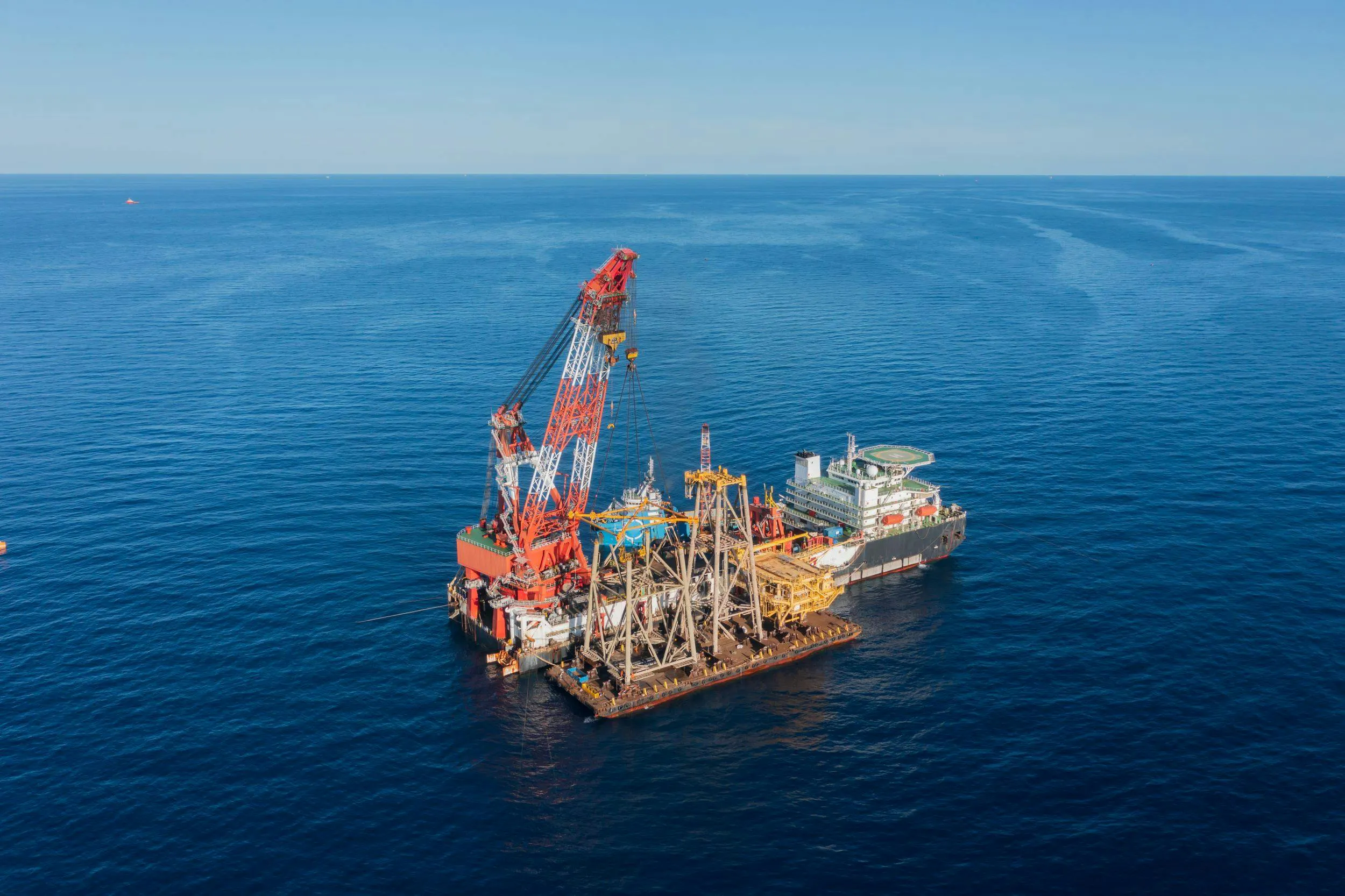
What’s driving the shift to responsible decommissioning is a convergence of market pressures, from regulatory gaps and commercial uncertainty to regional technology differences and asset integrity.
In an industry hotspot for deepwater expansion, Brazil’s Petrobras plans to decommission 18 units between 2026 and 2030, with more than 50 additional units expected after 2031, alongside 500 well abandonments and 1,800 km of flexible lines requiring removal.
The North Sea, a region that’s been at the leading edge of offshore decommissioning for fixed assets, as well as offshore the US and APAC markets—particularly Malaysia, Thailand and Indonesia—all face comparable activity across multiple asset classes.
As requirements tighten and stakeholder scrutiny increases, the absence of a unified international regulatory framework has resulted in overlapping requirements. The Hong Kong Convention, which entered into force in 2025, the EU Ship Recycling Regulation and the Basel Convention each govern different aspects depending on an asset type and jurisdiction. The US is not a signatory to the Hong Kong Convention, creating divergence between US Gulf projects and those operating under international frameworks.
Economics are also a significant constraint in an eight-figure offshore decommissioning market. Costs are difficult to assess in this market as no two projects or assets are alike. Decommissioning might be seen as generating no return on investment, depending on the strategy and unless the owner sells the asset.
However, not planning for the end, whether to repurpose or dismantle, and cutting late-life maintenance budgets are costlier bets in the long run since idle assets still drain capital. Costs are difficult to assess in this market as no two projects or assets are alike.
A third major consideration is whether there’s supporting infrastructure. Compliant recycling capacity is concentrated in only a handful of European yards that are already oversubscribed. Steel mill relationships and material destination planning are just as consequential as yard selection—and under capacity. Hazardous material streams such as asbestos and mercury also have limited qualified receiving facilities globally. Regional markets like Brazil’s might have willing facilities, but enabling legislative framework is not in place just yet.
There are technical challenges to address such as missing engineering records, subsea condition data and hazardous material inventories. Dismantling and recycling floating assets is more complex than fixed because there isn’t a standardized decommissioning process.
Finally, the supply chain capacity for specialized vessels and equipment is constrained across multiple regions.
Staying ahead of costs, reducing technical risk through early planning
Decommissioning encompasses every activity from last production, plugging and well abandonment to asset removal, material recycling and final site verification. Given the scale of complexity, operators must plan for the end before it is in sight—at the earliest phase of an asset’s design.
That means considering an asset’s decommissioning expenditures (decex) as a dedicated metric to capture all funds applied to retiring an asset. End-of-life is not a write-off but rather a structured liability requiring active management. Asset owners are motivated to show society, shareholders and partners that they are “doing the right thing.”
For example, unlike fixed platforms, which follow more predictable removal sequences, floating assets add to the challenge and complexity. Decommissioning FPSOs and semisubs involve hazardous material disposal and massive topside dismantling.
Disposal routing, transport permitting and receiving facility qualification must be resolved before physical work begins, and in many cases, only a few facilities globally are qualified to handle specific material streams.
Consequently, a single FPSO decommissioning plan can take two years to develop in part because projects like this surface new regulatory questions with no pre-established answers.
The most consistent guidance from practitioners across regions is to extend the planning horizon significantly, or five to seven years before final production. That window provides enough time for comprehensive planning, including condition assessments, data gap remediation, hazardous material inventory completion and regulatory engagement.
It is also wise to apply structured risk management frameworks, including HAZID workshops, quantitative risk assessments for heavy lift and towing operations, and bow-tie analysis linking structural, hazmat and operational threats to barriers.
Risk-based approaches and independent risk reviews help operators from either overspending on unnecessary conservatism or, worse, under-managing genuine risks.
Building toward a circular offshore economy
Responsible decommissioning creates a material opportunity to support what the industry is beginning to call the circular offshore economy. To that end, operators must properly plan to ensure safe fully traceable decommissioning.
Third-party audits and certification anchor this process from a regulatory and reputational standpoint.
In the US Gulf, SEMS audits are a regulatory requirement for all operators including those focused exclusively on decommissioning activities, while internationally, SEMS audits are optional.
ISO certification work conducted in Brazil, Africa and other markets demonstrates that the same certification framework applies globally, regardless of local regulatory stringency.
Independent verification provides operators, regulators and supply chain partners with documented assurance that decommissioning activities are occurring as intended.
Closing the loop on responsible decommissioning may be challenging in the near term, but as the industry has proven time and again, it is possible with close collaboration and an integrated approach.
Offshore is an official media partner of OTC 2026. Visit ABS and its affiliated companies at booth 1333 this week.
Editor’s note: Additional contributors include Luiz Feijo, director, Global Offshore – Production Sector, ABS; Rogerio Vieira, global director, business development, Marine and Offshore for ABS Consulting; Cy Sharp, director, Accreditation and Certification for ABS Quality Evaluations; Luciana Passos, offshore account manager for Brazil, ABS; and Keith Will, business development manager, Global Offshore Energies, ABS.
 OTC 2026 Opening Ceremony
About the Author
 Matthew Tremblay
 Matthew Tremblay
Matthew Tremblay serves as ABS senior vice president of Global Offshore based at ABS corporate headquarters in Houston. During his 30 years at ABS, Tremblay has served in various engineering and leadership positions throughout the US and Asia, including as Pacific Division vice president of operations based in Singapore and vice president of engineering for the ABS Americas Division.