ONS 2026: Life extension, reliability and asset integrity: What offshore operators are getting wrong
Key takeaways:
Operators achieve the greatest reliability and life-extension gains when they focus on critical risks and equipment rather than collecting more operational data. For example:
- Predictive maintenance does not eliminate failures; it reduces consequences;
- Collecting more data does not automatically create better decisions; and
- Continuously assessing risk is not the same as reducing risk.
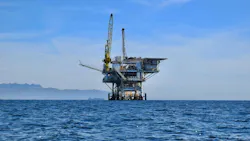
Across the North Sea and other mature offshore basins, operators are being asked to do more with aging assets. Facilities originally designed for shorter operating lives are now expected to remain productive for decades longer while meeting increasingly stringent safety, emissions and reliability requirements.
In mature basins such as the North Sea, operators are increasingly confronting equipment obsolescence, aging export infrastructure, maintenance backlogs and life-extension decisions as they seek to maximize production from existing facilities.
Ahead of this month's ONS 2026 event in Stavanger, Offshore chatted with Lloyd's Register's (LR) Energies Director Neil Arthur about how successful life extension is often about rethinking operations and prioritizing risks rather than spending large amounts of capital.
"One of the biggest integrity risks on mature offshore assets is not necessarily the primary structure itself, but the gradual degradation of the systems that surround it," Arthur said. "Operators are often dealing with deteriorating pipework coatings, aging valve systems, corrosion in secondary and tertiary steelwork, and structural components such as risers and supports that become increasingly challenging to maintain over time."
Reliability pressures increase as assets age
While aging structures present integrity concerns, Arthur said reliability issues frequently stem from critical rotating equipment.
"From a reliability perspective, the greatest vulnerabilities tend to be associated with critical rotating equipment, particularly power generation and gas compression systems," he explained. "As these assets age, reliability naturally declines, while equipment obsolescence, aging electrical systems and unsupported software can make maintenance and replacement more difficult."
Even efforts to reduce emissions can create new operational challenges.
"What is particularly interesting today is that some emissions reduction initiatives can unintentionally create operational vulnerabilities," Arthur said. "Reducing the number of gas turbine generators, for example, can improve efficiency and lower emissions, but it can also reduce redundancy."
If a remaining generator trips offline, operators may no longer have sufficient power available to maintain production, increasing the risk of facility shutdowns. Combined with spare-parts shortages and aging export infrastructure, these issues are becoming increasingly common across mature offshore regions.
In many cases, production constraints are driven less by reservoir performance than by the reliability of the equipment and infrastructure needed to keep hydrocarbons flowing.
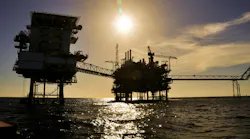 offshore oil and gas platform
More data does not always mean better decisions
As offshore operators invest in digitalization, predictive maintenance and artificial intelligence, Arthur believes the industry risks confusing information gathering with actionable insight.
"In many cases, operators are collecting significantly more information than they are turning into actionable insight," he said. "The industry has never had access to more data, but that does not automatically translate into better decisions."
Arthur cautioned against viewing predictive analytics as a standalone solution.
"There is a common misconception that predictive maintenance eliminates failures," he said. "In reality, it often helps reduce the consequences of failure rather than preventing the failure itself."
The most successful programs, he added, combine operational experience, original equipment manufacturer expertise and asset data to support practical engineering decisions.
"Technology is only effective when it is applied to clearly understood engineering challenges," he added.
Optimizing maintenance, not simply reducing it
Project at a glance: Maintenance optimization
- Portfolio: Seven UK North Sea assets
- Planned maintenance reviewed: 390,000 hours annually
- Hours eliminated: 145,000
- Reduction in maintenance workload: 27%
- Savings achieved: Nearly £15 million ($20.2 million)
- Approach: Risk-based maintenance optimization
"Backlog represents work that has not been completed by the date it was originally planned, but not all backlog carries the same level of risk," he said. "The objective is not necessarily to complete everything immediately. It is to ensure the right work is completed at the right time based on risk and operational consequence."
A recent LR Advisory project involving seven mature UK North Sea assets demonstrated what that approach can achieve. After analyzing about 390,000 hours of planned maintenance activities, the company helped reduce the workload by 145,000 hours, cutting planned maintenance requirements by 27% and generating nearly £15 million (US$20.2 million) in savings across the asset portfolio. The review focused on eliminating low-value tasks while maintaining asset integrity and reliability. (Download the case study below.)
 Illustration of an offshore rig integrated with advanced technology
Successful life extension starts with prioritization
Life-extension strategies have become increasingly important as operators seek to maximize recovery from existing offshore infrastructure. However, Arthur believes many organizations struggle because they attempt to address too many risks simultaneously.
"Successful life-extension projects begin with clarity," he said. "The real challenge is identifying and prioritizing the handful of issues that genuinely threaten future operation."
He added that operators must fully understand the operational and economic implications of remediation efforts before proceeding.
"Ultimately, successful life extension is not simply an engineering exercise," Arthur said. "It requires a balance between risk, cost, resources and production impact."
That philosophy was reflected in another LR Advisory engagement supporting North Sea fields approaching cessation of production. Rather than investing additional capital, the project focused on reassessing operating practices. A revised reservoir management strategy eliminated water injection requirements, reduced operating costs and allowed gas to be exported until the end of field life while maximizing remaining reserves. (Download the case study below.)
Turning technology into results
Looking ahead, Arthur sees significant opportunities in technologies that improve both operational performance and safety.
"The greatest opportunities will come from technologies that simultaneously improve safety, reduce cost and enhance operational performance," he said. "Advanced inspection techniques, particularly drone-based inspection, are a strong example."
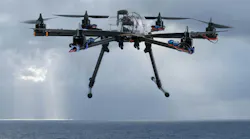 Hexacopter drone flying over the ocean
He also sees growing potential for AI-assisted inspection reviews and corrosion monitoring, but believes the industry's biggest gains will come from disciplined application rather than technological breakthroughs.
"Looking ahead, the biggest gains in integrity and reliability will not come from a single breakthrough technology," Arthur said. "They will come from using data more intelligently, targeting resources more effectively, removing personnel from hazardous activities where possible, and maintaining a relentless focus on critical equipment."
For operators managing aging offshore infrastructure, that message may be the most important takeaway: better outcomes depend less on collecting more data and more on understanding which risks truly matter.
ONS 2026: Lloyd's Register will be exhibiting at booth 5510 the Offshore Northern Seas (ONS) conference from Aug, 24-27 in Stavanger, Norway. LR is also a sponsor of the EIC UK Pavilion.
Offshore is a media partner of ONS 2026.
About the Author
 Ariana Hurtado
Ariana Hurtado
Editor-in-Chief
With more than a decade of copy editing, project management and journalism experience, Ariana Hurtado is a seasoned managing editor born and raised in the energy capital of the world—Houston, Texas. She currently serves as editor-in-chief of Offshore, overseeing the editorial team, its content and the brand's growth from a digital perspective.
Utilizing her editorial expertise, she manages digital media for the Offshore team. She also helps create and oversee new special industry reports and revolutionizes existing supplements, while also contributing content to Offshore's magazine, newsletters and website as a copy editor and writer.
Prior to her current role, she served as Offshore's editor and director of special reports from April 2022 to December 2024. Before joining Offshore, she served as senior managing editor of publications with Hart Energy. Prior to her nearly nine years with Hart, she worked on the copy desk as a news editor at the Houston Chronicle.
She graduated magna cum laude with a bachelor's degree in journalism from the University of Houston.