Offshore wind vessel fleets expand as developers prepare for larger projects
Why this news matters:
-
Offshore wind projects continue to increase in size and complexity, driving demand for larger installation, heavy-lift and transport vessels across the global supply chain.
-
Recent vessel investments and project milestones show contractors positioning themselves years ahead of anticipated offshore wind construction demand in Europe and other markets.
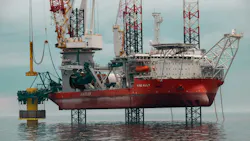
Vessel investments, fleet expansions and project execution milestones from contractors including Cadeler, Allseas and Seaway7 reflect growing demand for specialized assets capable of supporting larger offshore wind developments.
The latest developments span installation, heavy transport and foundation construction.
Offshore wind vessel activity at a glance
-
Cadeler: Ordered two T-class installation vessels, deliveries in 2030-2031
-
Allseas: Grand Tour heavy transport vessel due in 2028
-
Seaway7: Completed installation of 95 monopiles and 95 transition pieces at East Anglia THREE
-
Trend: Growing demand for larger installation, transport and heavy-lift vessels
Cadeler orders largest offshore wind construction vessels
Cadeler has placed orders with COSCO Shipping Offshore shipyard in Qidong, China, for two new T-class offshore wind installation vessels.
They are due to be delivered in 2030 and 2031.
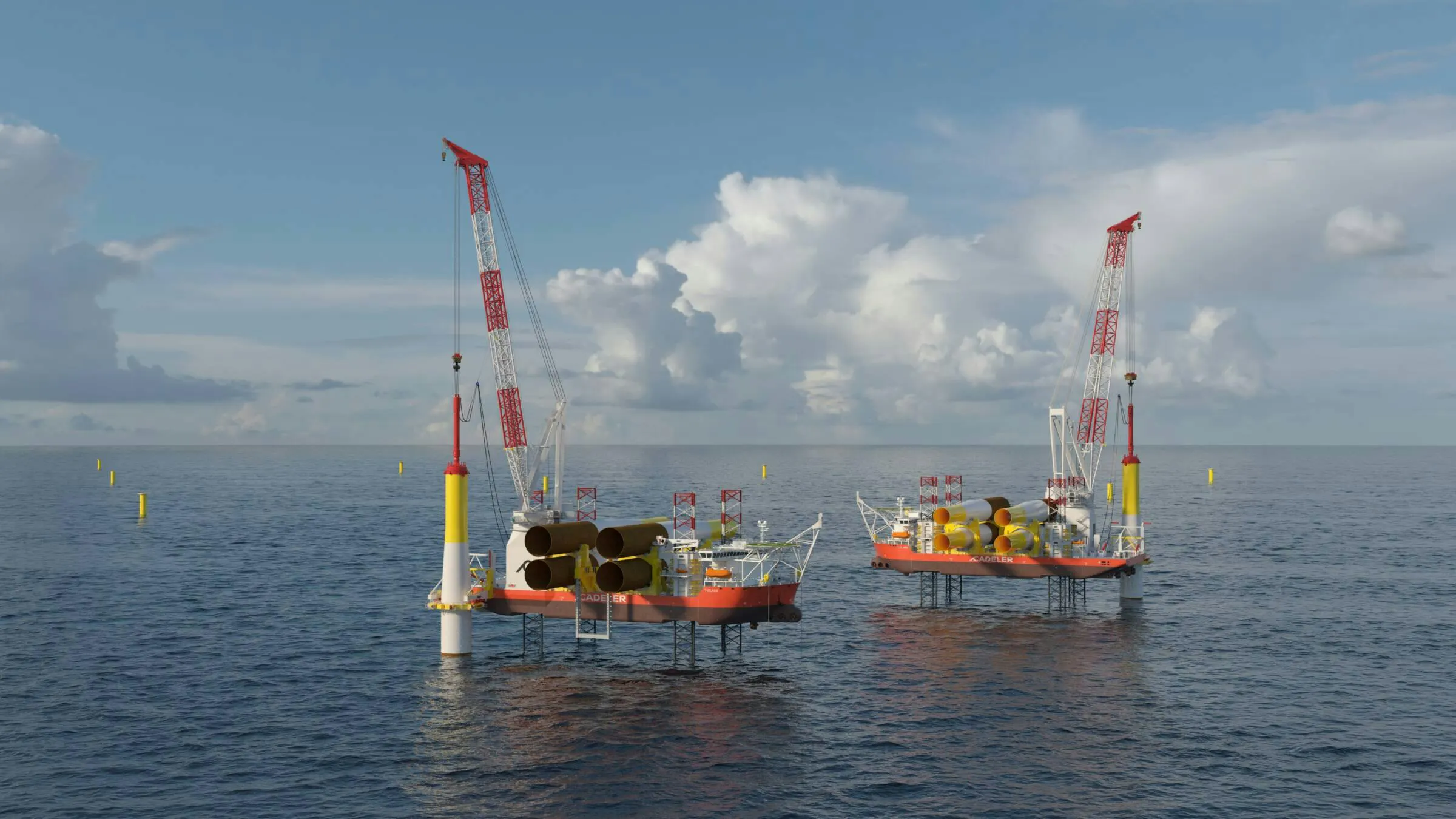
The new T-class series vessels, claimed to be the largest to date for the offshore wind sector, are designed to take on increasingly project complexity. Cadeler is already discussing future deployments with its clients.
COSCO Shipping Offshore has delivered numerous other newbuild vessels to Cadeler over the past few years.
Cadeler also revealed that its Wind Keeper vessel has completed the final turbine installation for Vestas at EnBW’s 960-MW He Dreiht offshore wind development in the German North Sea. The location is 90 km northwest of Borkum and 110 km west of Helgoland.
Wind Orca had started work on the program in April 2025 before Wind Keeper took over the remaining installation scope earlier this year.
He Dreiht is said to be the first commercial installation of Vestas’ V236-15.0 MW offshore wind turbines (64 in this case).
Wind Keeper, which had previously undergone an upgrade, has a 2,200-mt main crane.
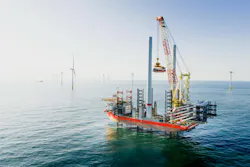
In a further announcement, Cadeler said it had acquired Menck, a supplier of equipment and technology for offshore foundation installation. Menck will continue to operate as a standalone business, but will also allow Cadeler to broaden its offshore wind project execution capabilities.
 Oil drilling platform and supply vessel
ABB supply power/propulsion package for Allseas converter station transport vessel
Guangzhou Shipyard International has commissioned ABB to provide power and propulsion equipment for Allseas’ new semisubmersible Grand Tour heavy-transport vessel.
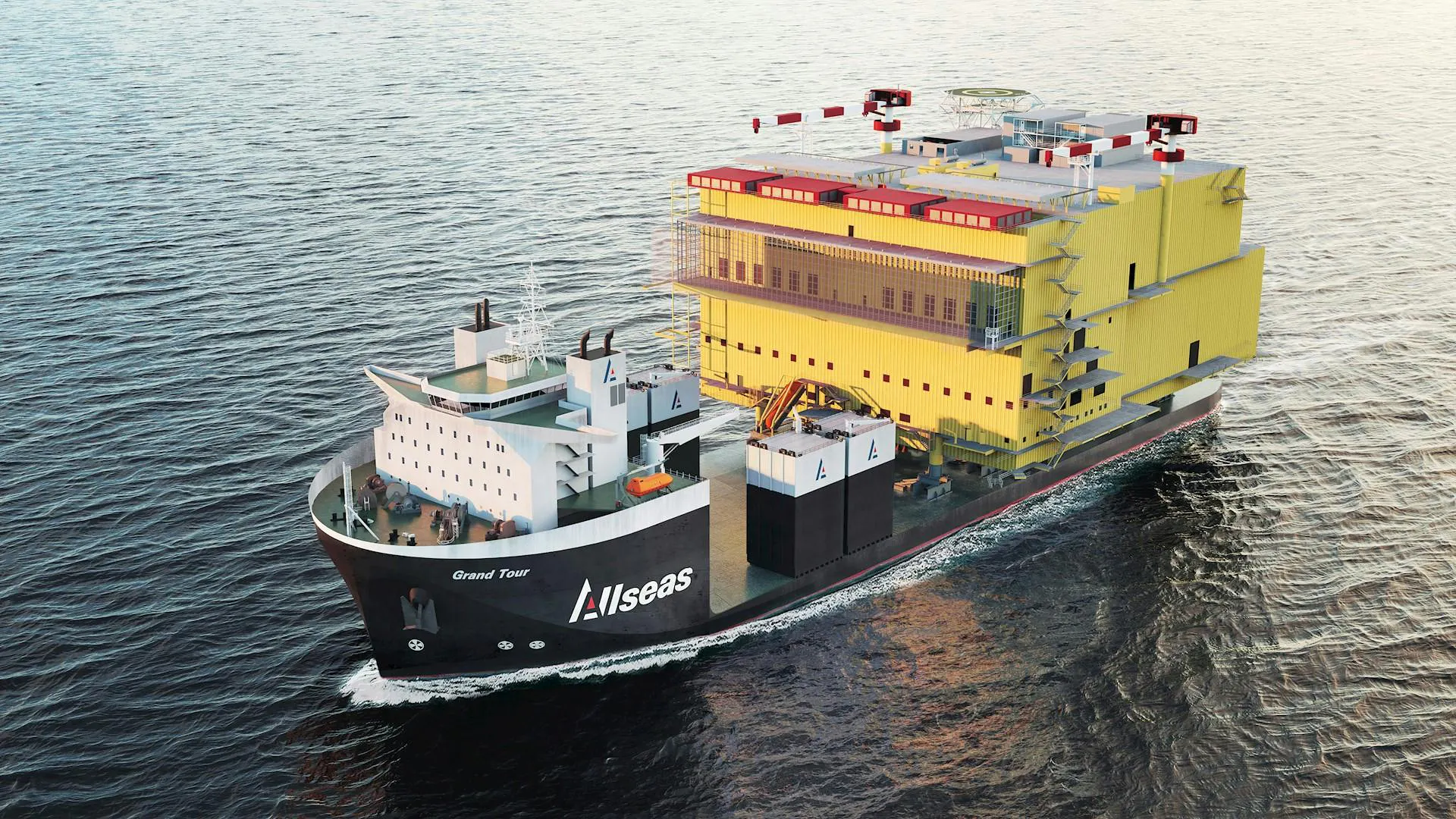
The 230-m long vessel, due to be delivered in 2028, will transport large AC to DC converter stations built by yards in Asia and Europe for direct transfer to Allseas’ installation vessel Pioneering Spirit.
With loads of up to 40,000 metric tons on its stern deck, the vessel will position itself alongside Pioneering Spirit while lowering its main deck below the waterline in order to float converter stations directly onboard.
ABB’s order includes four 3.5MW nozzled Azipod propulsion units with optimised nozzles, providing the thrust needed for Grand Tour's bollard pull and dynamic positioning tasks.
The Azipods, rotating 360 deg, will support maneuvering into position at Pioneering Spirit's bow.
Gearless Azipods, ABB adds, are designed to lessen mechanical losses and fuel consumption, with associated noise and vibration improvements compared to conventional mechanical thrusters.
In addition, the gearless design is said to minimize the need for lubrication oil and with it, maintenance, leading to lower operating costs.
The full package for the contract will include a medium-voltage AC power plant in a closed ring topology, controlled by the PEMS power and energy management system and enhanced power plant protection system; and remote condition monitoring and maintenance for the full powertrain.
 Underwater cables on the ocean floor in the Mediterranean Sea
Seaway7 jackup vessel completes North Sea East Anglia THREE monopile placements
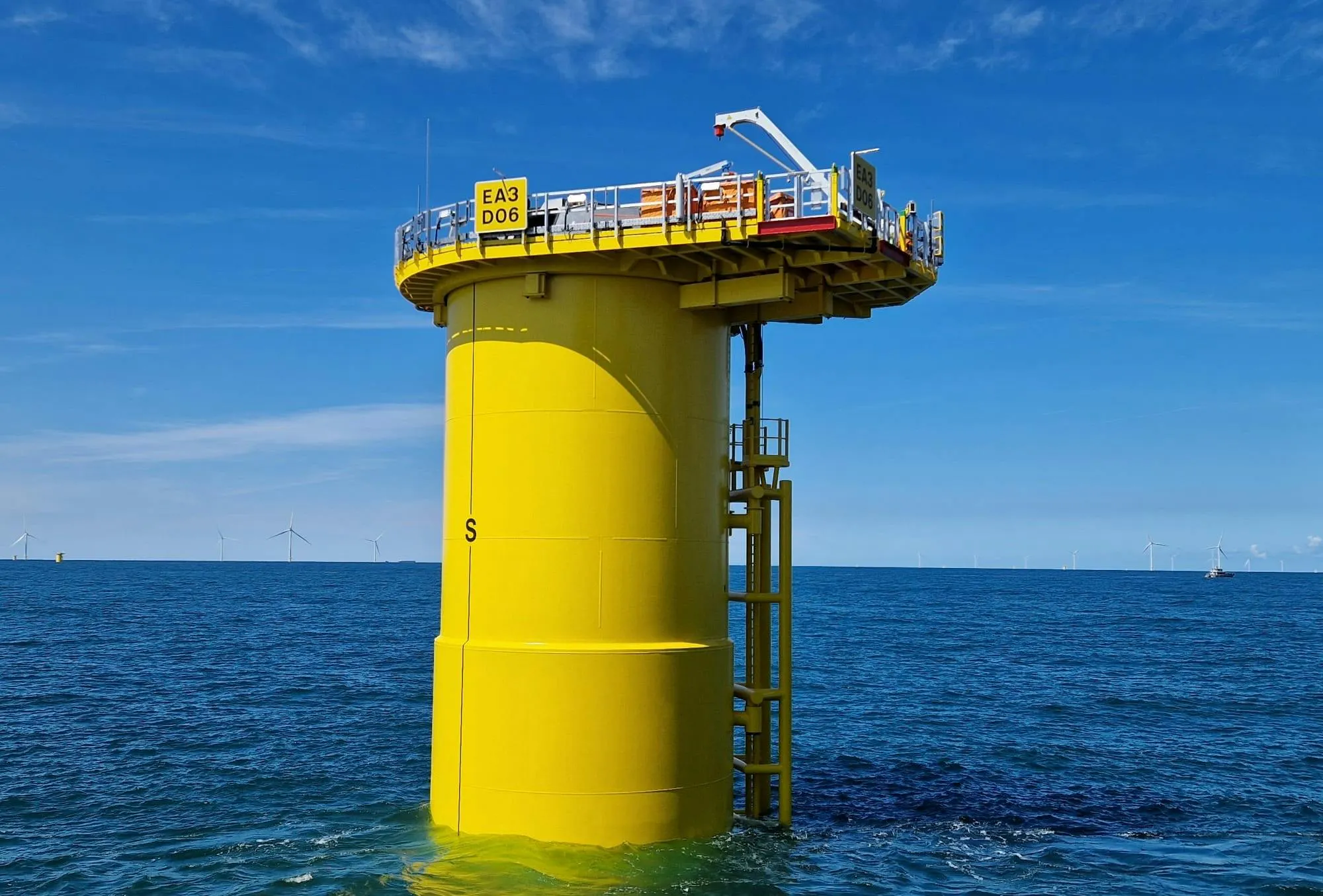
Seaway7’s jackup vessel Seaway Ventus has completed its first offshore wind foundation installation campaign at the East Anglia THREE development in the UK southern North Sea.
This is a joint venture between ScottishPower Renewables and Abu Dhabi Future Energy Company PJSC – Masdar.
ScottishPower Renewables reported that all 95 monopile foundations are now in place at the location offshore the Suffolk coast.
The structures weighing in the range 1,200-1,800 mt, with heights varying from 67-84 m and diameters of up to 10.6 m.
They are said to be the largest monopiles installed to date from a jack-up vessel offshore Europe.
Also completed is installation of the 95 transition pieces, each 20 m tall, 8 m in diameter, and weighing more than 400 mt.
Turbine installation is also advancing with the 1.4-GW project set to be fully operational by the end of the year.
About the Author
 Jeremy Beckman
Jeremy Beckman
Staff Writer / Editor, Europe
Jeremy Beckman has been Editor Europe, Offshore since 1992. Prior to joining Offshore he was a freelance journalist for eight years, working for a variety of electronics, computing and scientific journals in the UK. He regularly writes news columns on trends and events both in the NW Europe offshore region and globally. He also writes features on developments and technology in exploration and production.