Data briefs: Innovations and market dynamics shaping offshore oil exploration

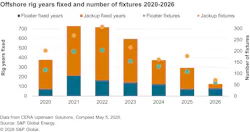
Offshore rig contracting: A market resurgence in 2026
The data indicates a strong start to 2026 for offshore rig contracting. With 61 floater fixtures so far, this already exceeds the total floater fixed years for all of 2025, which was 72.76. Notably, this milestone has been reached just one-third into the year, suggesting a more active market environment. The forecast projects a 4.1% increase in average demand for floaters in 2026 compared to 2025, indicating a positive outlook for the segment. Meanwhile, jackup fixed years decline sharply, down to 47.58 in 2026. The early momentum in floaters potentially points to renewed operator confidence and a tightening market, marking a possible turning point for offshore drilling demand.—Petrodata Rigs by S&P Global
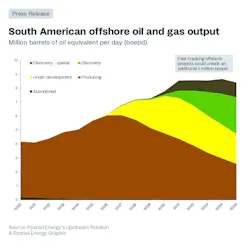
Most immediate source of upside offshore Brazil, Guyana and Suriname
Fast-tracking projects across these three markets could deliver more than 1 MMboe/d of additional production over the next decade, backed by about $33 billion in incremental greenfield capex through 2035. In Guyana, ExxonMobil is targeting up to 300,000 bbl/d from its Yellowtail project, which came online at an initial average production of 250,000 bbl/d, and identical debottlenecking could unlock an additional 80,000 to 90,000 bbl/d across the Errea Wittu, Jaguar and Hammerhead fields. However, the largest upside is in earlier FIDs of new projects, not expanding existing assets. Nevertheless, limited shipyard capacity for new FPSOs remains the binding constraint.—Rystad Energy
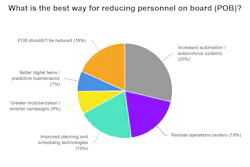
Poll results: Industry views on reducing offshore POB
Offshore surveyed more than 100 of its readers from April 23 to May 8 to assess the most effective strategies for reducing personnel on board (POB). The results show a clear preference for technology-led reduction strategies. Nearly one-third of respondents (28.7%) identified increased automation and autonomous systems as the most effective approach, pointing to strong industry confidence in robotics, AI-enabled workflows and unmanned operations to replace offshore labor. A second tier of responses underscores the role of onshore integration and operational efficiency. Remote operations centers and improved planning and scheduling technologies were tied at 19.1%, indicating that respondents see significant opportunity in relocating functions onshore while optimizing campaign execution to minimize offshore headcount.—Offshore staff
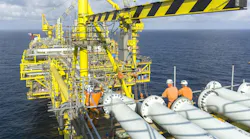 Offshore workers on oil and gas platform in South China Sea
About the Author
 Ariana Hurtado
Ariana Hurtado
Editor-in-Chief
With more than a decade of copy editing, project management and journalism experience, Ariana Hurtado is a seasoned managing editor born and raised in the energy capital of the world—Houston, Texas. She currently serves as editor-in-chief of Offshore, overseeing the editorial team, its content and the brand's growth from a digital perspective.
Utilizing her editorial expertise, she manages digital media for the Offshore team. She also helps create and oversee new special industry reports and revolutionizes existing supplements, while also contributing content to Offshore's magazine, newsletters and website as a copy editor and writer.
Prior to her current role, she served as Offshore's editor and director of special reports from April 2022 to December 2024. Before joining Offshore, she served as senior managing editor of publications with Hart Energy. Prior to her nearly nine years with Hart, she worked on the copy desk as a news editor at the Houston Chronicle.
She graduated magna cum laude with a bachelor's degree in journalism from the University of Houston.