Equinor produces first gas from Askeladd Vest subsea tieback offshore Norway
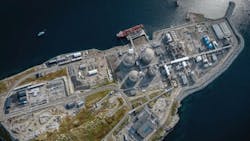
Equinor reported it has started production from the NOK3 billion (US$304 million) Askeladd Vest subsea field development in the Barents Sea.
The project’s two wells are connected via a new template to the Askeladd Field, which went onstream in 2022. From there, production heads 195 km through the Snøhvit Field subsea pipeline system for processing at the LNG plant on Melkøya Island offshore Hammerfest, northern Norway.
Askeladd Vest, with estimated recoverable reserves of about 15 Bcm, should help sustain full production at Hammerfest LNG until onshore compression starts as part of the Snøhvit Future project in 2028.
The LNG complex processes 6.5 Bcm/year of gas, which is about 5% of Norway’s overall gas exports, with LNG vessels departing Melkøya every five days to take their cargoes to European markets.
Askeladd Vest was part of Equinor’s original plan for a phased development and operation of the Snøhvit Field. The other partners are Petoro, TotalEnergies, Vår Energi and Harbour Energy.
 DNV subsea operations
Havtil issues two consents to Equinor
The Norwegian Ocean Industry Authority (Havtil) has authorized Equinor to start using new subsea production facilities for the Verdande Field in the Norwegian Sea, a tieback to the Norne Field FPSO.
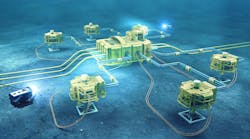
Norne, in 380 m water depth and 80 km north of the Heidrun Field, started production in 1997 and is connected to seven subsea templates.
 North Sea outlook: Activity gap between Norway and UK set to grow
Havtil has also issued consent for Equinor’s request for the semisub Deepsea Bollsta to perform plugging, drilling and completion of wells on the Visund Sør Field in the northern Norwegian North Sea.
Visund Sør, in 290 m water depth, started operations in 2012 via a subsea template tied back to the Gullfaks C platform, 10 km to the southwest.
About the Author
 Jeremy Beckman
Jeremy Beckman
Staff Writer / Editor, Europe
Jeremy Beckman has been Editor Europe, Offshore since 1992. Prior to joining Offshore he was a freelance journalist for eight years, working for a variety of electronics, computing and scientific journals in the UK. He regularly writes news columns on trends and events both in the NW Europe offshore region and globally. He also writes features on developments and technology in exploration and production.
Related
