Iran advances offshore capacity with Reshadat platform installation and South Pars infill drilling
Why this news matters:
- Material production gains: New platform capacity at Reshadat and 36 MMcm/d from South Pars infill wells will help offset reservoir decline and sustain output.
- Maximizing mature assets: Extended-reach infill drilling and pressure support highlight Iran’s focus on extracting more from long-producing offshore fields.
- Balancing growth with compliance: Phase 11 environmental conditions signal increasing scrutiny on emissions, water handling and offshore operating practices.
This sidebar section was created with the help of generative AI tools and edited by our content team for clarity and accuracy.
By Jeremy Beckman, Editor-Europe
Iran is advancing offshore oil and gas output in the Persian Gulf through a combination of new surface infrastructure, infill drilling and ongoing field development.
Recent updates highlight the installation of a major processing platform at the mature Reshadat Field, progress on complex extended-reach wells at South Pars, and continued momentum on Phase 11 with environmental approvals, underscoring efforts to sustain production and expand capacity across key assets.
Reshadat P4 platform installation boosts oil output
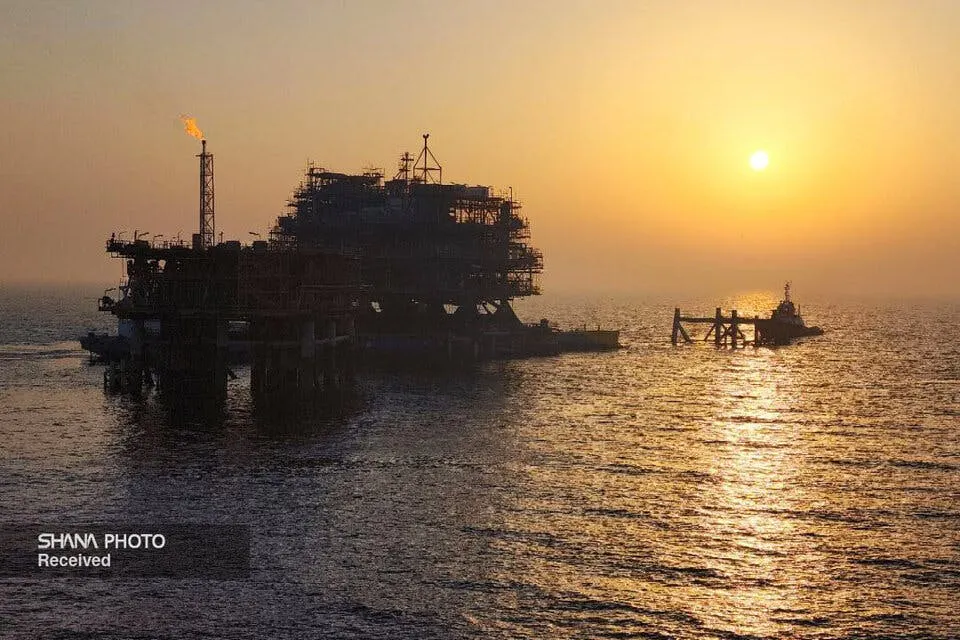
Iranian Offshore Oil Co.’s new P4 processing platform has been installed at the Reshadat oil field in the Persian Gulf.
The 6,200-mt structure is among the largest oil processing platforms offshore Iran, reported Shana News Agency on June 22. It was installed via a float-over operation.
P4 should raise the field’s oil production capacity by out 35,000 bbl/d and will inject up to 80,000 bbl/d of water to maintain reservoir pressure and support further development.
Reshadat, located about 90 km from Lavan Island, started production in 1969.
 oil and gas operations offshore Egypt
South Pars infill wells target pressure support and stable gas production
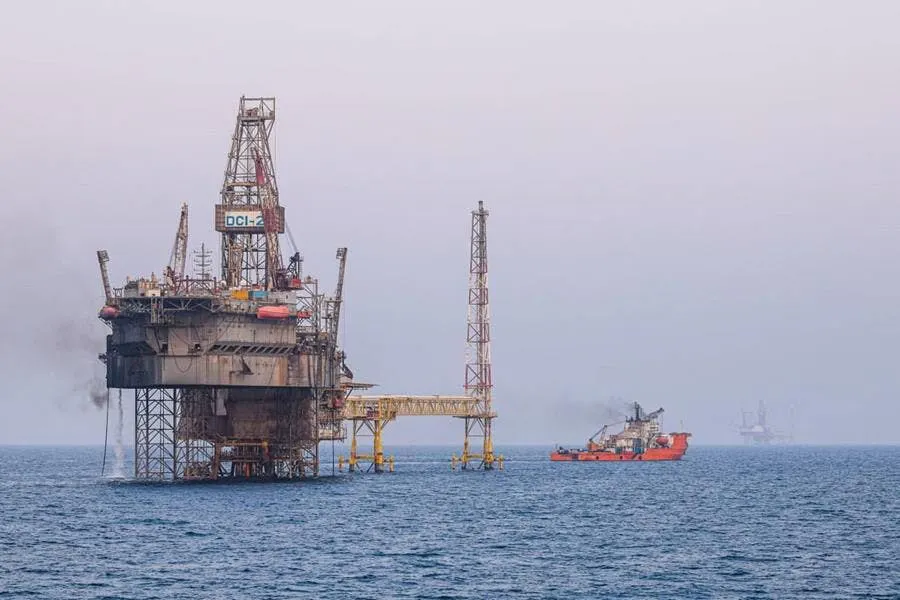
Elsewhere in the Persian Gulf, Pars Oil and Gas Co. (POGC) expects to bring two newly completed infill wells onstream shortly from the South Pars Phases 15 and 3 platforms, according to a separate Shana News Agency report on June 22.
POGC project manager Shobeir Nabavi told Shana the campaign had included extensive acid stimulation.
For one of the wells at the Phase 15 border platform, perforation operations were executed across an extended reservoir interval using the tubing conveyed perforating method, co-implemented with Petroiran Development Co. and Drilling International Ltd. (DCI).
The well, one of the longest in the field to date, was drilled to a depth of more than 5,000 m before being completed, activated and flow tested. It will be connected to the production facilities during a scheduled platform shutdown.
Another completed well at the SPD3 border platform, engineered by POGC and Pasargad Energy Development Co., has a measured length of more than 5,000 m, and becomes the platform’s 11th producer.
Nabavi explained that it was drilled to improve flowing pressure at the platform, compensating for pressure depletion brought on by more than 23 years of continuous production, and also to extend stable gas output.
Complex drilling conditions challenge extended-reach wells
The challenges associated with South Pars infill drilling, he added, typically include long well trajectories, high well angles, navigating drilling paths between existing wells to reach less-depleted reservoir sections, wellbore instability in fragile formations, and performing simultaneous drilling and production operations (SIMOPS).
Among the added operational complexities are the use of spare slots on producing platforms, single-well drilling instead of batch drilling programs, and the heavy mechanical and electrical loads on drilling equipment.
However, the program continued uninterrupted despite the recent conflict.
The South Pars infill drilling program comprises 35 wells across 17 platforms, which should add 36 MMcm/d gas production capacity.
 Flags of Iran and Qatar
 US-Israeli strike on Iranian South Pars gas field escalates Persian Gulf conflict
Phase 11 development progresses with environmental approval
Another Shana News Agency report on June 17 stated that POGC has obtained an environmental permit for Platform A of South Pars Phase 11.
The development includes construction of two wellhead platforms on four-legged jackets in 70 m of water, a 135-km 32-inch subsea pipeline, and associated 4-inch piggyback return lines to transport three-phase hydrocarbons to the Phase 12 processing facilities at the onshore South Pars Gas Complex.
Phase 11 will produce 2 Bcf/d. Previously, environmental approval had been granted for Platform B.
The environmental review covered the project, including protection of the Persian Gulf marine ecosystem, drilling waste management, air pollution control, wastewater treatment, and mitigation of environmental risks.
Key stipulations include preventing the discharge of produced water into the sea, use of flare gas recovery systems, real-time emissions monitoring, and advanced drilling mud and cuttings management techniques.
About the Author
 Jeremy Beckman
Jeremy Beckman
Staff Writer / Editor, Europe
Jeremy Beckman has been Editor Europe, Offshore since 1992. Prior to joining Offshore he was a freelance journalist for eight years, working for a variety of electronics, computing and scientific journals in the UK. He regularly writes news columns on trends and events both in the NW Europe offshore region and globally. He also writes features on developments and technology in exploration and production.