ADIPEC 2026: Offshore energy needs multi-orbit connectivity
Key highlights:
-
Reliability, not just bandwidth, is driving offshore adoption of multi-orbit communications networks, enabling drilling contractors and operators to prioritize critical operational traffic while maintaining continuous connectivity.
-
The next phase of offshore digitalization will depend on intelligent network orchestration that seamlessly manages multiple satellite constellations while strengthening cybersecurity across increasingly connected assets.
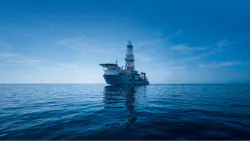
Offshore operations rely on connectivity for critical systems, cloud applications, remote support, real-time data and crew services.
Just ahead of ADIPEC 2026, Offshore chatted with Robert Austen, Marlink's VP Energy - Middle East, who explained that combining low Earth orbit (LEO), medium Earth orbit (MEO) and geostationary Earth orbit (GEO) satellite networks and terrestrial links reduces dependence on any single network and improves continuity.
This exclusive Q&A discussion explores why connectivity has become a critical operational asset for offshore energy companies and how communications networks are evolving to keep pace.
Offshore: Multi-orbit and multi-LEO connectivity is gaining momentum offshore. What operational challenges are driving adoption across drilling rigs, production facilities and offshore support vessels?

Austen: Offshore operations increasingly depend on connectivity for much more than basic communications. Operational systems, cloud applications, remote support, real-time data and crew services are all competing for bandwidth, often in locations where there is little or no terrestrial infrastructure.
LEO has changed what is possible in terms of throughput and latency, but the real requirement is resilience. Offshore operators cannot afford to be dependent on a single network or technology.
Combining LEO with other LEO constellations, GEO, MEO and terrestrial services where available provides diversity and allows connectivity to be maintained when an individual service is unavailable, congested or degraded.
 Modernizing the Global Drillship Fleet
Offshore: How are offshore drilling contractors using multi-orbit networks to improve reliability and continuity of communications for mission-critical operations?
Austen: The important change is that multiple links can be managed as one network rather than simply having a primary connection and a passive backup.
With intelligent network orchestration, traffic can be dynamically routed across the available connectivity and applications can be prioritized according to their operational importance. Critical services such as SCADA, remote monitoring and real-time operational traffic can therefore be prioritized while business and crew applications continue to use the same overall infrastructure.
That is really where multi-orbit delivers its value: not just having more connectivity available, but using that diversity intelligently to maximize availability and maintain operational continuity.
Offshore: As offshore oil and gas assets become increasingly connected and data-driven, what role does resilient satellite communications infrastructure play in supporting digital oilfield initiatives?
Austen: Connectivity has effectively become part of the critical infrastructure of an offshore asset. Digital oilfield applications increasingly rely on real-time data, remote expertise, automation, predictive maintenance and cloud-based applications, all of which depend on secure and consistent communications between offshore assets, systems and people.
There is also an important security consideration. As IT and OT environments converge, operators need visibility and control over connected assets and traffic flows. Resilience, therefore, needs to encompass the network and cybersecurity together, including segmentation and monitoring, rather than treating connectivity simply as bandwidth.
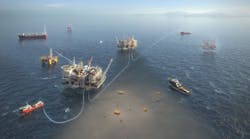 Tampnet Connected Platform
Offshore: Beyond operational performance, how has the shift to LEO-enabled connectivity changed the onboard experience for offshore crews, and why is that becoming an increasingly important consideration for operators?
Austen: LEO has significantly changed expectations around what connectivity in a remote offshore environment can look like.
Higher throughput and lower latency make the experience much closer to the connectivity people are accustomed to onshore, while multi-orbit architectures allow crew communications to coexist alongside operational services.
For operators, though, the important point is to manage those different demands correctly. Crew welfare traffic should not compete with mission-critical applications. With appropriate segmentation, prioritization and network management, operators can provide a much better experience for personnel while continuing to protect the performance of operational systems.
Offshore: Looking ahead, what developments in satellite communications and network architecture are likely to have the greatest impact on offshore energy operations over the next five years?
Austen: The biggest development will be greater diversity combined with more intelligent orchestration.
We are moving away from thinking about GEO, MEO, LEO or terrestrial connectivity independently.
The direction is toward carrier-agnostic architectures where multiple networks are available and the management layer determines how those resources are used according to performance, availability and application requirements.
We are already seeing multiple LEO networks becoming part of that model. Marlink's Multi-LEO approach, for example, combines Starlink and Eutelsat OneWeb within one managed service and is designed to incorporate additional LEO networks as they become available.
For offshore energy, the real evolution will, therefore, be less about the arrival of any one new satellite constellation and more about the network becoming adaptive, application-aware and increasingly integrated with cybersecurity. That creates the resilient digital foundation needed for increasingly connected and data-driven offshore operations.
ADIPEC 2026:
Offshore is an official media partner of ADIPEC.
The event is taking place this week, Nov. 2-5, in Abu Dhabi. For more information about this article's topic, visit Marlink at the show in Hall 16 at booth 16365.
Missed the event last year?
We've got you covered: ADIPEC 2025 Special Report
About the Author
 Ariana Hurtado
Editor-in-Chief
With more than a decade of copy editing, project management and journalism experience, Ariana Hurtado is a seasoned managing editor born and raised in the energy capital of the world—Houston, Texas. She currently serves as editor-in-chief of Offshore, overseeing the editorial team, its content and the brand's growth from a digital perspective.
Utilizing her editorial expertise, she manages digital media for the Offshore team. She also helps create and oversee new special industry reports and revolutionizes existing supplements, while also contributing content to Offshore's magazine, newsletters and website as a copy editor and writer.
Prior to her current role, she served as Offshore's editor and director of special reports from April 2022 to December 2024. Before joining Offshore, she served as senior managing editor of publications with Hart Energy. Prior to her nearly nine years with Hart, she worked on the copy desk as a news editor at the Houston Chronicle.
She graduated magna cum laude with a bachelor's degree in journalism from the University of Houston.
Related

 Wireless Connectivity Offshore Oil And Gas
You May Also Like
