CCS expert: Legacy wells among biggest long-term risks for offshore carbon storage projects
Key takeaways:
-
More than 1,400 legacy wells are located within UK carbon storage license areas, making well integrity assessment a critical step in CCS project development.
-
Historic well data, abandonment practices and barrier quality can create uncertainty around long-term CO2 containment, requiring targeted risk assessment and, in some cases, remediation.
-
Operators can draw on decades of offshore well abandonment experience, but CCS projects will require scalable approaches for monitoring and managing wells over the long term.

Thousands of historic oil and gas wells lie within or near prospective offshore carbon storage sites, making well integrity one of the industry's most closely watched carbon capture and storage (CCS) challenges.
Mature offshore basins targeted for carbon storage often contain hundreds of legacy wells, and while many may never require intervention, operators and regulators must determine whether existing barriers can withstand long-term exposure to stored CO2 and prevent potential migration pathways. As large-scale CCS projects move from planning into execution, the issue has become a key focus for developers seeking to demonstrate long-term storage integrity.
In this exclusive Q&A interview, Ben Cannell, CCS specialist at Aquaterra Energy, explains how operators evaluate legacy well risks, prioritize remediation and support long-term CO2 containment.
Offshore: As UK CCS projects move toward execution, how significant is the risk that legacy wells pose to long-term storage integrity?

Cannell: Clearly, if CCS is to achieve its core aim, injected CO2 has to remain securely contained over the long term, and legacy wells are one of the key areas that must be effectively managed to ensure this happens. Beyond the technicalities of doing so, the issue is also a commercial one, because if wells in a licence area require costly and time-intensive remediation, this can significantly alter the economic outlook of a project at the planning stage.
It’s important to say that this is also a challenge that we can solve with engineering. Not every well will require intervention, as analysis can demonstrate, and for wells that do require intervention, cost-effective approaches to reentry and proper re-abandonment can significantly reduce cost and ensure long-term containment.
There is also an opportunity to convert some legacy wells into assets, fitted with fiber optics, geophones or other equipment to help verify plume behavior and demonstrate storage integrity.
Offshore: With more than 1,400 wells in UK CCS licence areas, how should operators assess and prioritize which wells require intervention?
Cannell: Operators should begin with the CO2 injection plan and plume migration modeling. The first step is to understand where the CO2 is expected to move, how quickly it may migrate through the formation and which legacy wells could be reached over time.
Wells should then be assessed against available end-of-well reports, historical abandonment data and barrier status. Wells within or close to the predicted plume path should be prioritized, particularly where there is limited confidence in existing barriers.
Where a well presents a potential containment risk, operators need to consider re-abandonment, relocating injection wells, reducing injection volumes or adding further monitoring.
Offshore: What are the most common integrity risks associated with aging offshore wells, and how could these affect CO2 containment over time?
Cannell: One of the main risks is uncertainty around historical well data. Older wells may not have the level of documentation required to confidently prove long-term barrier integrity, and some legacy wells may have been correctly abandoned for their original oil and gas purpose but not with future CO2 storage in mind.
Exploration wells may have been drilled, tested, found to be non-commercial and then abandoned quickly. In some cases, barriers may have been installed to restore caprock integrity above the hydrocarbon target, but not necessarily above a saline aquifer that could later become part of a CO2 storage site.
Some materials used historically, including certain Portland cements and steel grades, may also be negatively affected by CO2 exposure over time. If the CO2 plume reaches a well where barrier integrity is uncertain or insufficient, that well could become a potential migration pathway.
Offshore: What lessons from offshore oil and gas well abandonment can be applied, or need to be adapted, for carbon storage projects?
Cannell: There is a lot that can be carried over from offshore oil and gas abandonment, particularly around well barriers, reentry techniques, abandonment practices and long-term well integrity. However, CCS means that wells are no longer simply being abandoned after hydrocarbon activity and must sit within a storage site that needs to safely contain CO2 for the long term.
Existing methods such as intersect wells and excavation provide useful lessons, but they can be expensive and may not be the most scalable route for CCS. The industry will need approaches that are technically robust, repeatable and commercially viable, including controlled vertical reentry and the ability to re-abandon legacy wells if required.
Offshore: How are regulators in the UK approaching legacy well risk in CCS permitting, and are current frameworks sufficient?
Cannell: The UK regulatory approach is conservative, which is understandable given that CCS is still an emerging industry. Regulators are focused on public confidence, as even a small leak could undermine confidence before the industry has had time to establish itself.
Operators can expect strong scrutiny around well integrity, legacy well assessment, monitoring plans and risk reduction measures. This framework can also influence project economics, as it could require additional monitoring, lower injection rates or remediation before a project moves forward.
Over time, as more CCS projects are successfully executed and monitored, the regulatory approach may evolve. For now, the priority is likely to remain cautious, with an emphasis on evidence and public reassurance.
Offshore: What steps does the industry need to take over the next few years to build confidence that CO2 can be safely stored for the long term?
Cannell: The industry needs to show, through real projects, that CO2 can be stored safely, monitored effectively and managed over the long term.
Confidence will come from a growing body of operational evidence and a clear track record of identifying and managing risk. It will also depend on regulators, operators and the supply chain learning from early projects and applying those lessons across the wider industry.
Communication matters too. The industry needs to share evidence openly, explain how risks are being managed and show how lessons from early projects are strengthening future developments.
Exclusive content:
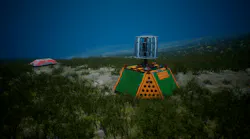 CCS lander on the seabed
About the Author
 Ariana Hurtado
Ariana Hurtado
Editor-in-Chief
With more than a decade of copy editing, project management and journalism experience, Ariana Hurtado is a seasoned managing editor born and raised in the energy capital of the world—Houston, Texas. She currently serves as editor-in-chief of Offshore, overseeing the editorial team, its content and the brand's growth from a digital perspective.
Utilizing her editorial expertise, she manages digital media for the Offshore team. She also helps create and oversee new special industry reports and revolutionizes existing supplements, while also contributing content to Offshore's magazine, newsletters and website as a copy editor and writer.
Prior to her current role, she served as Offshore's editor and director of special reports from April 2022 to December 2024. Before joining Offshore, she served as senior managing editor of publications with Hart Energy. Prior to her nearly nine years with Hart, she worked on the copy desk as a news editor at the Houston Chronicle.
She graduated magna cum laude with a bachelor's degree in journalism from the University of Houston.