New realities are reshaping deepwater engineering and project execution
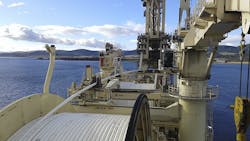
Deepwater and ultradeepwater developments are entering a new phase defined by harsher operating conditions, longer tiebacks, and a push for faster first production. These pressures are reshaping design philosophies, material choices, and execution models, prompting operators and suppliers to rethink how complex subsea systems are engineered and delivered.
Offshore recently chatted with Kevin Reizer, Tenaris commercial vice president of line pipe services, about complex deepwater projects, well completion planning and emerging trends.
Emerging trends in offshore and ultradeepwater
Operator decision-making in the offshore and ultradeepwater space often center on new design philosophies, materials selection approaches and risk mitigation strategies.
"The combination of higher pressures, more aggressive fluids, deeper water, longer step outs and multi-phased developments is driving a change in how wells and subsea systems are being designed and specified," Reizer said. "We’re seeing system-level design philosophies, and earlier/faster qualification of enhanced materials and technologies to suit. Those trends are already very visible in the projects coming to market today."
These conditions require advanced engineering approaches, including enhanced material performance for sour service, robust corrosion resistance and strain‑based design solutions to accommodate installation and operational loads across uneven seabed geometries in deepwater settings, he explained.
"Operators are also prioritizing robust architecture, minimizing potential failure points and selecting equipment designed to reduce the likelihood of workovers," he added.
In addition, Reizer said material mixture is evolving in parallel with corrosion-resistant alloys increasingly specified for aggressive production environments.
"At the subsea level, integrity and flow assurance are critical, especially as operators move to longer tiebacks and more demanding flowline systems," he continued.
Operators accelerating path from discovery to production
Offshore projects have been adapting to global shifts such as supply‑chain volatility, accelerated development timelines and increased reliability expectations. These changes can impact the future of well completion planning in challenging environments like the Black Sea or other frontier basins.
"Operators want to move from discovery to production much faster than in the past," Reizer explained. "That’s forcing a rethink of how projects are structured end-to-end: more programmatic planning, greater emphasis on repeatability and integrated execution to compress cycle times and improve schedule certainty. In that context, supply-chain reliability expectations directly shape technical and commercial decisions from the very front end. Integrated delivery models, earlier technical alignment with the supply chain, and more rigorous qualification programs become critical in this environment."
Collaboration during scoping, planning and execution
Tenaris provides pipe manufacturing services across 19 countries and has four R&D centers for developing and testing new products.
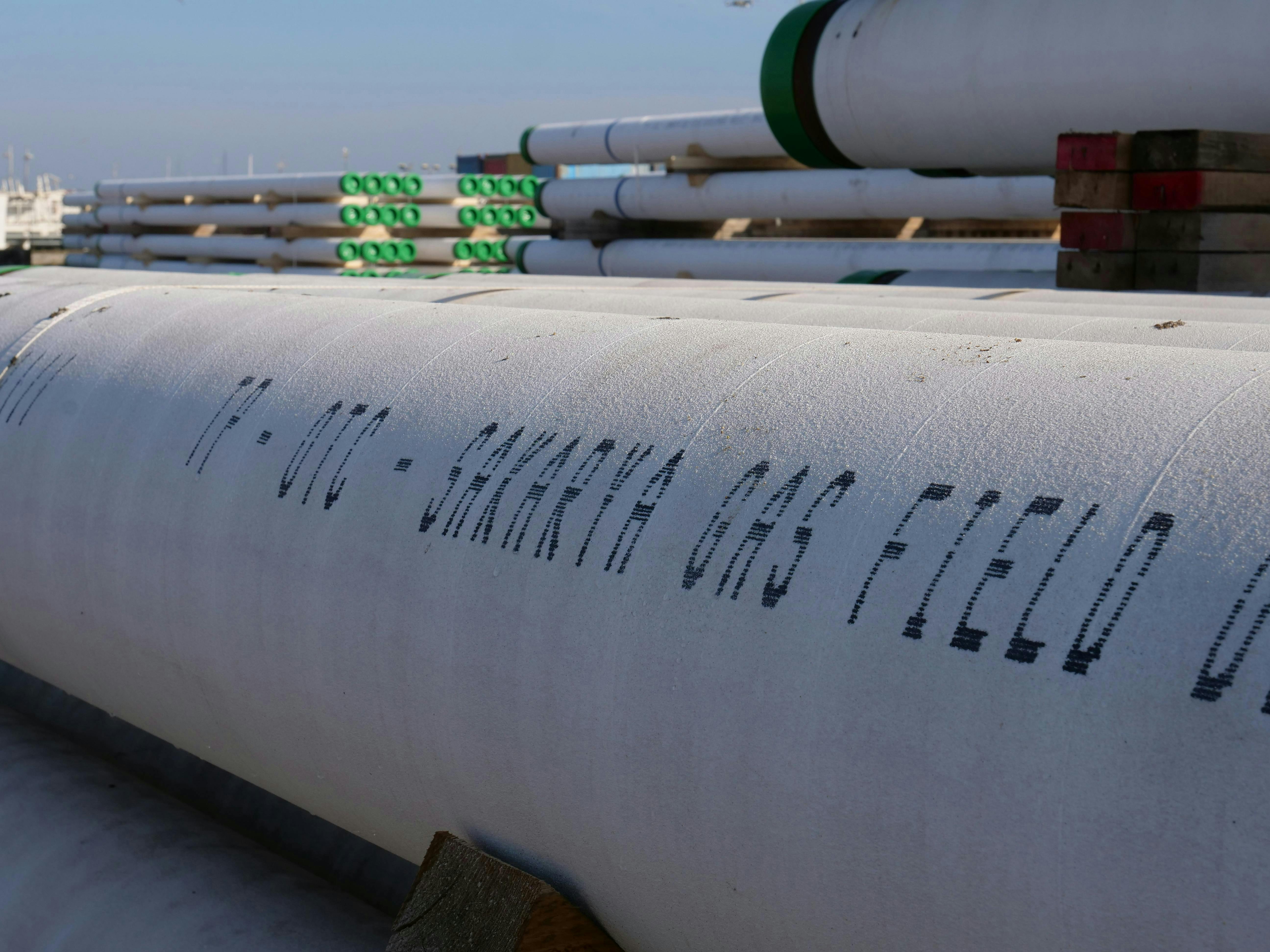
Tenaris recently secured two contracts from Türkiye Petrolleri Anonim Ortaklığı (TPAO) for Phase 3 of the ultradeepwater Sakarya Gas Project in the Black Sea, supplying more than 118,000 tons of seamless and welded pipes for flowlines, MEG infrastructure, export pipelines and offshore risers. Production will span Tenaris facilities in Italy and Brazil. The company will also provide 10,000 tons of offshore drilling casing that is designed to enhance safety and efficiency.
The company was also recently awarded a contract to supply casing and tubing for the deepwater Trion project offshore Mexico.
"For a significant scale project, Tenaris collaborates with the operator and engineering teams through an integrated workflow that begins during early project definition and continues through manufacturing, coating and offshore installation," Reizer explained. "This collaboration is reinforced by the active involvement of Tenaris’ Technology team, which works alongside stakeholders on line pipe, auxiliary components and associated services through extensive technical engagement to ensure full alignment throughout the project lifecycle."
He continued, "During scoping and front-end engineering, Tenaris works closely with the operator and the EPC teams to define qualification programs and the overall technical configuration. This phase addresses the complexity of the line pipe solutions required for demanding projects, including the definition of mechanical properties, potentially enhanced sour service performance, optimized wall thicknesses through Alpha Fab capabilities, and optimally defined pipe-end tolerances. It also includes alignment on line pipe specifications, anticorrosion and thermal coating requirements, accessories and specialized components required for deepwater service. Particular attention is given to structural integrity, system compatibility, installation feasibility, digital traceability and long-term performance under high external pressures and challenging seabed conditions."
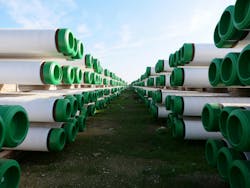
Taken together, these shifts are reshaping both design approaches and how major deepwater projects are executed.
Conclusion
The convergence of new material systems, system‑level engineering philosophies and integrated execution models is redefining how deepwater projects are delivered. As operators target faster deployment in harsher environments, early technical alignment, supply‑chain stability and lifecycle‑driven design will play an increasingly central role. These elements are shaping the next generation of ultradeepwater developments, where reliability, qualification rigor and coordinated execution are becoming as critical as the hardware itself.
About the Author
 Ariana Hurtado
Ariana Hurtado
Editor-in-Chief
With more than a decade of copy editing, project management and journalism experience, Ariana Hurtado is a seasoned managing editor born and raised in the energy capital of the world—Houston, Texas. She currently serves as editor-in-chief of Offshore, overseeing the editorial team, its content and the brand's growth from a digital perspective.
Utilizing her editorial expertise, she manages digital media for the Offshore team. She also helps create and oversee new special industry reports and revolutionizes existing supplements, while also contributing content to Offshore's magazine, newsletters and website as a copy editor and writer.
Prior to her current role, she served as Offshore's editor and director of special reports from April 2022 to December 2024. Before joining Offshore, she served as senior managing editor of publications with Hart Energy. Prior to her nearly nine years with Hart, she worked on the copy desk as a news editor at the Houston Chronicle.
She graduated magna cum laude with a bachelor's degree in journalism from the University of Houston.