Moving beyond forecasts: Weather intelligence reshaping offshore operational decision‑making
Key highlights:
- Weather intelligence translates environmental data into operational impact insights tailored to specific assets and activities.
- AI models are trained on extensive historical and real-time data, continuously validated to ensure accuracy in complex offshore environments.
- Integration of weather data into digital platforms enables automated alerts and semi-automated decision-making, enhancing operational responsiveness.
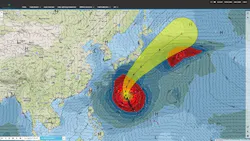
As offshore operators contend with volatile weather, many are moving beyond traditional marine forecasting and integrating AI‑driven weather intelligence into mission‑critical workflows.
Weather intelligence combines high‑quality meteorological data, predictive modeling and human expertise to translate forecasts into actionable, asset‑specific operational insight.
StormGeo, part of Alfa Laval, provides weather intelligence technology designed not only to predict weather, but to quantify its impact on offshore operations, personnel and assets.
Alan Binley, global head of offshore oil and gas at StormGeo, recently spoke with Offshore about how this technology is reshaping decision‑making for offshore oil and gas and offshore wind projects.
Offshore: How is weather intelligence materially different from traditional marine forecasting, and what specific capabilities does it enable for offshore energy operators that were not previously possible?

Binley: Traditional marine forecasting has historically focused on describing expected environmental conditions such as wind, waves and currents at a given time and location.
Weather intelligence represents a step change in this approach by translating those forecasts into operational impact. Rather than simply telling operators what the weather will be, it helps them understand what the weather means for their specific assets and activities.
This is achieved by combining multiple data sources, including metocean forecasts, vessel response models, and asset-specific thresholds, and delivering decision-ready insights. For offshore energy operators, this enables more precise guidance on operational limits, continuous monitoring aligned to risk thresholds and a more probabilistic understanding of uncertainty. The shift is fundamentally from data provision to decision support.
Offshore: Can you share recent offshore case studies where weather intelligence tools measurably improved safety, reduced downtime or supported critical operations?
Binley: For offshore oil and gas, weather intelligence is increasingly delivering measurable operational benefits. In oil and gas operations, particularly during lifting or simultaneous operations, real-time monitoring of forecast conditions against operational thresholds has helped operators avoid marginal conditions that could lead to safety incidents.
In regions such as the Gulf of Mexico, weather intelligence has also supported more targeted decision-making around shutdowns and evacuations, enabling operators to act earlier where necessary while avoiding overly conservative decisions.
In each case, the value lies less in improving the forecast itself and more in improving the timing and confidence of operational decisions.
A recent example from the Gulf of Mexico involved a deepwater operator planning a series of heavy-lift and subsea installation activities during a period of unsettled weather. Using weather intelligence, the operator was able to combine high-resolution forecasts with vessel motion limits and operational thresholds in real time. This allowed the team to identify that conditions, while within traditional forecast limits, would intermittently exceed safe lifting criteria due to swell direction and wave period.
As a result, the operation was rescheduled within the same weather window rather than proceeding under marginal conditions or delaying the campaign entirely. This avoided both a potential safety exposure and several days of standby time.
In parallel, the same system supported more confident decision-making around tropical disturbance monitoring, enabling the operator to delay precautionary shutdown measures until risk levels were clearly defined, reducing unnecessary disruption while maintaining full safety compliance.
Offshore: How are StormGeo’s AI-driven models trained and validated for complex offshore environments?
Binley: AI plays an increasingly important role in enhancing offshore forecasting, particularly in complex and highly variable environments such as the North Sea and Gulf of Mexico.
Rather than replacing traditional physics-based models, AI is primarily used to post-process and refine model outputs through bias correction, localization and pattern recognition. These models are trained using large volumes of historical data, including satellite observations, buoy measurements, radar data and reanalysis datasets, combined with operational feedback from real offshore conditions.
Validation is a continuous process, involving comparison against observed data from offshore installations and regional benchmarking to ensure performance across different climatic regimes. Particular attention is given to extreme and high-impact events, where accurate prediction is most critical.
The objective is to improve reliability and consistency at the local level, where operational decisions are made.
Offshore: How are operators integrating weather intelligence data into digital workflows or asset management platforms? Are automated or semi‑automated decisions emerging?
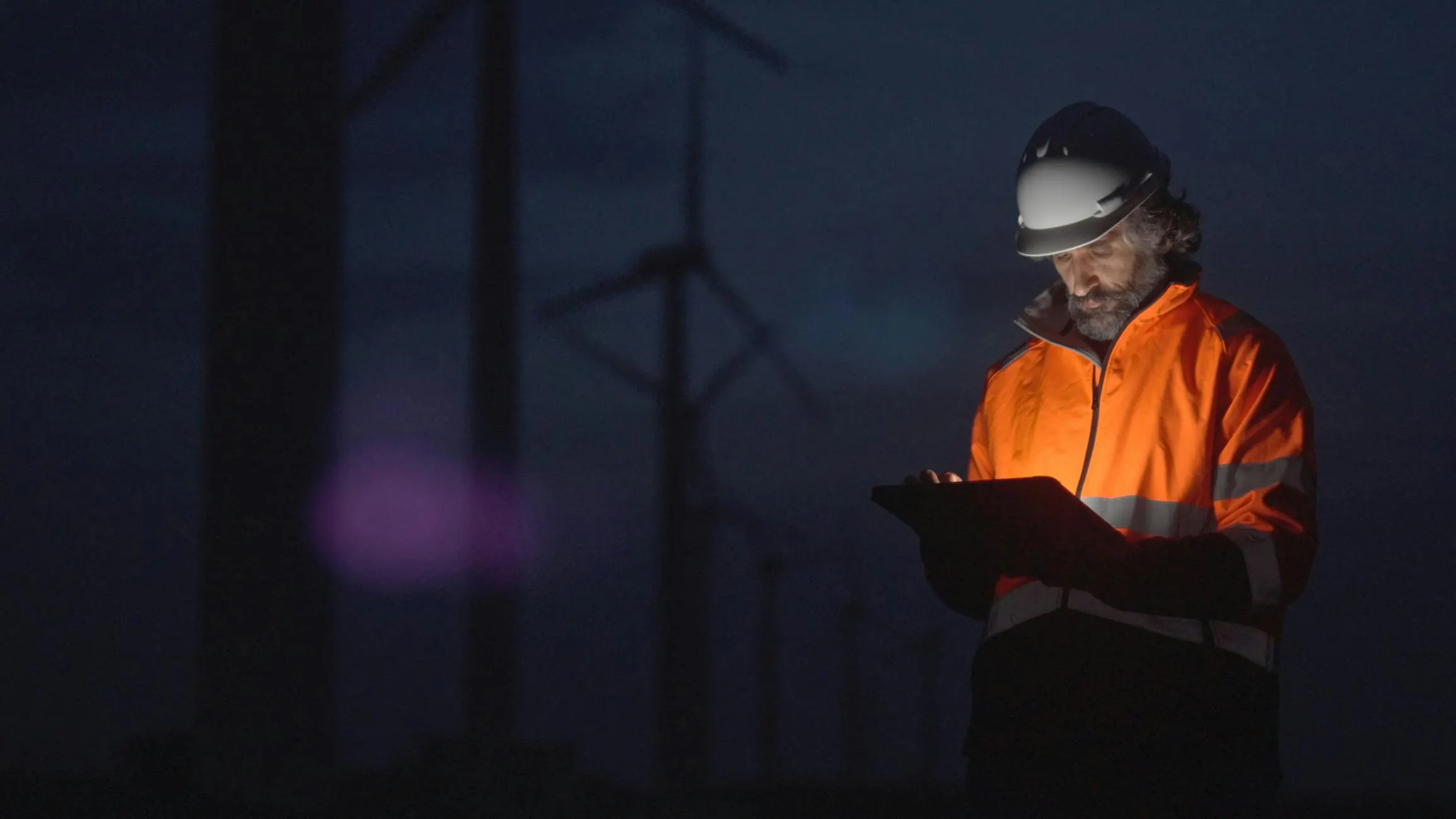
Binley: Offshore operators are increasingly integrating weather intelligence directly into their digital ecosystems, including asset management platforms and marine planning tools. This integration allows forecast data to be linked directly to operational thresholds, enabling automated alerts when conditions approach or exceed limits.
In some cases, this is evolving into semi-automated decision support, where systems can recommend actions such as delaying operations or adjusting schedules based on forecast conditions. AI-driven data delivery is playing a key role in this shift, allowing seamless integration into existing workflows.
While fully automated decision-making is still relatively limited, particularly for high-risk operations, there is a clear trend toward greater automation for routine planning and monitoring tasks, with human oversight retained where critical judgement is required.
Offshore: With extreme weather events increasing globally, what shifts are you seeing in how offshore energy operators are budgeting, planning or restructuring operations around climate risk?
Binley: With extreme weather becoming more frequent and less predictable, offshore energy operators are adapting both their planning processes and financial models. There is growing recognition that weather risk must be explicitly accounted for, leading to increased allocation of contingency time and budget within project planning.
Operators are also moving away from deterministic planning toward probabilistic approaches that consider a range of possible outcomes and associated risks. This has driven increased demand for longer-range forecasting and better insight into forecast uncertainty.
In parallel, climate variability is being factored into longer-term asset planning, influencing everything from installation strategies to maintenance scheduling.
Overall, the industry is shifting from a reactive approach to weather disruption toward a more proactive and risk-informed model of operations.
Want more content like this?
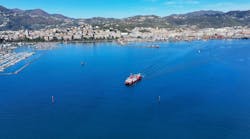
 Deepwater Atlas drillship
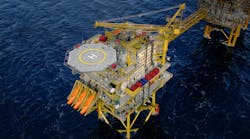 Tyra II
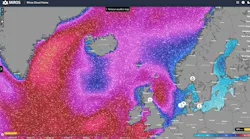 Windy visualization of waves are easily accessible on the miros.app.
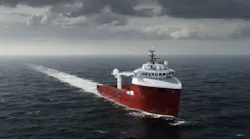 4 Subsea
About the Author
 Ariana Hurtado
Ariana Hurtado
Editor-in-Chief
With more than a decade of copy editing, project management and journalism experience, Ariana Hurtado is a seasoned managing editor born and raised in the energy capital of the world—Houston, Texas. She currently serves as editor-in-chief of Offshore, overseeing the editorial team, its content and the brand's growth from a digital perspective.
Utilizing her editorial expertise, she manages digital media for the Offshore team. She also helps create and oversee new special industry reports and revolutionizes existing supplements, while also contributing content to Offshore's magazine, newsletters and website as a copy editor and writer.
Prior to her current role, she served as Offshore's editor and director of special reports from April 2022 to December 2024. Before joining Offshore, she served as senior managing editor of publications with Hart Energy. Prior to her nearly nine years with Hart, she worked on the copy desk as a news editor at the Houston Chronicle.
She graduated magna cum laude with a bachelor's degree in journalism from the University of Houston.