Brazil’s CADE approves Saipem-Subsea7 merger

Brazil’s antitrust regulator has cleared the combination of Italian engineering giant Saipem and Subsea7, paving the way for the creation of Saipem7—a major global player in subsea oilfield services—while requiring the sale of a key vessel to address competition concerns.
On November 4, 2026, the Tribunal of the Conselho Administrativo de Defesa Econômica (CADE) approved the proposed merger through a Merger Control Agreement (Acordo em Controle de Concentrações). The decision was unanimous.
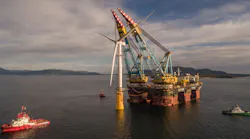
Under the terms, Saipem and Subsea7 must divest the pipelay and heavy-lift vessel Seven Borealis, a specialized unit capable of operating in deepwater and ultra-deepwater environments (including depths over 1,500 meters relevant to Brazil’s pre-salt fields).
The agreement includes provisions to protect the continuity of existing project backlogs and ensure that the buyer – the future purchaser of the Seven Borealis – can compete effectively for future contracts in Brazil.
Saipem stated that the divestiture is not expected to materially affect the strategic rationale of the deal or the previously announced synergies of roughly €300 million annually. The companies remain committed to closing the transaction and are working with remaining regulators.
Background and competition concerns
The combination, announced in July 2025, involves Subsea7 being absorbed into Saipem. The resulting Saipem7 would be headquartered in Milan, with shares listed in Milan and Oslo. It is projected to have annual revenues of approximately €21 billion and a combined backlog of around €43 billion.
CADE’s technical staff (Superintendência-Geral) had cleared the deal without conditions in June 2026. However, appeals from interested parties—including Petrobras, the Brazilian Association of Oil and Gas Exploration and Production Companies (ABEP), Exxon, and Technip Brasil—prompted the Tribunal to review the case.
Concerns centered on reduced rivalry in the market for SURF EPCI services (subsea umbilicals, risers, and flowlines—engineering, procurement, construction, and installation), particularly for deepwater and ultra-deepwater projects critical to Brazil’s offshore developments. The Tribunal concluded that the merger would eliminate close competition between two significant suppliers and that remedies were needed to preserve competitive pressure.
The Seven Borealis (built in 2012, roughly 182 meters long, with S-lay/J-lay capabilities and a large main crane) was identified as the appropriate asset to divest. No buyer has been named yet; it must be an independent, established industry participant, with CADE approval required for the sale terms.
Remaining regulatory path
Brazil’s conditional approval is a significant milestone (the companies have cleared most of the 16 jurisdictions involved, including the UK’s Competition and Markets Authority and Italian golden-power review, plus U.S. clearance). Outstanding reviews include the European Commission’s Phase II investigation (paused after an earlier deadline extension) and Australia’s ACCC Phase 2 review (determination period running into December). All conditions must generally be satisfied or waived by December 31, 2026, under the merger agreement, though extensions remain possible.
The deal consolidates two leading European offshore engineering and construction contractors at a time of strong activity in deepwater developments and energy transition projects. Industry observers note that while the Brazilian remedy is narrower than some opponents sought, it addresses localized capacity concerns without undermining the broader industrial logic of the combination.
About the Author
 Bruce Beaubouef
Senior Lead Reporter / Managing Editor
Bruce Beaubouef is Managing Editor for Offshore magazine. In that capacity, he plans and oversees content for the magazine; writes features on technologies and trends for the magazine; writes news updates for the website; creates and moderates topical webinars; and creates videos that focus on offshore oil and gas and renewable energies. Beaubouef has been in the oil and gas trade media for 25 years, starting out as Editor of Hart’s Pipeline Digest in 1998. From there, he went on to serve as Associate Editor for Pipe Line and Gas Industry for Gulf Publishing for four years before rejoining Hart Publications as Editor of PipeLine and Gas Technology in 2003. He joined Offshore magazine as Managing Editor in 2010, at that time owned by PennWell Corp. Beaubouef earned his Ph.D. at the University of Houston in 1997, and his dissertation was published in book form by Texas A&M University Press in September 2007 as The Strategic Petroleum Reserve: U.S. Energy Security and Oil Politics, 1975-2005.
Related