Eni and Petronas confirm Indonesia/Malaysia E&P joint venture
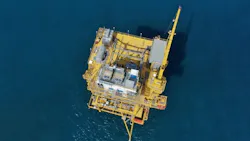
Eni and Petronas have formed Searah, a 50:50 joint venture that combines their respective E&P businesses in Indonesia and Malaysia.
It follows a memorandum of understanding announced in February 2025.
The combined portfolio comprises 19 gas-producing and development assets, 14 of which are in Indonesia and five in Malaysia, with an initial production base of more than 300,000 boe/d.
Within the next three years, they aim to increase production to more than 500,000 boe/d.
All regulatory, governmental and partner approvals are in place in Malaysia and Indonesia, with all conditions precedent fulfilled.
Want more content on this region?
Check out Offshore's Regional Reports: Asia section for more industry news, project updates and technology trends.
Eni CEO Claudio Descalzi said Searah was the first entity of its type in Southeast Asia.
Tengku Muhammad Taufik, president and group CEO of Petronas, added, “Searah is envisaged to bring the operational depth, financial resilience and growth capacity of both partners in addressing the region’s growing energy needs reliably and responsibly, even as it contributes toward the long-term security of supply in Indonesia and Malaysia."
The partnership has also secured a $6 billion Revolving Credit Facility to fund Searah’s growth plans, which include projects with an estimated overall price tag of more than $20 billion during the next five years.
The expenditure will develop more than 3 Bboe of discovered resources and address multibillion boe of additional exploration potential.
Eni Indonesia and Petronas Indonesia staff have transitioned to Searah, alongside the formation of Searah Malaysia as a dedicated entity that will manage the Malaysian interests.
The launch follows FIDs announced by Eni in March for the Gendalo and Gandang fields (South Hub), and Geng North and Gehem fields (North Hub) projects in the offshore Kutei Basin in eastern Indonesia.
These are targeting 10 Tcf of in-place gas and 550 MMbbl of associated condensate, with production set to start in 2028 and reach a plateau of 2 Bscf/d of gas and 90,000 bbl/d of condensate by 2029.
Exclusive content:
 Top 5 projects to watch -- operators advance field development plans
 LNG tanker and FLNG terminal in port.
 NAGA 5 rig
About the Author
 Jeremy Beckman
Jeremy Beckman
Staff Writer / Editor, Europe
Jeremy Beckman has been Editor Europe, Offshore since 1992. Prior to joining Offshore he was a freelance journalist for eight years, working for a variety of electronics, computing and scientific journals in the UK. He regularly writes news columns on trends and events both in the NW Europe offshore region and globally. He also writes features on developments and technology in exploration and production.