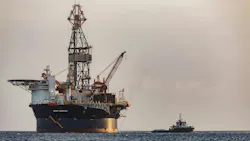
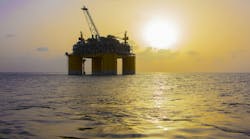
New Fortress Energy has sold two cylindrical semisubmersible rigs it bought from Seadrill in 2022 for demolition, closing a four-year effort to convert the units into floating LNG liquefaction plants.
VesselsValue demolition data lists the 2009-built Sevan Driller and 2012-built Sevan Brasil as sold for scrap this month. No price or recycling yard was disclosed.
NFE, led by Wes Edens, acquired the cold-stacked units cheaply in April 2022—$18 million for Sevan Driller and $6 million for Sevan Brasil—as Seadrill disposed of assets after its own Chapter 11 restructuring. The rigs were sold for non-drilling use.
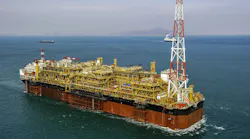
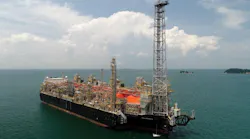
NFE later slotted them into its Fast LNG program. Singapore’s Sembcorp Marine (now Seatrium) signed agreements in 2022 for engineering, hull conversion, and integration of LNG topsides. Each converted unit was intended to host NFE-designed liquefaction capacity of about 1.4 million tonnes per year, with the first conversion once targeted for the first half of 2024.
Sevan Driller was earmarked for the Lakach deepwater gas project off Mexico with Pemex, where the converted hull would liquefy most of the field’s output. That plan collapsed. In its latest quarterly filing, NFE said it determined in 2025 that Lakach development was no longer probable; the project was among assets hit by a $123.1 million impairment.
The scrap sales coincide with a broader retreat from LNG expansion as NFE works through a major balance-sheet overhaul.
NFE spent years trying to build LNG-to-power infrastructure across the Americas but never generated free cash flow and piled up heavy debt amid project delays, cost overruns, and weak operations.
By late 2025 it lacked liquidity for interest payments. Total debt had reached roughly $8.9 billion at one point; the in-scope funded debt later targeted for restructuring was about $5.7 billion.
Rather than a US Chapter 11 filing, NFE used two English Part 26A restructuring plans—one of the largest such deals of its kind. A Restructuring Support Agreement won support from about 97% of creditors by value. The UK High Court sanctioned the plans on June 18–19, 2026; the US Bankruptcy Court for the Southern District of New York later recognized them under Chapter 15.
The transaction slashes corporate debt on the remaining “CoreCo”/New NFE business from about $5.7 billion to roughly $527.5 million (about a 91% cut). Creditors receive new debt, preferred equity, and a majority of common equity (about 65%), with existing shareholders retaining a minority stake.
Brazilian operations—terminals, power plants, and the Barcarena/Santa Catarina platform—are being separated into a creditor-owned private company often referred to as BrazilCo or Hygo. Implementation has been targeted for the third quarter of 2026, subject to remaining conditions.
NFE’s first Fast LNG unit off Altamira, Mexico, is operating. A second Fast LNG project is in doubt: the company has said it will not commit significant further capital after the restructuring and is seeking a third-party partner, with an estimated $750 million to $1.5 billion still needed to finish it.
Selling the unused Sevan hulls is a modest cash and cost-cleanup step after an ambitious conversion thesis failed and the company reset around a slimmer, creditor-driven capital structure.