US advances first deep-sea mining lease sale off American Samoa
Why this news matters:
-
The move could open a new chapter in US offshore resource development, with the federal government advancing what would be the nation’s first deep-sea mining lease sale. The decision may help shape future policy, permitting frameworks, and environmental oversight for seabed mineral extraction in US waters.
-
Critical minerals are increasingly viewed as strategically important for energy, defense, and technology supply chains. A successful lease sale could intensify debate over balancing resource security and economic opportunities against environmental concerns surrounding deep-ocean ecosystems.
The US Department of the Interior’s Marine Minerals Administration is moving forward with plans for the nation’s first commercial deep-sea mining lease sale in federal waters off American Samoa, targeting polymetallic nodules rich in critical minerals.
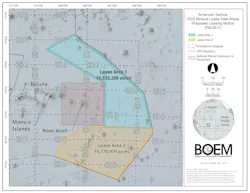
A proposed leasing notice issued in mid-July outlines an auction of two large blocks totaling more than 31 million acres, with a tentative sale date of November 19, 2026.
The proposed areas consist of one block of approximately 16.3 million acres and another of 15.1 million acres in the Outer Continental Shelf (OCS) off the eastern coast of Tau (part of the Manu’a Islands). Water depths range from about 1,400 to 6,000 meters (roughly 4,600 to 20,000 feet). The region borders the Cook Islands’ exclusive economic zone and lies roughly 57 miles from the Rose Atoll National Wildlife Refuge and Marine National Monument.
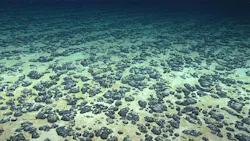
These potato-shaped polymetallic nodules on the seafloor contain nickel, cobalt, manganese, copper, and other minerals used in electric vehicle batteries, electronics, defense systems, and advanced manufacturing. The initiative stems from President Donald Trump’s 2025 executive orders aimed at boosting domestic critical minerals production and reducing reliance on foreign sources. It was initially prompted by an unsolicited lease request from California-based Impossible Metals in 2025.
Under the proposed terms, the competitive auction would be held at BOEM/MMA offices in Camarillo, California (closed to the public but livestreamed). Minimum bids are set at $3 million per block. Leases would run for 20 years, with royalty rates of 2% of mineral production value for the first five years and 5% thereafter. Initial leases would authorize preliminary activities such as geophysical surveys, biological sampling, and oceanographic measurements; any actual mining would require separate plans and further environmental reviews. Stipulations encourage lessees to hire American Samoans, use local businesses, and utilize the Port of Pago Pago.
American Samoa Governor Pulaali’i Nikolao Pula, an opponent of deep-sea mining, has a 60-day period to review and comment on the proposed notice. The territory maintains a moratorium on seabed mining in its own territorial waters (extending 3 nautical miles from shore). Local leaders, community organizations such as Fa’asao Amerika Samoa, and environmental groups have strongly opposed the federal plans, citing risks to marine biodiversity, fisheries central to Samoan culture and livelihoods (fa’a Samoa), tourism, and unknown deep-sea ecosystems. Tens of thousands of public comments on the earlier Request for Information largely opposed leasing.
On August 18, 2026, Earthjustice filed a lawsuit in the US District Court for the District of Hawaii on behalf of Fa‘asao Amerika Samoa and the Conservation Council for Hawai‘i. The suit challenges a National Marine Fisheries Service determination that the proposed leasing is “not likely to adversely affect” species protected under the Endangered Species Act, including multiple endangered whale and sea turtle populations, threatened corals, and other species. Plaintiffs contend that the review was inadequate and failed to fully assess potential impacts from exploration or future mining activities such as sediment plumes, noise, and habitat disturbance.
NOAA has conducted a roughly $20-million hydrographic survey of more than 30,000 square nautical miles in the area to map potential mineral deposits and characterize the environment, with samples confirming the presence of nodules. Supporters emphasize national security and supply-chain benefits, while critics—including scientists and international voices calling for moratoriums—warn of irreversible ecological harm in largely unexplored deep-sea habitats and question the economic viability given high costs and uncertain nodule grades relative to better-studied areas like the Clarion-Clipperton Zone.
Issuance of the proposed notice does not guarantee a sale or any extraction. A final leasing notice would be required at least 30 days before any auction. The process represents a significant step in US efforts to develop offshore critical minerals, with similar planning underway for other areas including the Commonwealth of the Northern Mariana Islands. Further developments, including the governor’s response, the lawsuit’s progress, and any final sale decision, will shape whether commercial deep-sea mining begins in US waters for the first time.
About the Author
 Bruce Beaubouef
Bruce Beaubouef
Senior Lead Reporter / Managing Editor
Bruce Beaubouef is Managing Editor for Offshore magazine. In that capacity, he plans and oversees content for the magazine; writes features on technologies and trends for the magazine; writes news updates for the website; creates and moderates topical webinars; and creates videos that focus on offshore oil and gas and renewable energies. Beaubouef has been in the oil and gas trade media for 25 years, starting out as Editor of Hart’s Pipeline Digest in 1998. From there, he went on to serve as Associate Editor for Pipe Line and Gas Industry for Gulf Publishing for four years before rejoining Hart Publications as Editor of PipeLine and Gas Technology in 2003. He joined Offshore magazine as Managing Editor in 2010, at that time owned by PennWell Corp. Beaubouef earned his Ph.D. at the University of Houston in 1997, and his dissertation was published in book form by Texas A&M University Press in September 2007 as The Strategic Petroleum Reserve: U.S. Energy Security and Oil Politics, 1975-2005.