Federal agencies create new framework for floating nuclear power platforms
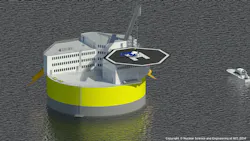
The Marine Minerals Administration (MMA) and the Nuclear Regulatory Commission (NRC) have signed a Memorandum of Understanding (MOU) to support the safe and responsible development of offshore nuclear energy projects on the US Outer Continental Shelf.
The agreement advances the Trump administration’s “Unleash American Energy” initiative and its goal of quadrupling US nuclear capacity by 2050.
Offshore nuclear facilities—primarily floating platforms or barges powered by advanced small modular reactors (SMRs)—offer compelling benefits that go well beyond simply avoiding onshore land-use conflicts, the agencies say. Experts highlight their potential to strengthen energy security, accelerate deployment, and enhance safety in marine environments.
Key advantages of offshore nuclear power
- Flexible siting and minimal land use: Eliminates the need for large coastal land parcels often hindered by local opposition, high costs, and regulatory delays. Plants can be positioned near high-demand coastal areas and connected via underwater cables, while reducing the footprint of emergency planning zones.
- Enhanced safety and cooling: Surrounded by an unlimited supply of seawater for passive and active cooling, floating designs significantly lower the risk of overheating or coolant loss incidents. They also demonstrate strong resistance to earthquakes and tsunamis due to the buffering effect of deep ocean waters.
- Faster, more efficient construction: Built in shipyards using modular, serial production techniques similar to offshore oil platforms, these facilities can be fabricated, assembled, towed to site, and deployed more quickly and cost-effectively than traditional onshore plants. They are also easier to relocate, refuel, refurbish, or decommission.
- Versatile applications: These types of facilities are ideal for powering remote coastal communities, decarbonizing offshore oil and gas operations, supporting desalination, hydrogen production, or providing reliable electricity for data centers and military installations.
- Scalability in federal waters: With nearly 3.2 billion acres of Outer Continental Shelf under US jurisdiction, offshore nuclear energy can expand clean energy options without competing for terrestrial space.
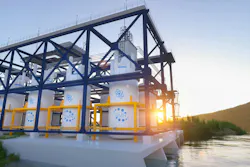
“Submerged reactor systems have been safely deployed in naval applications for decades, demonstrating their potential as a reliable source of energy in demanding marine environments,” said MMA Acting Director Matt Giacona. “This MOU is an important step toward building the technical expertise, regulatory clarity, and interagency coordination needed to assess whether and how this technology could be responsibly implemented.”
The MOU is designed to foster interagency cooperation, clarify jurisdictions, and provide regulatory certainty for potential industry applicants exploring these innovative technologies.
While challenges such as marine engineering requirements, environmental considerations, and operational logistics remain, proponents argue that modern SMR passive safety features and proven maritime nuclear experience position offshore nuclear as a promising pathway for America’s energy future.
Why this news matters:
The MMA-NRC agreement marks one of the first steps toward establishing a regulatory pathway for offshore nuclear power in US waters, potentially opening a new market that intersects offshore energy, maritime infrastructure and advanced reactor technology. For the offshore sector, floating small modular reactors (SMRs) could eventually provide low-carbon power for offshore oil and gas facilities, hydrogen production, desalination projects and remote coastal energy hubs—while leveraging expertise already developed in offshore engineering, fabrication and marine operations.
About the Author
 Bruce Beaubouef
Bruce Beaubouef
Senior Lead Reporter / Managing Editor
Bruce Beaubouef is Managing Editor for Offshore magazine. In that capacity, he plans and oversees content for the magazine; writes features on technologies and trends for the magazine; writes news updates for the website; creates and moderates topical webinars; and creates videos that focus on offshore oil and gas and renewable energies. Beaubouef has been in the oil and gas trade media for 25 years, starting out as Editor of Hart’s Pipeline Digest in 1998. From there, he went on to serve as Associate Editor for Pipe Line and Gas Industry for Gulf Publishing for four years before rejoining Hart Publications as Editor of PipeLine and Gas Technology in 2003. He joined Offshore magazine as Managing Editor in 2010, at that time owned by PennWell Corp. Beaubouef earned his Ph.D. at the University of Houston in 1997, and his dissertation was published in book form by Texas A&M University Press in September 2007 as The Strategic Petroleum Reserve: U.S. Energy Security and Oil Politics, 1975-2005.