Hai Long, East Anglia TWO among offshore wind projects reaching key milestones
Why this news matters:
-
Offshore wind developers are advancing projects through key construction, installation and commissioning milestones.
-
New contract awards and transmission initiatives signal continued investment across the offshore wind supply chain.
-
Technology, inspection and floating wind developments point to the sector's next phase of growth.
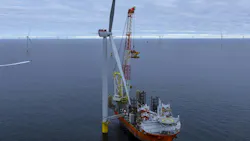
Progress on offshore wind developments in the UK, Netherlands, Taiwan, Australia and Japan includes turbine installations, cable landfall works, transmission planning, vessel awards and floating wind certification advances.
East Anglia TWO achieves major cable landfall milestone
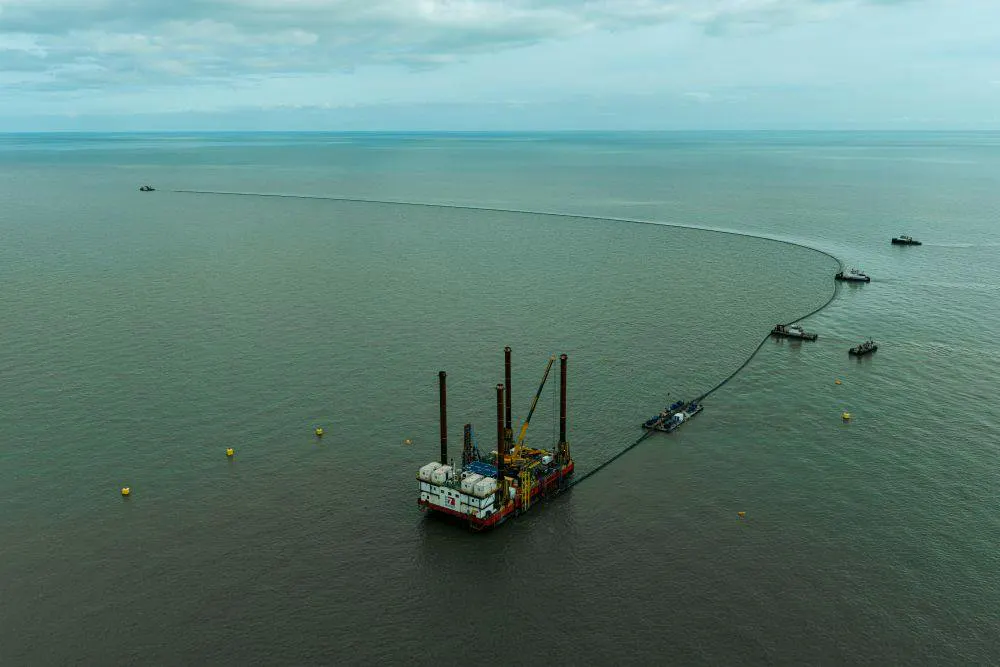
ScottishPower Renewables has completed a subsea drilling and duct pull-in operation at its £4-billion ($5.35 billion) East Anglia TWO offshore wind development in the UK southern North Sea.
The program, managed by OCU Group, with support from Peter McCormack & Sons, involved installing two cable ducts, manufactured by Pipelife.
These will provide protection for the high-voltage export cables transporting electricity from the 960-MW windfarm to the shore.
Horizontal Directional Drilling (HDD) was employed to drill under the Suffolk coastline and seabed in East Anglia.
According to ScottishPower Renewables, the program included the world's longest continuous single sections of extruded polyethylene ducts, measuring just under 1,800 m long and 800 mm.
The combination of these dimensions, the company added, makes the ducts the largest electricity transmission landfall of their type in the UK.
Ross Ovens, ScottishPower Renewables’ managing director for Offshore, said the HDD was three times the length of the company’s other East Anglia landfall projects.
“HDD is a complex engineering solution that goes deep beneath the ground to create an underground bore without the need to dig up beaches, dunes, cliffs or coastal habitats, minimising any disruption to the environment and sensitive landscapes. It's completed using rigs working onshore and offshore simultaneously.”
Martin Myhre, project manager at Pipelife Norway, said: “Producing the pipe through continuous extrusion meant we could manufacture it as one uninterrupted length, without the need for welding. This eliminates welded joints, resulting in a more robust and reliable solution for this demanding application.”
Following manufacture in Stathelle, Norway, the pipe was towed to Thorpeness in eastern England.
The first of the East Anglia TWO export cables should be installed next summer, with the wind farm set to be in commercial operation in late 2028. The location is 33 km from Southwold on the Suffolk coast.
Exclusive content:
 Offshore Wind Turbine Maintenance Vessel at Sea
Hai Long reaches full turbine installation milestone
Northland Power reported Oct. 15 that all 73 turbines at the Hai Long Offshore Wind Project have been installed and are generating power. The milestone marks a significant step toward full commercial operations for the project, one of the largest offshore wind developments underway in the Asia-Pacific region.
DEME awarded turbine installation scope at Zeevonk
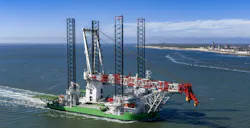
DEME has secured a contract to install 69 wind turbines at the Zeevonk offshore wind farm in the Netherlands. The turbines for Phase 1 will be installed by DEME’s Norse Energi jackup offshore transport and installation vessel.
Mobilization activities are scheduled to begin in 2028, with offshore operations starting shortly thereafter, DEME reported. The project is expected to reach completion in 2029.
The Zeevonk offshore wind farm project is jointly owned by Vattenfall and Copenhagen Infrastructure Partners (CIP) through its Energy Investment Fund I.
Ørsted moves to full ownership of Gunfleet Sands
To the south, Ørsted has taken up a buyback right for the 172-MW Gunfleet Sands 1 & 2 offshore wind farm, 7 km from the Essex coast. This will give the company outright ownership: the estimated consideration to the partners is around £15 million ($20 million).
Ørsted said the move would lead to greater flexibility in assessing future options, including a potential lifetime extension.
Seaway7 agreement advances Berwick Bank B development
SSE reported Oct. 20 that an agreement with Seaway7 for its Berwick Bank B offshore wind project is expected to support nearly 500 UK jobs. SSE’s preferred supplier agreement with Seaway7 covers the project’s engineering, procurement, construction and installation (EPCI) work. Subject to a final contract award, Seaway7 will design, supply and install offshore wind turbine foundations and subsea inter-array cables for Berwick Bank B, which is targeting construction in the outer Firth of Forth, about 38 km offshore Scotland.
ACCIONA joins Australian offshore wind transmission project
ACCIONA has been selected as a development partner for the Gippsland offshore wind 2-GW transmission project. The agreement is intended to support the planning and development of transmission infrastructure needed to connect future offshore wind generation to the country's electricity grid.
OEG to power Hornsea 3 commissioning activities
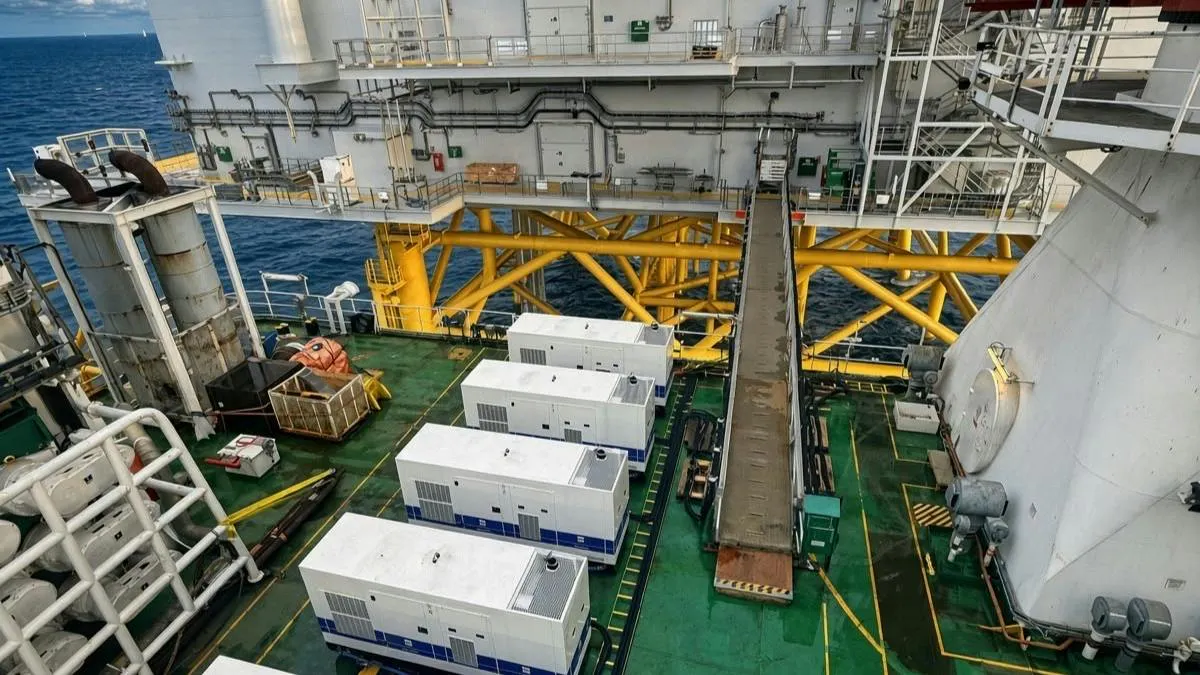
Ørsted has contracted OEG to provide temporary power to the Hornsea 3 wind farm off the Yorkshire coast of eastern England, both during offshore converter station commissioning work and the turbine installation/ commissioning phase.
Heerema Marine Contractors installed the two convertor stations last month.
OEG will supply power from a jackup vessel for converter station commissioning via five 200kVA and two 300kVA generators running in parallel. The total envisaged power supply is up to 1,400 kVA.
For the turbine installation and commissioning, the arrangement will be 150kVA generators paired with 3,000 liter mountable fuel tanks. OEG’s temporary power team previously supported the Hornsea 1 and Hornsea 2 construction phases.
Ørsted advances offshore inspection and logistics technologies
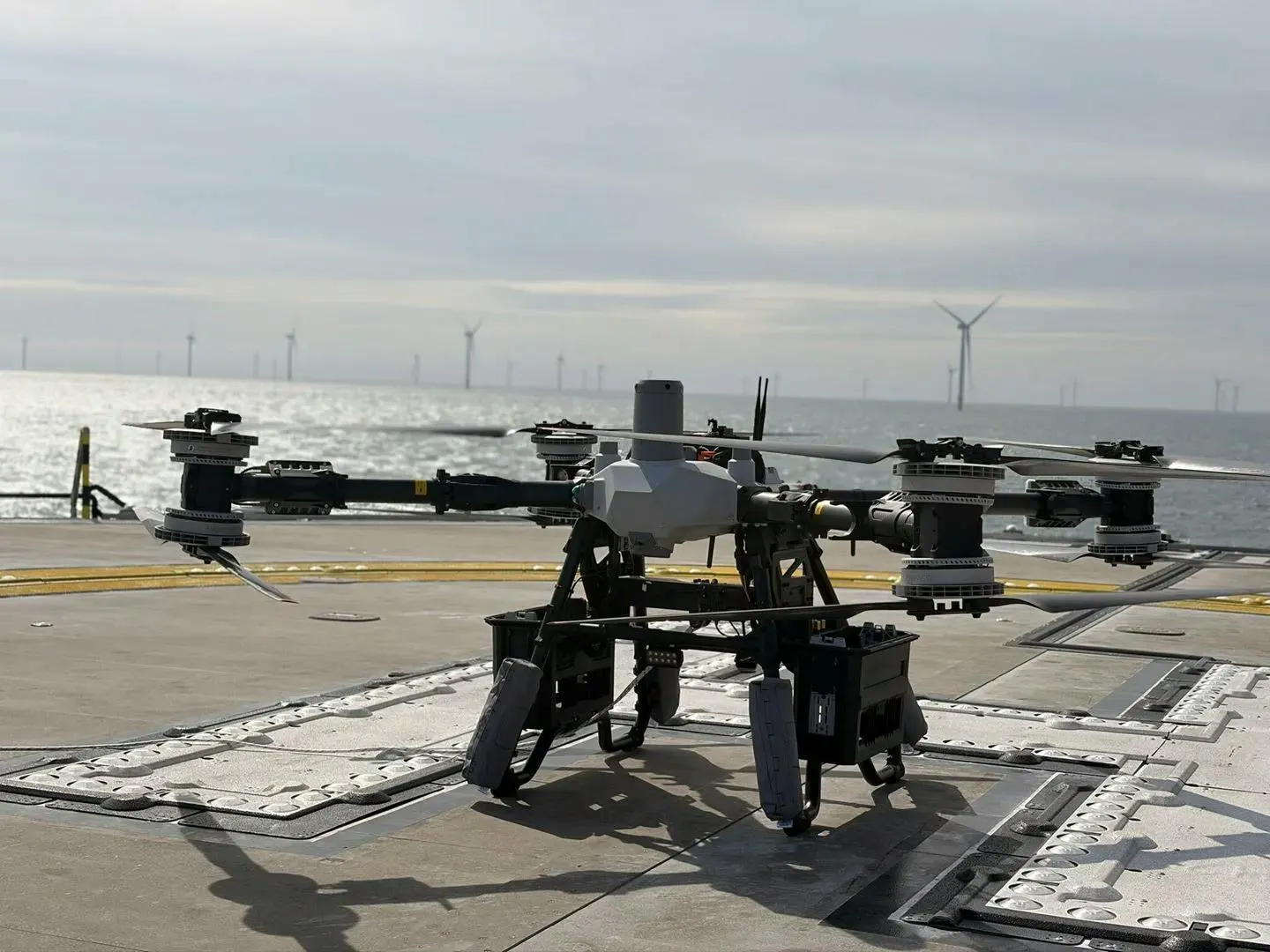
Separately, Saab UK reported Oct.12 that Ørsted has ordered a third Seaeye Cougar XT Compact electric remotely operated vehicle (eROV) to support subsea inspection, maintenance and survey activities at offshore wind assets.
Floating wind certification framework advances in Japan
DNV has received authorization to apply its floating offshore wind rules within Japan's regulatory framework, a move intended to support the development, certification and deployment of floating wind projects in the country. The authorization could help streamline project approvals and provide a recognized technical framework as Japan seeks to expand its floating offshore wind sector.
Related content:
 Kumagai Gumi deepens Japanese involvement in DemoSATH floating wind demonstrator
 Offshore wind substations Darß and Zingst installed in German Baltic Sea
About the Author
 Jeremy Beckman
Staff Writer / Editor, Europe
Jeremy Beckman has been Editor Europe, Offshore since 1992. Prior to joining Offshore he was a freelance journalist for eight years, working for a variety of electronics, computing and scientific journals in the UK. He regularly writes news columns on trends and events both in the NW Europe offshore region and globally. He also writes features on developments and technology in exploration and production.
Related
