First offshore OTEC floating platform prototype installed at Canary Islands test site
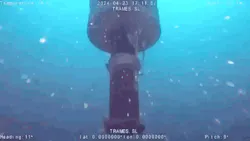
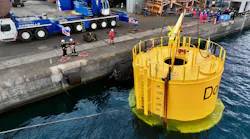
Global OTEC has installed a renewable energy floating platform prototype at a test site offshore the Canary Islands.
The technology is designed to deliver continuous renewable energy by exploiting the temperature difference in the ocean.
The OTEC system generates electricity by exploiting the temperature difference between warm surface water and cold deep ocean water. A previous small-scale demonstration had been conducted onshore at a site where existing deep ocean water intake facilities are available.
Offshore OTEC is said to provide the scale for generating substantial power for use in nearby islands through reducing the length of the pipe needed compared to onshore operations by 80%.
In most tropical island nations, power is mostly generated from diesel and heavy fuel oil, which are subject to volatile fuel prices and high energy costs.
Some island nations have wind and solar energy facilities, however the potential for expansion can be restricted due to a shortage of available land and problematic seabed conditions close to shore.
By operating offshore and exploiting the ocean’s natural temperature gradient, OTEC is said to provide continuous, baseload electricity.
The prototype floating platform was installed at the PLOCAN (Oceanic Platform of the Canary Islands) marine technology test site, which provides access to deep ocean water close to shore.
This is said to allow validation of system performance and environmental impact under realistic operating conditions. The prototype is part of a project funded by the European Union’s Horizon Europe initiative, which was awarded to a pan-European consortium led by Global OTEC in 2022.
Global OTEC has identified over 25 GW of existing fossil fuel capacity across tropical islands that could be replaced by its systems over time.
The PLOTEC project culminated this week with the deployment and connection of the vertical seawater intake riser, the most complicated procedure for establishing an offshore OTEC system.
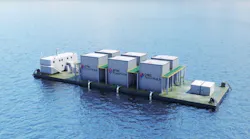
Global OTEC next plans to test the first OTEC Power Module in Hawai’i.
Related content:
 OTEC Power Modules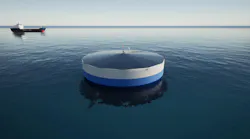
About the Author
 Jeremy Beckman
Jeremy Beckman
Staff Writer / Editor, Europe
Jeremy Beckman has been Editor Europe, Offshore since 1992. Prior to joining Offshore he was a freelance journalist for eight years, working for a variety of electronics, computing and scientific journals in the UK. He regularly writes news columns on trends and events both in the NW Europe offshore region and globally. He also writes features on developments and technology in exploration and production.
Related
