Passive heave compensator/shock absorber designed for lifting of upsized offshore wind structures
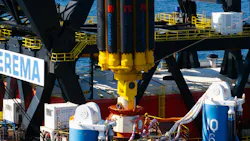
Cranemaster has developed what it claims is the world’s largest Passive Heave Compensator (PHC) and shock absorber, in collaboration with Heerema Marine Contractors.
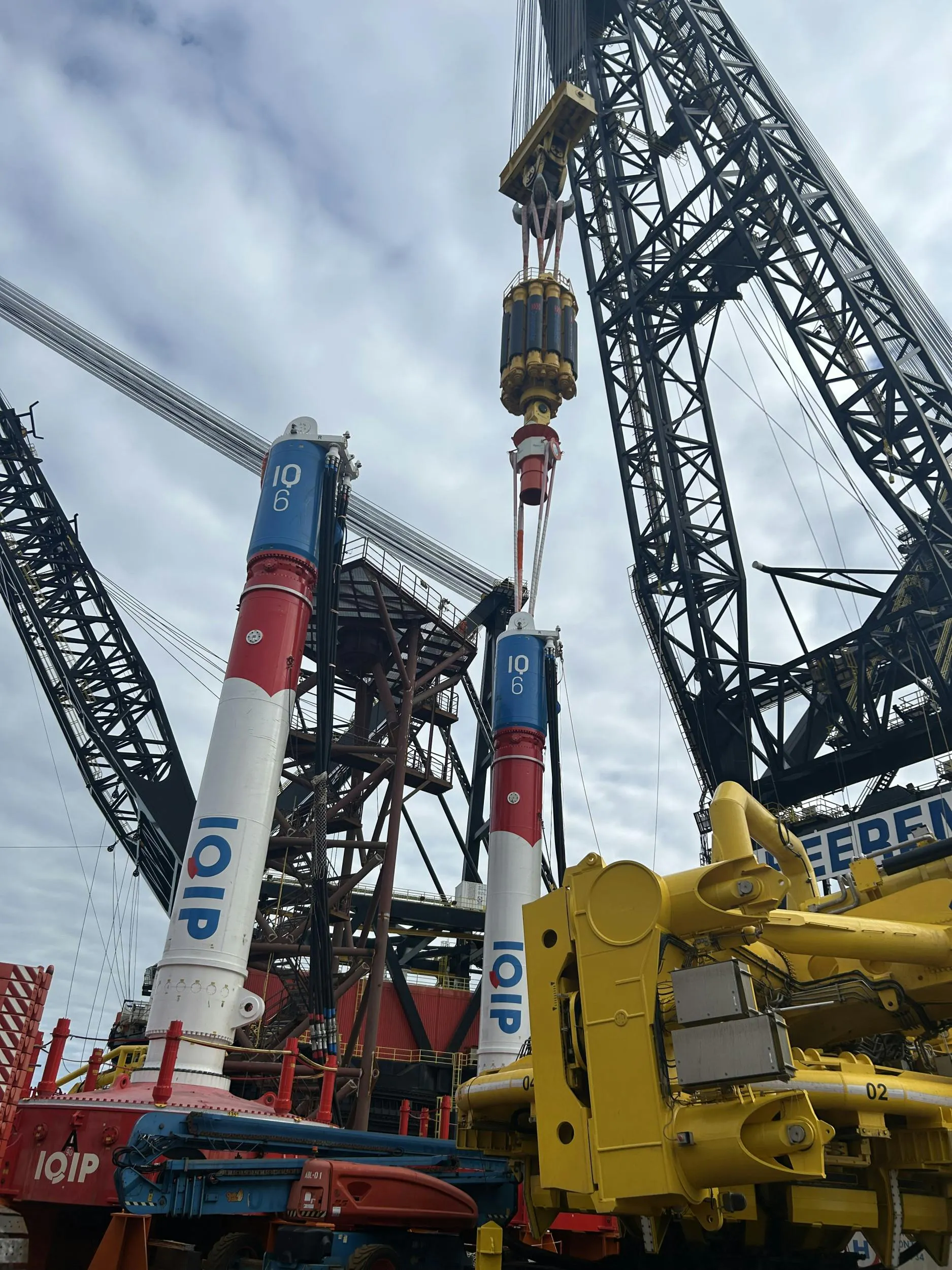
The CM3-3000T-5500-A system is designed to safely manage dynamic loads of up to 3,500mt during offshore lifting operations. It was engineered to suit the needs of increasingly scaled-up offshore wind installation projects.
The growing size and weight of the offshore structures are causing issues for installation contractors, Cranemaster said, exceeding traditional crane capacity/capabilities.
So the main challenge is no longer the static weight of the load alone, but also the dynamic forces induced by vessel motion and load interaction.
Heerema approached the company to develop the new passive heave compensation system to manage these extreme dynamic forces for some of its current and future offshore wind campaigns.
The CM3-3000T-5500-A is said to be capable of stabilising ultra-heavy loads while at the same time protecting cranes, rigging and structures from peak forces generated by vessel motion.
The new PHC absorbs shock loads and dampens vertical movement during lifting operation, enabling improved and sustained control of large structures in challenging offshore conditions, Cranemaster said.
By reducing peak loads and improving load stability, the system also expands operational weather windows, the company added, leading to improved overall safety margins during critical lifts.
The system has already been deployed in offshore wind installation projects, with further installation work planned later this year.
And deploying two CM3-3000T-5500-A systems in parallel creates an unprecedented combined 6000-mt passive heave compensation and shock absorption system, the company said.
This would enable safe and controlled lifting of some of the largest offshore structures ever installed, including offshore jackets and topsides; large offshore wind foundations and monopiles; floating offshore wind structures; heavy subsea infrastructure.
The dual-unit configuration could also suit large-scale decommissioning, allowing entire structures to be lifted and removed intact, with no prior need for cutting and sectional removal.
Another proposed application is providing run protection during the installation of larger foundations and piles, controlling dynamic loads and protecting equipment.
Prior to starting service offshore, the CM3-3000T-5500-A underwent full-scale trials in Norway that included extreme vertical load cycles, dynamic response behavior and structural verification under simulated wave-induced motion.
Physical testing and advanced simulations were applied for validation purposes, ensuring compliance with international offshore lifting standards.
About the Author
 Jeremy Beckman
Jeremy Beckman
Staff Writer / Editor, Europe
Jeremy Beckman has been Editor Europe, Offshore since 1992. Prior to joining Offshore he was a freelance journalist for eight years, working for a variety of electronics, computing and scientific journals in the UK. He regularly writes news columns on trends and events both in the NW Europe offshore region and globally. He also writes features on developments and technology in exploration and production.
Related
