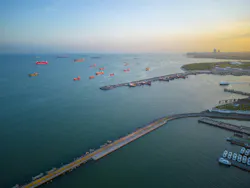
Turkiye's offshore wind sector moves from planning to execution

Turkiye is laying the groundwork for an offshore wind industry, but achieving its 5-GW target by 2035 will depend on project execution, infrastructure investment and continued policy support, according to GlobalData.

Key highlights:

  • Turkiye aims to install 5 GW of offshore wind capacity by 2035, although current forecasts indicate about 1.3 GW could be operating by then.

  • Authorities are preparing a 1-GW offshore wind tender covering priority development zones in the Aegean region.

  • Grid expansion, port upgrades, financing mechanisms and streamlined permitting will be critical to scale the sector.


By Attaurrahman Ojindaram Saibasan, GlobalData


Turkiye is close to tapping into its offshore wind potential. The country has set big goals and the first real steps are starting to take shape, but the road to 2035 will bring both major opportunities and real hurdles.

Big goals, realistic expectations

Strong wind resources, but tricky geography

Turkiye’s technical offshore wind potential is estimated at about 75 GW, especially along the Aegean coast and in the northwest where wind speeds are strong. The challenge is that many of these areas are in deeper water (more than 50 m), which makes traditional fixed foundations harder and increases the importance of floating wind technology.

On top of that, projects will need to avoid or carefully manage constraints like shipping routes, bird migration paths, naval zones and protected marine areas since these can slow permitting or stop projects altogether.

Investment and policy tools that can unlock progress

So far, most energy investment has gone into solar, onshore wind and nuclear energy. Offshore wind spending is only beginning to show up in a meaningful way in forecasts for the late 2020s. To make offshore wind more bankable, upcoming tenders are expected to include tools like long-term power purchase agreements (PPAs), local content requirements, tariff indexation to protect against inflation and currency swings, and clearer rules for hybrid projects and storage measures meant to reduce risk and attract investors.

Ports and grid upgrades are critical

Offshore wind can’t scale without major enabling infrastructure. Many likely project sites are far from where most electricity demand sits, so Turkiye will need new transmission lines, upgraded substations and possibly offshore export cables.

Ports also need to be ready, as handling offshore turbines requires large dock space, heavy-lift cranes, storage yards and assembly areas.

Better wind forecasting, seabed surveys and environmental studies will also play a big role in financing decisions and project schedules.

Priorities for industry stakeholders

Developers: Gather early site and environmental data, and prepare bids before competition ramps up.

Ports and logistics companies: Start expanding capacity—more dock space, heavier lifting equipment and larger staging/storage areas.

Investors and lenders: Structure deals to manage inflation and FX risk, and build multiple revenue sources (e.g., PPAs, grid services, hybrid setups).

Regulators and policymakers: Shorten permitting timelines, coordinate maritime/environment/energy authorities, and align grid expansion plans with offshore zones.

Ambition versus delivery

Turkiye’s offshore wind market is moving from idea to execution. The 5-GW target by 2035 is aggressive, but not impossible if policy, grid upgrades, ports and project delivery all move quickly. While current projections suggest closer to 1.3 GW by 2035 under today’s conditions, that’s better seen as a signal to speed up, not a fixed ceiling. For companies willing to move early with strong engineering, flexible execution and smart financing, Turkiye could become a serious new offshore wind market.
About the Author

Attaurrahman Ojindaram Saibasan

Attaurrahman Ojindaram Saibasan

Attaurrahman Ojindaram Saibasan is a senior research analyst in the Power department at GlobalData Plc. He has 10+ years of market research experience, including 5+ years specializing in the power sector.

Sign up for our eNewsletters
Get the latest news and updates