Inside the cable: How continuous monitoring is rewriting offshore wind reliability
Key highlights:
- Subsea power cables face mechanical stresses from environmental factors like tidal currents, seabed mobility and biofouling, which can cause unnoticed degradation and early failures.
- Continuous fiber-optic DAS monitoring provides real-time data on strain, vibration and mechanical loading, helping operators predict failures and plan targeted interventions.
- Data analytics translate large volumes of sensing data into actionable insights, enabling shift from reactive repairs to proactive maintenance strategies.
- Integration of cloud-based monitoring systems with existing infrastructure is streamlined through repurposed optical fibers and secure, low-bandwidth data transmission, with cybersecurity considerations ensuring data integrity.
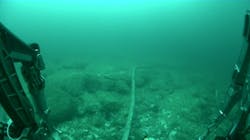
Subsea power cables remain one of the offshore industry’s most persistent reliability challenges, with fatigue, abrasion, seabed mobility and storm loading often causing failures long before its intended design life. At the same time, operators face growing pressure from regulators, insurers and investors to demonstrate proactive cable stewardship and reduce the operational and financial risks tied to unplanned outages.
Indeximate, a UK specialist in fiber‑optic cable monitoring, is addressing this by applying distributed acoustic sensing (DAS) to the optical fibers already built into subsea power cables. This enables continuous measurement of strain, vibration and mechanical loading along the full cable length, without new subsea hardware.
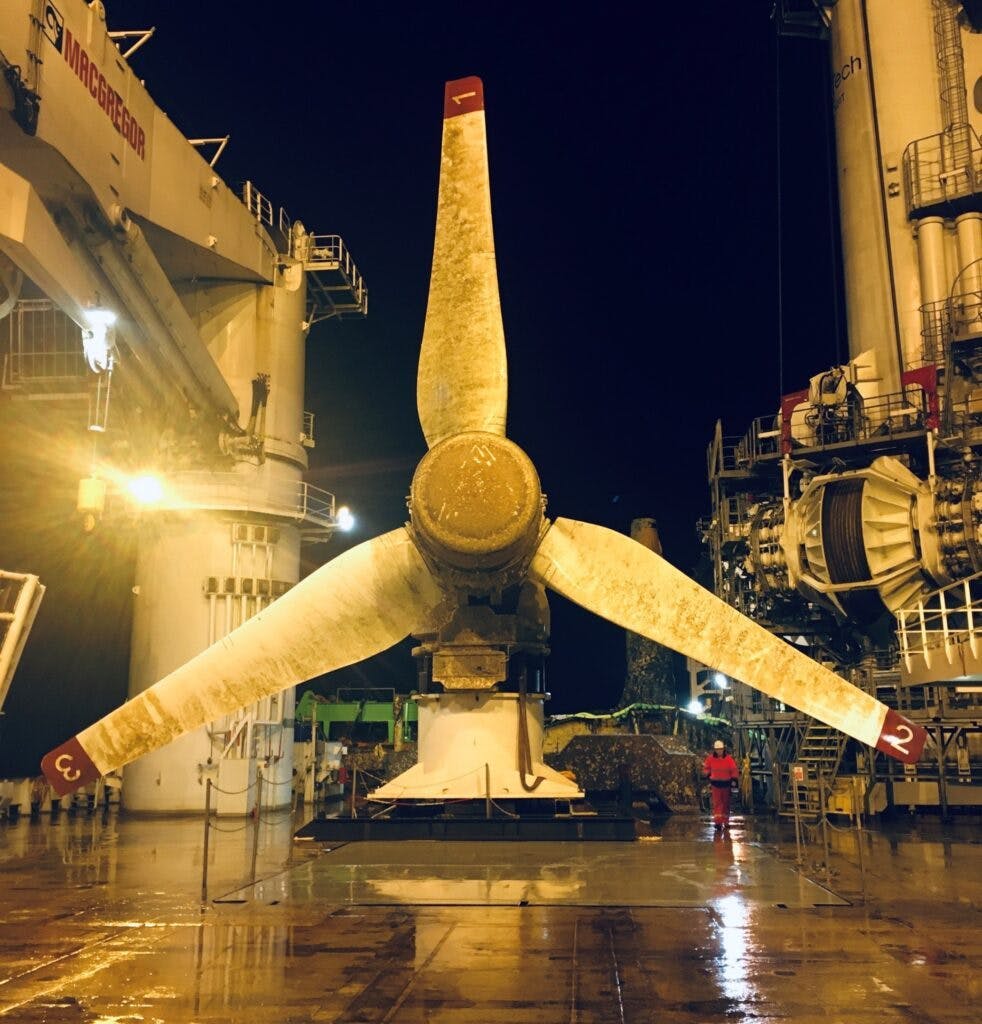
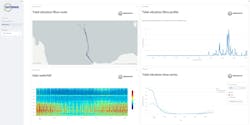
The company recently supported MeyGen’s tidal array in Scotland’s Pentland Firth, using long‑term, cloud‑based monitoring to capture cable behavior in one of the world’s harshest marine environments. Lessons from the project (e.g., the value of long-duration data, the need for efficient data compression and the benefits of high-resolution health profiles) now inform Indeximate’s approach to offshore wind portfolios.
In this interview, Dr. Chris Minto, director and founder of Indeximate, discusses the mechanics of cable degradation, the evolution of digital monitoring and how continuous sensing is reshaping subsea cable integrity management.
Offshore: What are the primary engineering challenges associated with subsea cable integrity?
Dr. Minto: Subsea power cables operate in some of the most mechanically demanding environments in offshore engineering, where long-term structural behavior, rather than electrical performance, is the dominant integrity challenge. Fatigue, abrasion, vibration and cyclic strain accumulate over years as cables respond continuously to tidal currents, wave loading, gravity effects and interaction with the seabed. These stresses are not static or uniform but evolve as environmental conditions and burial states change.
Crucially, degradation tends to concentrate at specific high-risk locations such as touchdown points, within cable protection systems, inside monopiles and at transitions between buried and exposed sections. Many of these regions are either inaccessible or extremely difficult to inspect using conventional survey techniques and historically have been invisible once assets are commissioned. As a result, damage can accumulate unnoticed until it manifests as a sudden failure, often long before the cable reaches its intended design life.
Offshore: How does real-time health monitoring of subsea cables improve operational reliability and reduce unplanned maintenance offshore?
Dr. Minto: Instead of relying on periodic inspections that provide only isolated snapshots, continuous health monitoring builds a profile of cables over months and years to show how fatigue, movement and vibration evolve in response to tides, storms and seasonal transitions.
Cable strain is inherently non-linear, with most fatigue damage accumulating during relatively short periods of elevated metocean loading. A small number of severe winter storms can therefore contribute disproportionately to overall cable degradation.
Understanding how close a cable is to fatigue limits at any point is critical. From this long-term health profile, we can identify risks and emerging faults and predict when failure may occur. In essence, we’re helping cable operators buy very valuable time.
This insight allows operators to manage risks early, often well before damage becomes critical. By understanding how loading is accumulating, operators can proactively manage cable load and health, plan inspections more precisely and schedule intervention during periods of lower generation and suitable weather. The result is fewer unplanned outages, reduced exposure to emergency repair campaigns that require specialist vessels and greater control over operational risk across the asset lifecycle.
Offshore: What role do data analytics play in predicting cable fatigue and failure modes under dynamic marine loading conditions?
Dr. Minto: Data analytics are essential for translating high-volume sensing data into actionable engineering insight. Short-term monitoring can identify individual events, but only long-term datasets reveal the cumulative processes that lead to failure, such as gradual increases in vibration amplitude, evolving strain response or subtle changes in how cables react under specific combinations of wave direction, current velocity, power loading and effects of unpredictable storms.
This approach has been applied on operational offshore wind assets, including work with RWE, where continuous fibre-optic monitoring was used to observe strain, vibration and fatigue behavior on subsea power cables through winter storm conditions in the Baltic Sea. The monitoring included traditionally hard-to-inspect regions, such as cable protection systems and monopile interfaces, providing insight into how mechanical loading accumulates under real operating conditions.
By correlating cable behavior with metocean conditions, analytics make it possible to distinguish between normal operational response and early indicators of deterioration. Fatigue and abrasion can then be tracked as progressive mechanisms rather than isolated incidents, allowing operators to quantify risk trends over time and move from reactive fault response to planned, predictive maintenance.
This conceptual leap from reaction to prevention often saves cable stakeholders substantially in unplanned repair costs and, more importantly, avoidance of downtime and lost revenues—expenses that can rapidly escalate into very large, system-level losses.
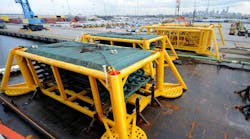 subsea equipment lifted from Appleton Docks to a heavy lift barge
Offshore: Can you explain the integration process of cloud-based monitoring systems with existing offshore infrastructure, and what cybersecurity considerations come into play?
Dr. Minto: Cloud-based subsea cable monitoring can be integrated with existing offshore infrastructure with minimal physical intervention because the primary sensor already exists within the asset itself. Modern subsea power cables typically contain multiple optical fibers, originally installed for communications or control, which can be repurposed for condition monitoring without interrupting power transmission. An optical interrogator unit is installed onshore and connected to one end of the cable, where it converts the fiber into a continuous sensing element. In many cases, multiple cables, such as inter-array circuits, can be daisy-chained together to maximize the use of a single interrogator, reducing hardware requirements.
At the onshore substation, a compact rack-mounted processing unit continuously reads and compresses the raw sensing data in real time. This compressed data is then transmitted over a low-bandwidth connection supplied by the asset owner to Indeximate’s secure cloud environment, where all analytics and long-term processing take place. This approach avoids the need to move large volumes of raw data offshore or to deploy additional subsea equipment.
From a cybersecurity perspective, the architecture aligns with established industrial data practices: power transmission remains physically isolated, data flows are one-directional and integration with client systems is handled through secure APIs. This allows asset owners to retain control over how monitoring outputs are consumed, whether through direct integration into existing asset management systems or via standalone reporting and analytics tools.
Similar monitoring principles are also being applied on electricity distribution networks. In work with SSEN, continuous fiber-optic sensing has been used to monitor subsea interconnectors serving island communities in Orkney, including routes exposed to extreme tidal flows, to support long-term cable health assessment and network resilience planning.
Offshore: How do environmental factors, such as tidal currents, seabed composition and biofouling, impact subsea cable performance and monitoring strategies?
Dr. Minto: Environmental conditions directly influence how cables degrade over time, often in ways that are difficult to capture through modeling alone. Strong tidal currents can prompt vortex-induced vibration and cyclic bending, while mobile sediments can expose previously buried sections, increasing abrasion risk. Changes in seabed composition can alter how cables interact with protection systems, and biofouling can modify hydrodynamic response, amplifying loading under certain conditions.
Effective monitoring strategies therefore need to account for site-specific and seasonal variability. Continuous, distributed sensing allows operators to observe how environmental forces translate into real mechanical stress on the cable, providing evidence-based insight rather than relying solely on modelling assumptions.
Offshore: How do you see subsea monitoring evolving to meet emerging regulatory standards for offshore renewables and grid reliability?
Dr. Minto: As offshore renewable capacity grows, subsea power cables are increasingly recognized as critical to national infrastructure, and expectations around asset integrity are rising. Regulators and insurers are therefore placing greater emphasis on long-term asset stewardship through data transparency and demonstrable risk management. Monitoring is expected to evolve from an optional enhancement to a standard component of cable integrity management.
Continuous, evidence-based monitoring supports this shift by providing auditable records of asset condition and deterioration trends over time. This is increasingly relevant as insurers and system stakeholders seek clearer evidence of how subsea cable risks are understood and managed.
The lack of standards for cable health monitoring is holding back progress – insurers have nothing to mandate, and owners have little guidance to follow. Indeximate joined forces with GUH [Global Underwater Hub] to co-author a new standard in 2025 to tackle this vacuum. A first edition was published in September 2025 with an update expected in May 2026.
Offshore: What are the key considerations for scaling subsea monitoring solutions across multi-gigawatt offshore wind developments?
Dr. Minto: Scaling monitoring across large offshore wind portfolios requires approaches that minimize the complexities of the subsea conditions and environment to maximize insight. Key considerations include reducing reliance on additional subsea hardware, leveraging existing fiber infrastructure and managing very large datasets efficiently. Insights must also be delivered in a form that is intuitive for cable stakeholders and supports prioritization across the entire cable network rather than isolated assets.
Cloud-based analytics and automated processing are essential to scale monitoring from individual assets to entire portfolios, enabling operators to prioritize intervention across dozens or hundreds of cable sections based on quantified risk.
Offshore: In your view, how will AI and machine learning transform predictive maintenance for subsea assets over the next decade?
Dr. Minto: AI and machine learning will increasingly automate the interpretation of long-term monitoring data, allowing subtle trends and correlations to be identified that would be extremely difficult to detect through manual analysis alone. As larger and more diverse datasets become available, these tools will improve their ability to recognize early indicators of degradation, reduce uncertainty in predictions and extend the lead time for corrective action.
One of the most significant benefits is the creation of planning time. By identifying deterioration earlier, operators can move from an emergency response into a planned activity, with clear operational and financial advantages. AI plays an important role in supporting this shift by assisting with automated analysis, interpretation and reporting. While expert review remains essential today, the long-term objective is for AI-supported reporting to achieve the same level of reliability and insight as manually quality-controlled outputs, enabling monitoring programs to scale without a corresponding increase in cost.
At a more technical level, AI and machine learning are particularly valuable in areas where pattern recognition outperforms traditional physics-based modeling. Applications such as vessel detection and activity classification are well suited to data-driven approaches, complementing deterministic models and improving the overall robustness of predictive maintenance systems.
About the Author
 Ariana Hurtado
Ariana Hurtado
Editor-in-Chief
With more than a decade of copy editing, project management and journalism experience, Ariana Hurtado is a seasoned managing editor born and raised in the energy capital of the world—Houston, Texas. She currently serves as editor-in-chief of Offshore, overseeing the editorial team, its content and the brand's growth from a digital perspective.
Utilizing her editorial expertise, she manages digital media for the Offshore team. She also helps create and oversee new special industry reports and revolutionizes existing supplements, while also contributing content to Offshore's magazine, newsletters and website as a copy editor and writer.
Prior to her current role, she served as Offshore's editor and director of special reports from April 2022 to December 2024. Before joining Offshore, she served as senior managing editor of publications with Hart Energy. Prior to her nearly nine years with Hart, she worked on the copy desk as a news editor at the Houston Chronicle.
She graduated magna cum laude with a bachelor's degree in journalism from the University of Houston.
Related
