US Interior Department proposes updates to Arctic Exploratory Drilling Rule
Why this news matters:
-
The proposal signals a potential shift in how Arctic offshore exploration is regulated, with the Department of the Interior seeking to streamline requirements while maintaining safety and environmental protections. Any changes could influence future operator interest in Alaska's offshore frontier acreage.
-
Although Arctic drilling activity remains limited, the rule update underscores the federal government's continued focus on preserving a regulatory framework for offshore exploration in the region, where resource potential, environmental concerns, and energy security objectives often intersect.
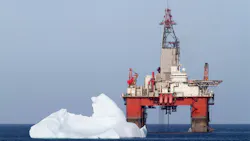
The Department of the Interior has announced a proposed rule through the Marine Minerals Administration designed to modernize and refine federal regulations governing exploratory oil and gas drilling on the Arctic Outer Continental Shelf.
The proposal would make targeted revisions to the 2016 Arctic Exploratory Drilling Rule finalized in the Obama administration. That earlier rule was written largely in response to problems encountered during Shell’s 2012 Arctic exploration campaign and imposed stricter requirements for operations in the remote, ice-prone Beaufort and Chukchi Seas. Interior now seeks to reduce what it describes as “unnecessary regulatory burdens,” improve clarity and operational efficiency, and better reflect technological advancements and implementation experience since 2016.
The Department of the Interior’s proposed updates would revise specific provisions of that framework, drawing on lessons learned from implementation of the 2016 rule, advances in technology, and stakeholder input received during prior rulemaking efforts.
Under the proposal, the Marine Minerals Administration would update requirements related to blowout preventer real-time monitoring; Arctic source control and containment equipment; relief rig capability; subsea isolation devices; mudline cellars; oil spill response plan-holder reviews; crane operations on artificial islands; and suspensions of operations and production.
The proposal would also revise portions of Exploration Plan and Development and Production Plan regulations, including removing the separate Integrated Operations Plan requirement while retaining key Arctic planning information through the Exploration Plan process. The DOI says the proposed revisions maintain the highest commitment to safe operations.
The proposed rule is designed to provide operators with clearer, more flexible compliance options while preserving federal authority to review, approve, condition, or require additional safeguards for proposed Arctic Outer Continental Shelf activities. The proposal does not approve any specific lease sale, exploration plan, permit, or drilling activity.
“The Alaskan Outer Continental Shelf contains some of America’s most promising offshore resources,” said Marine Minerals Administration Acting Director Matt Giacona. “These targeted updates would provide clear, practical compliance options for Arctic Outer Continental Shelf exploration while preserving safeguards to protect workers, the environment and Alaska’s precious natural resources.”
The Marine Minerals Administration (the recently consolidated agency that absorbed the former Bureau of Ocean Energy Management and Bureau of Safety and Environmental Enforcement) says it will continue to evaluate any proposed Arctic Outer Continental Shelf operations through established federal review processes, including environmental review, exploration plan review, permit review, oil spill response plan review, inspections, and compliance oversight. Existing statutory authorities, regulatory protections, and public engagement opportunities remain in place.
The proposed rule will be published in the Federal Register, initiating a 90-day public comment period.
About the Author
 Bruce Beaubouef
Bruce Beaubouef
Senior Lead Reporter / Managing Editor
Bruce Beaubouef is Managing Editor for Offshore magazine. In that capacity, he plans and oversees content for the magazine; writes features on technologies and trends for the magazine; writes news updates for the website; creates and moderates topical webinars; and creates videos that focus on offshore oil and gas and renewable energies. Beaubouef has been in the oil and gas trade media for 25 years, starting out as Editor of Hart’s Pipeline Digest in 1998. From there, he went on to serve as Associate Editor for Pipe Line and Gas Industry for Gulf Publishing for four years before rejoining Hart Publications as Editor of PipeLine and Gas Technology in 2003. He joined Offshore magazine as Managing Editor in 2010, at that time owned by PennWell Corp. Beaubouef earned his Ph.D. at the University of Houston in 1997, and his dissertation was published in book form by Texas A&M University Press in September 2007 as The Strategic Petroleum Reserve: U.S. Energy Security and Oil Politics, 1975-2005.