Enhancing offshore safety and readiness with digital immersive training in the US Gulf of Mexico
Key highlights:
- Immersive digital training enables offshore personnel to practice tasks and hazard recognition in consequence-free environments, improving safety and readiness.
- High engagement levels are evidenced by repeat participation, with more than 75% of crew members returning for multiple sessions, indicating relevance and effectiveness.
- Structured debriefs and realistic scenarios help reinforce safety protocols, decision-making and communication skills crucial for offshore success.

By Paulo Moritz, Noble Corp.
Offshore activity in the US Gulf continues to be shaped by evolving workforce dynamics and a sustained focus on safe and reliable execution. In this environment, digital tools are increasingly being used to support safety performance and workforce readiness by preparing personnel for operational realities before they encounter them offshore.
One area of growing adoption is digitally enabled training, particularly immersive learning technologies. Rather than relying solely on classroom instruction or learning that occurs for the first time offshore, many operators and contractors active in the region are using digital tools to shift critical training earlier in the work cycle. This approach reduces exposure to risk, improves readiness and shortens the time required for personnel to perform effectively in safety‑critical roles.
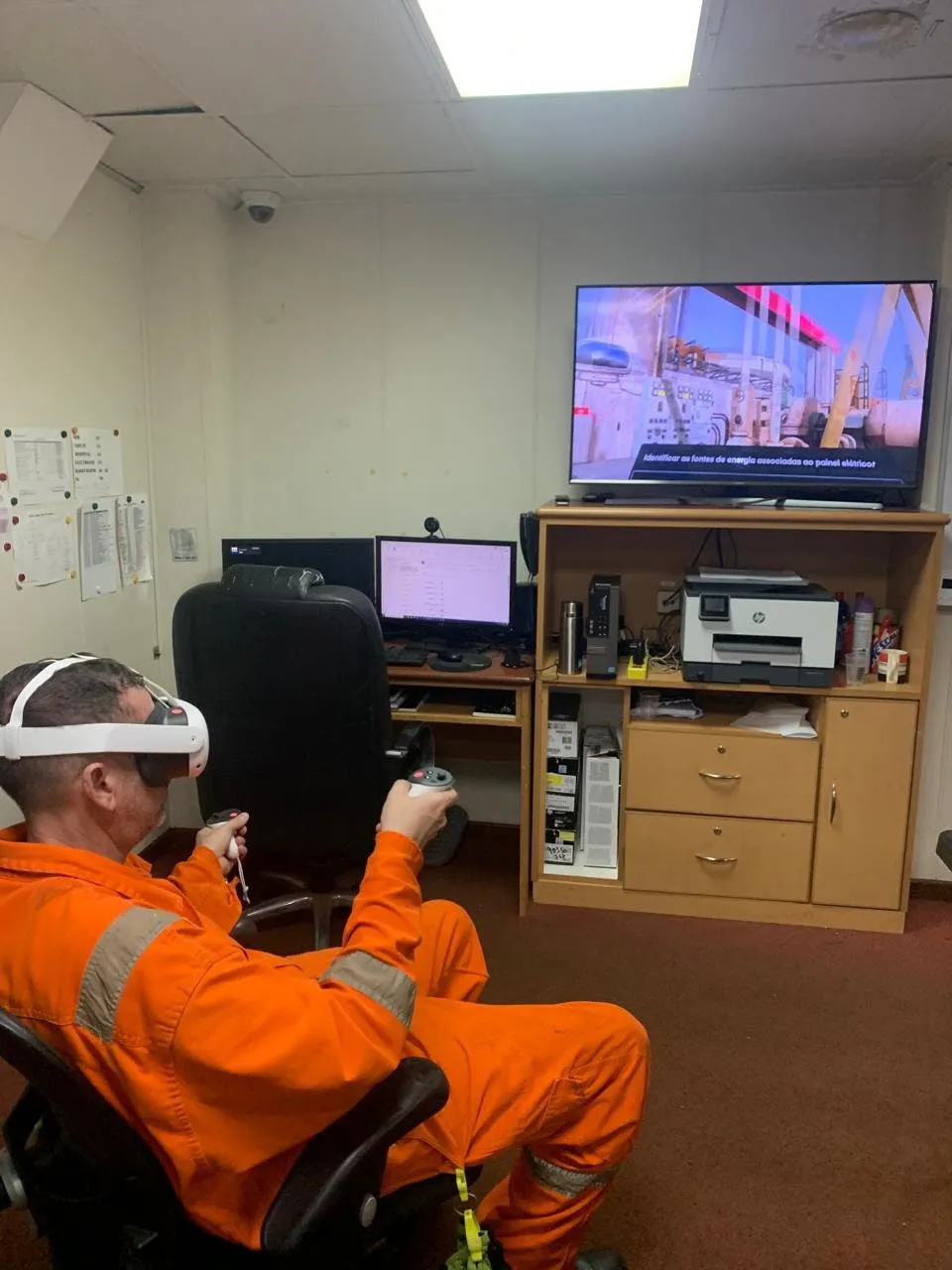
At Noble, virtual reality has been integrated into a broader digital training and performance framework designed to support safety, operational consistency and asset performance across local offshore operations. The emphasis is not on technology for its own sake, but on practical applications that mirror offshore conditions and reinforce expected behaviors before personnel arrive on the rig.
Immersive training environments are designed to closely reflect offshore workspaces, equipment layouts and operational scenarios typical of these operations. Participants are able to move through tasks and procedures in a hands‑on, consequence‑free setting, allowing them to recognize hazards, practice decision-making and respond to simulated stop‑work situations before facing similar conditions offshore. This preparation helps reduce risk and builds familiarity with assets, workflows and safety expectations.
Early adoption shows strong engagement and relevance
Early deployment results point to strong adoption and operational relevance. In the first months of implementation, 42 offshore crew members completed more than 400 immersive training sessions, averaging more than 10 training experiences per participant. More than three‑quarters of participants returned for multiple sessions, indicating that the training scenarios were viewed as engaging and applicable to their specific responsibilities.
Feedback from offshore leadership has reinforced these observations. Participants have noted that the immersive scenarios capture a high level of behavioral detail, including tone, body language and eye contact, making the experience feel realistic rather than scripted.
The dynamic nature of the interactions, with varied responses and escalating complexity, has been highlighted as particularly effective for preparing personnel for difficult conversations offshore. Structured debriefs embedded in the simulations provide clear, constructive feedback, giving participants practical guidance they can apply directly during real‑world interactions.
Digital training tools also support consistency across offshore activity. In a region where crews may rotate between assets and campaigns, immersive learning helps establish a common baseline of understanding regardless of prior experience. By reinforcing standard operating practices and safety protocols early, digital training reduces variability in execution and eases the burden on offshore supervision to deliver foundational instruction during active operations.
Beyond task‑based training, immersive scenarios are being used to address human factors that directly influence safety and asset performance. Digital simulations allow personnel to practice communication, leadership and decision‑making skills in realistic operational contexts, supporting speak‑up behaviors, stop‑work authority and pre‑job engagement. These capabilities are especially valuable in preparing leaders to manage challenging conversations under operational pressure.
From an asset performance perspective, properly prepared crews contribute to more predictable execution. Personnel who arrive offshore with a clearer understanding of equipment interfaces, procedures and operational expectations are better positioned to avoid errors that can lead to unplanned downtime or equipment damage. In a high‑risk environment like offshore drilling, improvements in preparedness can translate into meaningful performance benefits.
As digital tools continue to evolve, their role in supporting offshore operations in the US Gulf is becoming more clearly defined. When thoughtfully implemented, immersive technologies serve as practical enablers of safety and training effectiveness, reinforcing readiness well before personnel step onto the rig.
This article is part of Offshore's 2026 Gulf of Mexico Regional Report.
New video:
 Simulation and VR training: Preparing offshore crews before it matters
About the Author
 Paulo Moritz
 Paulo Moritz
Paulo Moritz is a senior leadership and organizational development professional serving as Noble Corp.'s developmental training manager, based in Houston. He brings extensive experience designing and implementing workforce development strategies that enhance safety, strengthen the culture and improve operational performance. He is recognized for partnering with leaders to translate strategy into sustained, frontline results. His industry contributions include leading the IADC initiative to integrate human factors into well control training and serving as chair of the IADC Workforce Committee, helping shape training standards and workforce development across the offshore sector.