UK Energy Secretary reportedly inclined to reject Rosebank project
Why this news matters:
- A rejection of the Rosebank development would create further uncertainty for offshore investors in the UK North Sea, potentially affecting future project approvals and capital allocation decisions.
-
The outcome could influence the pace of domestic oil and gas development, with implications for the UK's energy security strategy and long-term supply outlook.
-
Rosebank is viewed as a flagship North Sea project, so the government's decision may signal how future offshore developments will be assessed under evolving climate and regulatory policies.

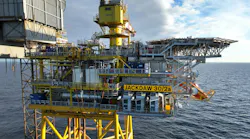
UK Energy Secretary Miatta Fahnbulleh is reportedly “minded” to reject the Rosebank oilfield after approving the smaller Jackdaw gas field, though no final decision has been made.
On Oct. 21, Fahnbulleh approved production consent for the Jackdaw gas field (east of Aberdeen). But at the same time, officials and sources told The Guardian that she is leaning toward refusing approval for Rosebank, one of the largest undeveloped oil fields in the UK North Sea (roughly 80 miles/128 km northwest of Shetland). A ruling is expected before the end of 2026.
Fahnbulleh has drawn a clear distinction between the projects. She told The Guardian that Jackdaw is “a gasfield that caters for the domestic market,” while Rosebank “is an oilfield that is mainly for export.” She reportedly stressed that each application must be judged on its own merits and remain consistent with the UK’s climate obligations, carbon budgets, and the path to net zero.
According to the reporting, officials have noted that Rosebank would emit roughly seven times the carbon of Jackdaw and is seen as contributing less to UK energy security.
The Department for Energy Security and Net Zero has described the reports as speculation, reiterating that each project will be assessed on its own merits. On Oct. 22, Fahnbulleh told reporters that the decision is hers alone under a “tight” regulatory/quasi-judicial framework designed to withstand court scrutiny. She said only she can make the final call and that overriding it would risk the decision being overturned in court. She indicated she will weigh climate impacts alongside economic factors such as jobs and growth.
Background on the projects
Jackdaw gas field:
- Original consent under the previous Conservative government was quashed by the Scottish Court of Session (following a Supreme Court precedent on Scope 3 emissions from burning the fuel).
- Revised assessments were completed and consent was granted this week.
- Production is expected to begin within weeks.
- Ministers argue it supports energy security with relatively lower-carbon domestic supply during the transition.
Rosebank oil field:
- It is the largest remaining undeveloped UK oil field, with recoverable resources estimated around 300 million barrels (mostly oil, with some associated gas).
- It was discovered in 2004.
- Final investment decision and initial NSTA consent took place in 2023 under the Conservatives (roughly $3.8 billion Phase 1 investment).
- Consent was similarly quashed in early 2025 for inadequate consideration of downstream (Scope 3) emissions.
- It is operated by Adura (Shell/Equinor joint venture, ~80%) with Ithaca Energy holding 20%.
- First production had been targeted for 2026-27 if approved.
- Peak employment support has been estimated in the region of 1,200 jobs, and industry figures have highlighted tax revenue potential.
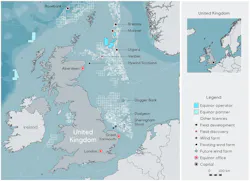
Labour’s 2024 manifesto committed to no new exploration licenses while allowing management of existing fields.
These two projects fall into the category of previously licensed developments requiring fresh environmental consent after the court rulings. Prime Minister Andy Burnham has taken a “pragmatic” line and previously indicated decisions would come “shortly.” Chancellor John Healey has spoken positively about oil and gas revenues contributing to a new Energy Wealth Fund (initial £2 billion capitalization announced alongside the Jackdaw decision) to support renewables and low-carbon projects.
Reactions and stakes
Climate campaigners and some Labour MPs view a potential Rosebank rejection as a significant win and have warned of internal party pushback (and possible parliamentary pressure) if it is approved. Greens have signaled that they will campaign on the issue in key seats. Industry voices, including Ithaca Energy, have warned that blocking Rosebank could lead the company to halt further UK investment (including other projects), amid competition for capital elsewhere. North Sea unions, Scottish stakeholders, and Conservatives have pressed for approval on economic, jobs, and energy-security grounds, especially given recent energy-price volatility linked to Middle East conflicts. Fahnbulleh has acknowledged that neither project is primarily about lowering household bills in the short term.
The reports point to a likely split decision—green light for the domestic-oriented Jackdaw gas field, lean against the larger export-oriented Rosebank oil field—while leaving the final Rosebank call with the Energy Secretary under the formal process. A definitive announcement is still pending later this year.
About the Author
 Bruce Beaubouef
Senior Lead Reporter / Managing Editor
Bruce Beaubouef is Managing Editor for Offshore magazine. In that capacity, he plans and oversees content for the magazine; writes features on technologies and trends for the magazine; writes news updates for the website; creates and moderates topical webinars; and creates videos that focus on offshore oil and gas and renewable energies. Beaubouef has been in the oil and gas trade media for 25 years, starting out as Editor of Hart’s Pipeline Digest in 1998. From there, he went on to serve as Associate Editor for Pipe Line and Gas Industry for Gulf Publishing for four years before rejoining Hart Publications as Editor of PipeLine and Gas Technology in 2003. He joined Offshore magazine as Managing Editor in 2010, at that time owned by PennWell Corp. Beaubouef earned his Ph.D. at the University of Houston in 1997, and his dissertation was published in book form by Texas A&M University Press in September 2007 as The Strategic Petroleum Reserve: U.S. Energy Security and Oil Politics, 1975-2005.
Related
