UK regulator approves North Sea Jackdaw gas project
Why this news matters:
-
Jackdaw will help bolster UK domestic gas supply as North Sea production continues to decline.
-
The project highlights how new developments can be tied into existing offshore infrastructure to improve economics.
-
The approval provides an important signal for future North Sea oil and gas investment decisions.
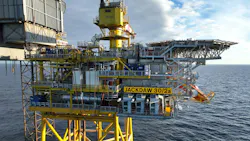
Britain’s North Sea Transition Authority (NSTA) has final issued development and production consent to Adura for the high-pressure, high-temperature Jackdaw gas-condensate field in the UK central North Sea.
Approval came through 21 months after a judicial review, which ruled that operator Shell had not fully taken into account the project’s Scope 3 emissions.
That decision led to the suspension of the original development consent signed off in 2022 by Britain’s previous Conservative administration.
Regulatory approval clears final hurdle
Adura, the joint venture formed last year by Shell and Equinor to combine their UK E&P operations, agreed to undertake a further review of Jackdaw’s potential emissions. Today’s consent followed the UK Secretary of State for Energy Security and Net Zero’s acceptance of the findings related to Adura’s Environmental Statement.
NSTA chief executive Stuart Payne said: “After robust scrutiny we have today granted consent for the Jackdaw field development which allows the owners to proceed with their project and produce gas from the field upon completion of development work.
Payne continued: “This project will support the UK’s energy security by providing domestically produced gas, generate tax revenues, safeguard supply chain jobs, use existing infrastructure, and have an emissions intensity well below the UK average.”
He added: “Now is the time to move forward at pace and we welcome the government's approval in allowing us permission to consider a small number of new out of round licences ahead of forthcoming legislation.”
The next major hurdle Adura and partner Ithaca Oil & Gas have to clear is approval for their deepwater Rosebank oil and gas field development west of Shetland. Here too the original consent has been challenged on environmental grounds.
Industry reaction and wider implications
INEOS, operator of the Forties Transportation System that handles oil and gas production from multiple UK and Norwegian North Sea fields, expressed relief over today’s decision, with caveats.
A spokesman commented: “Approving Jackdaw is the right decision, but this does not stop the damage being done to the North Sea. And it appears Rosebank [west of Shetland] remains stuck in political limbo.”
“The North Sea Levy must be amended in [next week’s] Budget…Tax receipts are going down, not up, while imports increase. The government is driving away the very investment that generates jobs, production and tax revenues. It makes no sense.”
“Maintaining this punitive 78% tax in the budget will compound the mistake. It will leave an even bigger black hole in future budgets.”
Britain will continue to need oil and gas for decades to come, the spokesman added. “We can produce it here, creating British jobs and generating billions in tax revenues, or continue to increase imports from overseas and send those benefits abroad.”
Project details and production outlook
Consultants at Wood Mackenzie claim first gas from Jackdaw could now follow within weeks. The NSTA, they point out, accepted Adura’s submission that Jackdaw's climate impact is not significant and will not materially affect the UK's climate change commitments.
Wood Mackenzie's own P50 estimate assesses total greenhouse gas emissions over the field's anticipated nine-year lifespan at 24 MtCO2e, which it calculates as equivalent to 1.8% of remaining UKCS emissions.
Jackdaw, with 68 MMboe of gas/condensate, was discovered by BG Group, later acquired by Shell. It is the third largest pre-production field asset on the UKCS after Rosebank and Cambo, with £1.2 billion ($1.6 billion) said to have been invested in the project to date.
The consultants expect production from Jackdaw next year in 2027 to average 140 MMcf/d, accounting for 6% of overall gas supply from the UKCS.
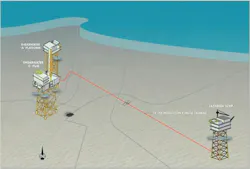
The field, in water depths of around 78 m, extends across Blocks 30/02a, 30/03a, and is situated 30 km south-east of Adura’s Shearwater gas-condensate complex and adjacent to the UK/Norway median line.
Jackdaw’s ‘not permanently attended’ wellhead platform with four wells is tied back to the Shearwater hub via a 31-km pipeline that was laid in July 2024. The steel jacket and topside were installed in August 2023 and October 2025 respectively.
Gas from Shearwater heads to St Fergus, north of Aberdeen.
Gail Anderson, research director, North Sea Upstream at Wood Mackenzie, said: “Blocking Jackdaw would require the UK to import more emissions-intensive LNG to meet UK gas demand. We estimate that would have increased net emissions by 3.5 MtCO2e, not reduced them.”
“The correct way to tackle the climate crisis is to reduce demand for oil and gas.”
At current prices, she added, Jackdaw could deliver £1.5 billion ($2 billion) in tax receipts to the UK Treasury. “Blocking it would have seen these revenues go elsewhere, while over £20 billion [$26.77 billion] of future greenfield UKCS investment would very likely be lost.
“These are compelling reasons why North Sea production should remain a vital part of the UK's energy mix.”
About the Author
 Jeremy Beckman
Staff Writer / Editor, Europe
Jeremy Beckman has been Editor Europe, Offshore since 1992. Prior to joining Offshore he was a freelance journalist for eight years, working for a variety of electronics, computing and scientific journals in the UK. He regularly writes news columns on trends and events both in the NW Europe offshore region and globally. He also writes features on developments and technology in exploration and production.
Related
