Energean gets green light to resume gas production from Karish field offshore Israel
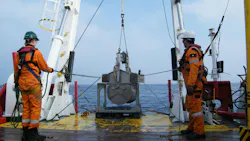
Israel’s Ministry of Energy and Infrastructure has authorized Energean to safely re-start gas production and operations at its Energean Power FPSO unit in the eastern Mediterranean.
The facility, which had been on standby for more than a month since late February 2026, produces natural gas and associated liquids from the Karish field (and supports nearby developments like Karish North).
Energean confirmed it received the notice and is now working to safely reactivate the facility and ramp up to normal operations in line with its established procedures.
Prior to the shutdown, the company was in the final stages of commissioning upgrades, including a second oil train, which is expected to boost liquids output to around 20,000 barrels per day upon full restart (from ~15,000 bpd previously).
Karish is a key offshore gas field (with ~1 tcf 2P gas reserves plus liquids) located roughly 90 km off Israel's northern coast. Production began in October 2022 after the FPSO arrived in Israeli waters — the first of its kind to transit the Suez Canal in that manner.
The Energean Power FPSO is a purpose-built, gas-focused unit with nameplate capacity of up to 8 billion cubic meters (bcm) per year. Gas is sold primarily under long-term "take-or-pay" contracts to Israel's power generation sector, enhancing competition, energy security, and helping displace coal-fired generation. It has also supported export discussions, including a recent MoU for potential supply to Cyprus via a new pipeline.
Together with Karish North (which added ~1.5 bcm/year capacity) and the upcoming Katlan development, it forms a core part of Energean's Israel portfolio, with licenses extending to 2044 (plus extension options).
The recent halt was ordered by Israeli authorities around February 28, 2026, as a precautionary security measure amid escalating regional tensions and direct conflict involving Iran. This was the second such shutdown in roughly a year for Israeli offshore gas assets.
Energean incurred standby costs of approximately $10 million per month, suspended its 2026 Israel production guidance, and warned that prolonged downtime beyond May could delay its >$1 billion Katlan project (which targets first gas to help fill the FPSO).The restart follows the US-brokered ceasefire with Iran, allowing a return to operations.
Karish has been a game-changer for Israel’s energy landscape, diversifying supply beyond the larger Tamar and Leviathan fields and supporting domestic needs (including desalination, which takes a big chunk of power demand) while opening export potential to neighbors like Egypt and Jordan, and further afield.
For Energean, a London-listed independent focused on the East Med, Israel represents the bulk of its output — making the restart a material positive after the disruption. Full ramp-up is expected to help offset deferred revenues and position the company for steady production. Analysts and the company will be watching closely for any updates on Katlan timelines and regional export ambitions.
Updated weekly:
 Offshore and OGJ coverage on the conflict in the Middle East
About the Author
 Jeremy Beckman
Jeremy Beckman
Staff Writer / Editor, Europe
Jeremy Beckman has been Editor Europe, Offshore since 1992. Prior to joining Offshore he was a freelance journalist for eight years, working for a variety of electronics, computing and scientific journals in the UK. He regularly writes news columns on trends and events both in the NW Europe offshore region and globally. He also writes features on developments and technology in exploration and production.
 Bruce Beaubouef
Bruce Beaubouef
Senior Lead Reporter / Managing Editor
Bruce Beaubouef is Managing Editor for Offshore magazine. In that capacity, he plans and oversees content for the magazine; writes features on technologies and trends for the magazine; writes news updates for the website; creates and moderates topical webinars; and creates videos that focus on offshore oil and gas and renewable energies. Beaubouef has been in the oil and gas trade media for 25 years, starting out as Editor of Hart’s Pipeline Digest in 1998. From there, he went on to serve as Associate Editor for Pipe Line and Gas Industry for Gulf Publishing for four years before rejoining Hart Publications as Editor of PipeLine and Gas Technology in 2003. He joined Offshore magazine as Managing Editor in 2010, at that time owned by PennWell Corp. Beaubouef earned his Ph.D. at the University of Houston in 1997, and his dissertation was published in book form by Texas A&M University Press in September 2007 as The Strategic Petroleum Reserve: U.S. Energy Security and Oil Politics, 1975-2005.
Related
