Computer Vision Moves Operations from Images to Action
Key Highlights
- AI delivers value when it improves decisions and operational outcomes, not simply by generating more data, with organizations focused on measurable ROI, adoption, and scalability.
- Industry leaders emphasized that successful AI pilots do not guarantee enterprise-wide success, highlighting the importance of user trust, integration into workflows, and clear measurement of results.
- Computer vision (CV) helps bridge the gap between field operations and decision-makers, providing visual context that enables faster, more informed actions to improve safety, efficiency, and asset reliability.
In oil and gas, the value of AI does not come from detecting more events or generating more data. It comes from adding context to information and turning it into better decisions, more consistent processes, and measurable operational outcomes. AI's role in the industry keeps growing, with applications that span subsurface interpretation, exploration, drilling and well construction, production, subsea integrity and asset management, logistics, and emissions monitoring.
While companies understand the value AI can deliver to operations, they are moving forward cautiously, integrating solutions that deliver a reasonable return on investment and can be scaled across functions without disrupting operations. For many of them, the starting point is the operational problem itself and how AI can support the people, processes, and decisions involved. Organizations across the industry are working through similar questions about implementation, and until recently, there were few opportunities to compare notes on specific solutions, such as computer vision (CV).
Cooperating for collective advancement
CV is a technology that enables computers and systems to derive meaningful information from digital images, videos, and other visual inputs. In industrial operations, the value of computer vision lies in turning visual information into understanding, understanding into action, and operational visibility into operational confidence.
ALTAVE, a Brazilian company with 15 years in the market and nearly five years of experience providing CV-powered intelligent monitoring solutions, has established a forum for meaningful conversations about this technology. Today, ALTAVE serves 44 enterprise clients across 179 active sites in six countries and holds 14 patents, a SOC 2 attestation, and ISO 9001 certification.
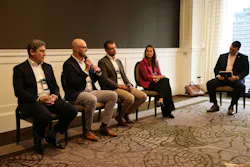
The Houston forum, held at the Petroleum Club on September 2, 2026, followed ALTAVE Conecta events in Belo Horizonte and Rio de Janeiro earlier this year. This event brought together operators, drilling companies, and technology partners, who took part in roundtable discussions led by industry managers that addressed specific concerns, including:
- What happens when AI moves from possibility to practice
- Where AI creates value
- What it takes for people to trust and adopt AI
- How companies can measure the impact of AI
- How to move from successful pilots to solutions that can scale across operations
Representatives from Shell, NVIDIA, Transocean, Nabors, Valaris, and other leading companies talked about how they have applied AI in their operations and how their organizations have refined their approach and integrated the technology.
One of the most significant takeaways from the event was the recognition that “potential” is not synonymous with “operational value.” In practical terms, AI must be measurable in operational outcomes. Success is contingent upon human adoption of the technology, a factor that companies must include in the equation when adopting advanced solutions. Panelists further agreed that even when a CV solution is successful, implementation challenges can limit the technology's expanded use. In other words, a successful pilot is not the same as successful adoption across the organization.
“One of the most important lessons from Connect AI was that technology alone does not create operational value,” says Bruno Avena, CEO of ALTAVE. “There is strong interest in AI across the industry, but companies are increasingly focused on what happens after a successful demonstration or pilot. They want to know how the technology will integrate with their operations, how teams will trust and adopt it, how its impact will be measured, and whether it can scale consistently.”
Making CV work in the field
To impact operations, technology must be reliable. “We begin by understanding the operational challenge and then adapt the technology to the customer’s environment and workflows,” says Avena. “Ultimately, our role is to ensure that the technology works not only in a demonstration, but also under real operational conditions.”
Processes with a recurring pattern or sequence of events can be improved, but no improvement can be achieved without understanding what is happening in the field, where inconsistencies exist, and how people are working on the front lines. In many cases, companies assume work is always being performed in the same way, but visual evidence often identifies areas where consistency can be improved.
“Other technologies may indicate that an event occurred, but images allow teams to understand how it happened, the conditions surrounding it, and what was taking place before, during, and after the event,” says Avena. “That level of visual context is something only images can provide.”
CV technology not only streamlines operations, but it also closes the gap between the field and the office. Managers can use CV data to make faster, better-informed decisions that improve operations. “Detection itself is not the final value,” adds Avena. “Value is created when the information generated by AI leads to better actions and decisions.”
For operational applications where an organization wants to move from images to data, ALTAVE assesses the operation and designs a solution that extends well beyond the technology itself and includes implementation, integration, maintenance, 24/7 technical support, system monitoring, and ongoing customer success.
ALTAVE does not just develop AI models and provide software that a company must install and adopt. Through its HARPIA platform, which turns video and operational data into actionable intelligence, ALTAVE introduces CV technology in complex environments where reliability, integration, and operational continuity are essential.
The insights shared at ALTAVE Connect AI are already shaping the company’s roadmap.
“We are using what we learned to evaluate not only how our technology should evolve, but also how it fits into the customer’s broader operational context,” says Avena. “This means prioritizing applications that solve clearly defined problems, improving integration with existing systems and workflows, and ensuring that the information generated by the technology is relevant and actionable.” ALTAVE is also increasing its capacity to scale proven applications across sites, assets, and segments of the energy industry.
The goal is to address concrete challenges to improve safety, operational efficiency, asset reliability, and effective decision-making.
This content is sponsored by:

Related