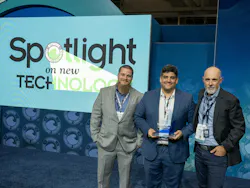
OTC 2026: Fugro GeoAI framework earns Spotlight award for accelerating offshore site insights
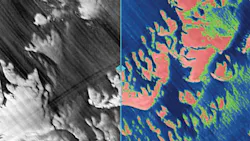
Fugro has received an OTC Spotlight on New Technology Award for its GeoAI framework, which the company says is helping offshore project teams shorten interpretation timelines without sacrificing engineering rigor or regulatory defensibility.
The framework applies machine learning to automate time‑intensive geoscience tasks, such as seabed feature detection and habitat mapping, while embedding structured human oversight and model governance throughout the workflow.
According to Fugro, the technology is particularly effective on projects where survey, engineering and operations run in parallel, and where delayed interpretation can directly affect vessel time, installation planning or early‑stage development decisions.
From survey data to operational decisions
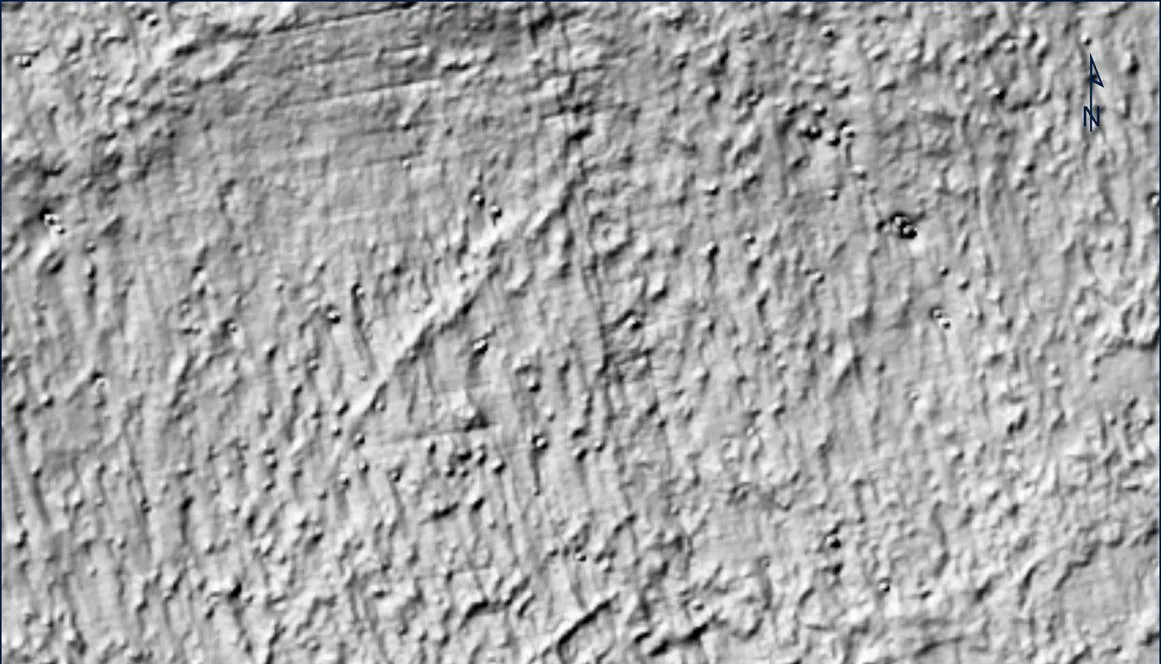
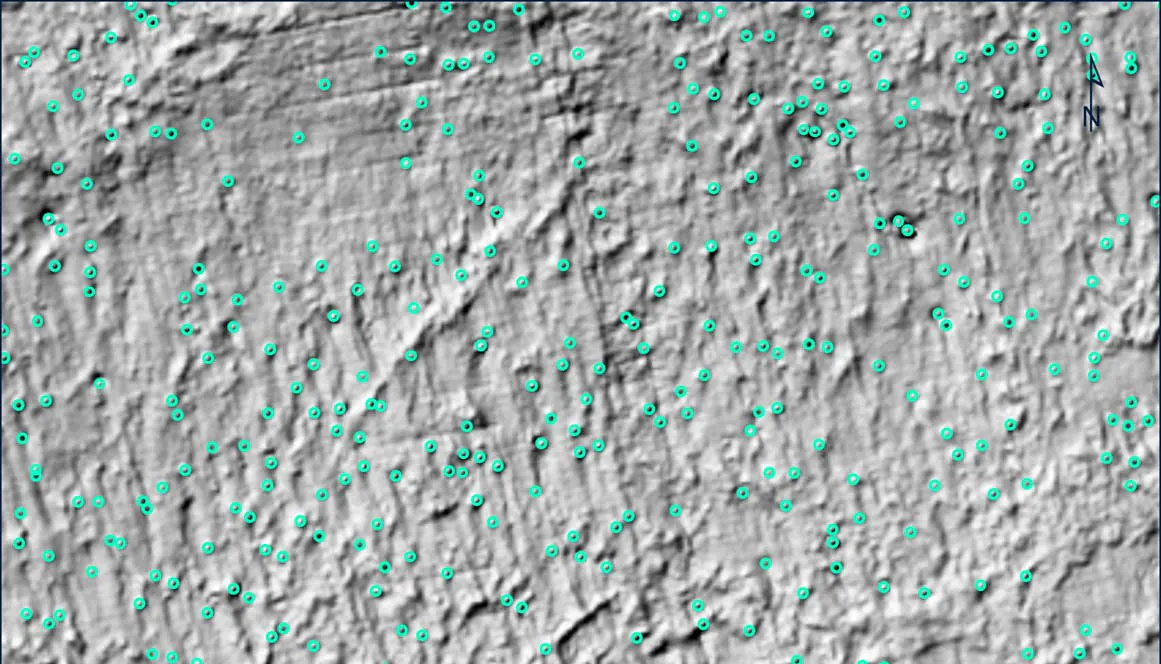
One recent offshore energy project highlighted the framework’s value during a subsea installation campaign that combined multibeam data acquisition and boulder removal from a single construction vessel.
Using GeoAI, Fugro classified more than 5,000 seabed boulders in under two days, a task that would have taken more than 160 hours using manual interpretation.
“The project combined multibeam data acquisition and boulder removal from a single construction vessel, leaving no margin for delay,” Morgan John, principal geologist and GeoAI strategy lead at Fugro, told Offshore in an OTC 2026 interview.
Beyond identifying targets, the AI output included boulder size, extent and height—information required immediately for removal planning and execution. Because results were delivered between survey passes, offshore operations continued without interruption.
“That meant the team could confirm removal scope early and avoid last‑minute changes offshore, with a direct impact on cost and schedule,” John said.
With a traditional workflow, he added, interpretation would likely lag behind operations, forcing teams either to pause work or proceed with incomplete information, increasing risk and rework potential.
Enabling earlier planning and regulatory moves
Fugro reports similar time compression at earlier project stages. On another offshore development, GeoAI was used to map seabed habitat across a large lease area, delivering preliminary results within days and validated outputs within a week.
“That allowed the project team to move forward with regulatory and planning decisions on a timeline that matched the pace of development, not the pace of manual interpretation,” John said.
In both operational and early‑phase applications, the goal is not just speed, but aligning interpretation delivery with real‑world project decision points.
Transparency and governance remain central
AI‑assisted interpretation has raised attention across the offshore sector about transparency, repeatability and regulatory acceptance, he said. Fugro emphasizes that its GeoAI solution is structured as a decision‑support framework, not an autonomous system.
“Fugro GeoAI speeds up interpretation, but it doesn’t replace the geoscientist," John added. "That distinction matters when outputs need to be defensible for engineering design and regulatory use."
Depending on data type and resolution, first‑pass AI outputs typically achieve 70% to 90% accuracy, making expert review mandatory before delivery. Fugro applies a human‑in‑the‑loop QA/QC process at each stage, with geoscientists reviewing and approving all results.
“There is no black box,” John said. “Each dataset is delivered with full metadata, including model version, processing parameters, validation status and confidence levels, so results are traceable and auditable.”
He added that models are retrained and revalidated when applied to new basins or datasets, and that client data is never used for training without consent.
In summary
Fugro said the GeoAI framework reflects a shift toward governed automation, where speed, consistency and specialist oversight are combined.
“In practice, Fugro GeoAI delivers speed and consistency,” John concluded. “But it’s the expert who ensures accuracy.”
 OTC 2026 Opening Ceremony
About the Author
 Ariana Hurtado
Ariana Hurtado
Editor-in-Chief
With more than a decade of copy editing, project management and journalism experience, Ariana Hurtado is a seasoned managing editor born and raised in the energy capital of the world—Houston, Texas. She currently serves as editor-in-chief of Offshore, overseeing the editorial team, its content and the brand's growth from a digital perspective.
Utilizing her editorial expertise, she manages digital media for the Offshore team. She also helps create and oversee new special industry reports and revolutionizes existing supplements, while also contributing content to Offshore's magazine, newsletters and website as a copy editor and writer.
Prior to her current role, she served as Offshore's editor and director of special reports from April 2022 to December 2024. Before joining Offshore, she served as senior managing editor of publications with Hart Energy. Prior to her nearly nine years with Hart, she worked on the copy desk as a news editor at the Houston Chronicle.
She graduated magna cum laude with a bachelor's degree in journalism from the University of Houston.