Techouse tests compact steam generator for offshore platforms, targets lower emissions
Why this news matters:
-
Many offshore facilities still rely on gas turbines for power generation, making efficiency improvements one of the fastest pathways to lower operational emissions without major infrastructure changes.
-
By reducing the weight and size of heat recovery equipment, Techouse aims to overcome a key barrier that has limited broader deployment of combined-cycle power systems offshore.
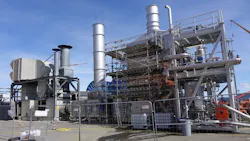
Norway-based Techouse has completed testing of a compact once-through steam generator (COTSG), designed to reduce fuel consumption and CO2 emissions from power and heat production processes on offshore installations.
The joint industry project (JIP) is supported by TotalEnergies, Equinor and SINTEF Energy Research.
Following funding from the Norwegian Research Council, the JIP developed the lightweight COTSG. Trials took place at the Sustainable Energy test center for new and green energy carriers at Stord, western Norway.
Project at a glance:
|
Item |
Details |
|---|---|
|
Technology |
Compact once-through steam generator (COTSG) |
|
Developer |
Techouse |
|
Partners |
TotalEnergies, Equinor, SINTEF Energy Research |
|
Location of testing |
Stord, Norway |
|
Claimed benefit |
22-25% lower CO2 emissions versus conventional gas turbine solutions |
|
Design goal |
Smaller and lighter than conventional OTSGs |
|
Lifecycle target |
30 years |
|
Next step |
Commercial launch targeted by year-end 2026 |
Reducing emissions from offshore power generation
An analysis revealed that gas turbine combined cycle solutions on floating and fixed offshore installations can bring a 22-25% reduction in CO2 emissions compared to conventional gas turbine solutions.
Cutting fuel use and CO2 emissions by 25% could reduce emissions by between 50,000 and 150,000 metric tons annually per combined-cycle power plant installation, the developers claim.
Platform power generation remains one of the largest sources of operational emissions offshore. While electrification from shore is being adopted in select regions such as the Norwegian Continental Shelf, many offshore facilities worldwide continue to rely on gas turbines for power and heat generation, driving interest in technologies that improve efficiency and reduce fuel consumption.
With combined cycle, heat from the exhaust of the gas turbines is used to generate superheated steam, which is harnessed to generate additional power in a steam turbine.
But present OTSG solutions are restricted by the weight and size of the heat recovery equipment, with deck space and weight capacity already constrained on many offshore oil and gas installations.
Potential applications could include fixed production platforms, FPSOs and other offshore facilities that depend on gas-turbine-based power generation and are seeking lower-emission operating strategies.
Weight and topsides space constraints have long limited deployment of combined-cycle systems offshore, particularly on floating production facilities and mature fixed platforms where additional equipment can have significant design and operational impacts.
“The JIP set out to design, build and test an OTSG that is lighter and smaller than current solutions, enabling it to be installed on even more offshore installations," Techouse CTO Pål Kloster said. “We have previously achieved the two first objectives of making it lighter and smaller, thereby more competitive. We have over the past few months tested the generator to ascertain its robustness and thereby fully verify its commercial potential.”
Testing targets long-term offshore deployment
The test program covered performance, vibrations and fatigue, including thermal fatigue, and stress testing, to determine if the steam generator could withstand a minimum 30-year lifecycle.
“The test has delivered positive results against the key test parameters, and we are now proceeding with a comprehensive analysis of the logged test data,” Kloster added.
The testing campaign was designed to verify that the compact steam generator could meet offshore reliability requirements while maintaining its reduced weight and footprint.
Techouse said a commercial version of the COTSG could be introduced later this year. Beyond commercialization, the company said it plans to pursue projects integrating the technology with carbon capture systems on offshore platforms.
Related content:
 FPSO
FPSO
 SBM Offshore signs investment agreement with Ocean-Power
 Papa Terra offshore Brazil
About the Author
 Jeremy Beckman
Jeremy Beckman
Staff Writer / Editor, Europe
Jeremy Beckman has been Editor Europe, Offshore since 1992. Prior to joining Offshore he was a freelance journalist for eight years, working for a variety of electronics, computing and scientific journals in the UK. He regularly writes news columns on trends and events both in the NW Europe offshore region and globally. He also writes features on developments and technology in exploration and production.