PosHYdon begins green hydrogen production on Dutch North Sea platform
Why this news matters:
-
Tests a potential new role for offshore infrastructure: If successful, offshore hydrogen production could allow operators to leverage existing platforms, pipelines and offshore expertise as the North Sea energy system evolves.
-
Addresses wind integration challenges: Producing hydrogen offshore could provide an alternative pathway for transporting renewable energy and help reduce pressure on electricity transmission networks as offshore wind capacity grows.
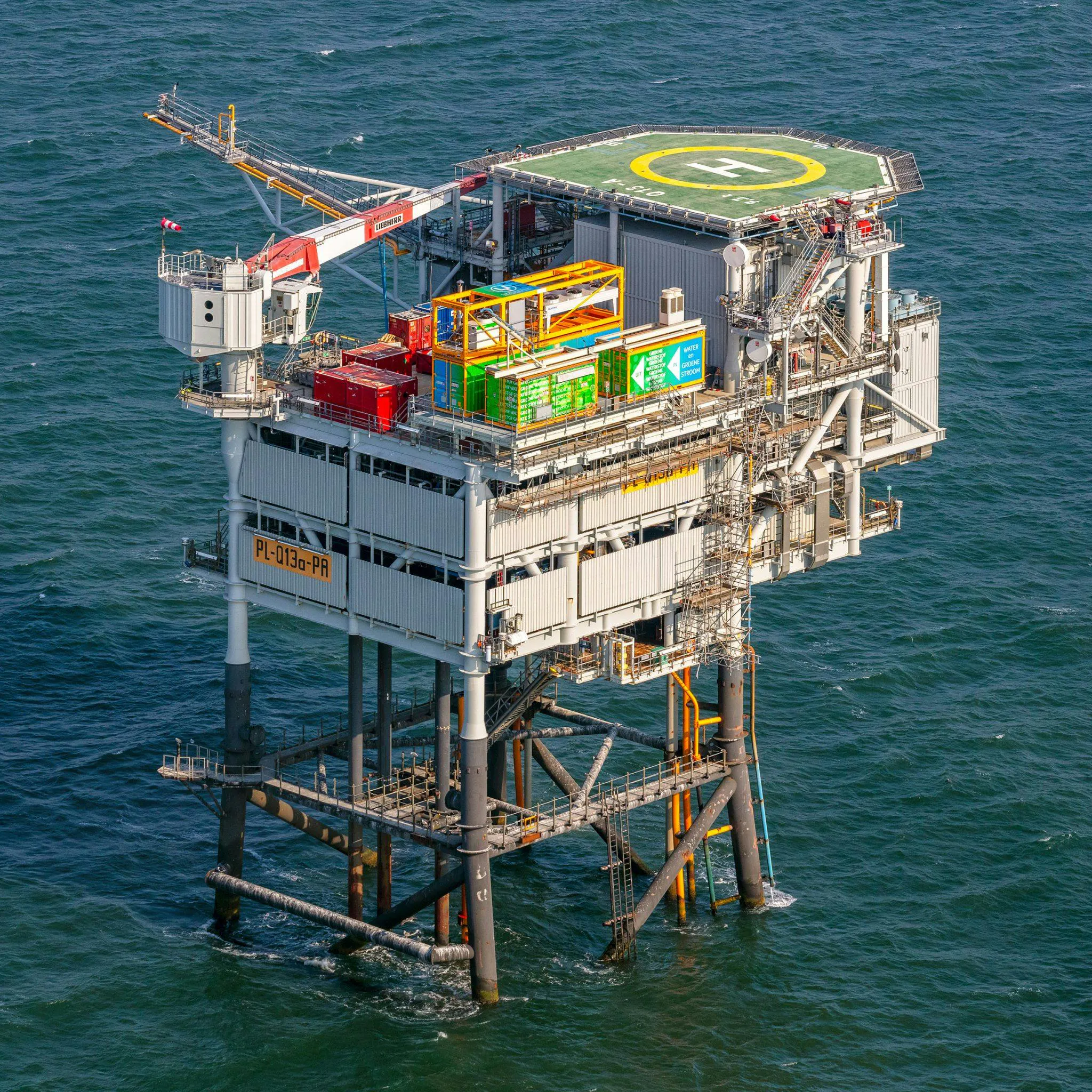
The PosHYdon pilot has started production of green hydrogen on Eni’s Q13a-A gas platform in the Dutch North Sea.
PosHYdon is an initiative supported by DEME, EBN, Eneco, Emerson, Gasunie, Hatenboerwater, Investa Expertise Centrum, IV Offshore & Energy, Nel, Eni, Nexstep, NGT, Nogat, TAQA, TNO, the Dutch Ministry of Economic Affairs and Climate Policy, and EBN (Energie Beheer Nederland).
It is claimed to be the world’s first project combining offshore wind power, hydrogen production and natural gas production on an operating offshore platform.
The Q13a-A platform, situated 13 km from the coast of Scheveningen, is also the Dutch sector’s first fully electrified production installation. At the facility, seawater is converted into demineralized water, which is then transformed into hydrogen through electrolysis.
Electricity required for the process is supplied by a nearby offshore wind farm.
The project is designed to evaluate whether hydrogen can be produced offshore and transported using existing North Sea energy infrastructure, potentially reducing the need for new transmission networks. Developers are also examining whether offshore hydrogen production could help address grid congestion associated with large-scale offshore wind expansion.
During the trial period, green hydrogen will be produced, with the initial goal of demonstrating stable system operation. The focus will then turn to monitoring the effectiveness of the system when responding to fluctuations in offshore wind power generation.
In addition, the trial should shed light on the costs, maintenance demands and operational performance of offshore hydrogen installations, which are key factors in determining whether offshore hydrogen production can be scaled commercially.
Findings from the pilot will be analyzed during August and September, with the results expected to inform future decisions on commercial-scale offshore hydrogen production and presented to interested parties in the hydrogen sector during the fall.
“This project is an important step in scaling up offshore hydrogen production based on offshore wind energy," said Rene Peters, business director of energy infrastructure at TNO. “The pilot offers the opportunity to gain valuable knowledge and practical experience that are essential for the further development of large-scale offshore hydrogen production. This helps to reduce risks and control costs more effectively.”
Exclusive content:
 H2DO Demonstrator 30-50 MW
About the Author
 Jeremy Beckman
Jeremy Beckman
Staff Writer / Editor, Europe
Jeremy Beckman has been Editor Europe, Offshore since 1992. Prior to joining Offshore he was a freelance journalist for eight years, working for a variety of electronics, computing and scientific journals in the UK. He regularly writes news columns on trends and events both in the NW Europe offshore region and globally. He also writes features on developments and technology in exploration and production.