Redesigning a water-based mud system for an offshore sidetrack in reactive shale
Key highlights:
-
The redesigned water-based mud system improved shale inhibition and wellbore stability during an offshore sidetrack campaign in highly reactive shale formations.
-
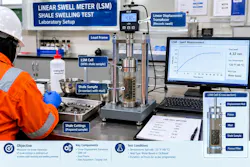
Laboratory testing, including shale characterization and swelling analysis, helped identify the root causes of drilling challenges and optimize mud performance.
-
The customized fluid program reduced shale reactivity, improved operational efficiency, and supported successful execution of the offshore drilling operation.
By Peter Ogunlusi, Independent Consultant
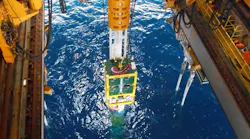
During an offshore drilling campaign in Block SK320 in the Central Luconia Province of the Sarawak Basin offshore Borneo, I served as the drilling and completion fluids advisor responsible for addressing a serious wellbore-instability problem. The well was being drilled from the Velesto Naga 4 jackup in about 108 m of water, roughly 200 nautical miles from the Asian Supply Base in Labuan.
Drilling problems prevented our team from completing the original 12¼-inch section. Tight hole conditions, bit and bottomhole-assembly balling, back-reaming, erratic torque and drag, and ultimately stuck pipe showed that the existing potassium chloride (KCl) polymer water-based mud was not providing the inhibition, hole cleaning and fluid-loss control required for the interval.
Before attempting a sidetrack, there needed to be an understanding as to why the system had failed.
Diagnosing the failure mechanisms
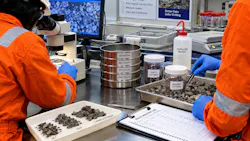
X-ray diffraction, cation-exchange capacity (CEC) and capillary suction time testing of cuttings identified illite and smectite, and confirmed significant shale reactivity. CEC values above 30 meq/100 g indicated reactive smectite layers with substantial potential for water uptake, and high filtrate volumes and thick, spongy filter cakes increased the potential for cuttings accumulation and differential sticking.
The evidence pointed to chemical and mechanical causes that required stronger inhibition, tighter filtration control, effective bridging and sealing, and better solids management in the sidetrack.
Redesigning the mud system
Pilot testing in the laboratory helped determine the additive concentrations needed to achieve the required inhibition, rheology and filtration performance. The redesigned polymer water-based mud combined KCl, glycol and sulphonated asphalt to improve inhibition and sealing. Fluid-loss additives and polymers provided filtration and rheology control, with graphite and graded marble added for bridging and wellbore strengthening. Barite was added as required to maintain a target density of about 9.6 ppg.
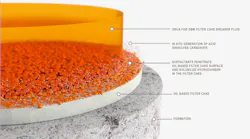
The redesigned system addressed the failure mechanisms through complementary functions, with potassium ions helping to limit clay swelling, glycol reducing water penetration at shale surfaces, and sulphonated asphalt contributing inhibition and sealing. A graded particle-size distribution of graphite and marble was designed to bridge and seal microfractures in the near-wellbore region.
When the complete formulation was tested under simulated downhole pressure and temperature, it showed stable rheology and manageable viscosity, providing the team with confidence to take the system into the sidetrack.
Managing offshore execution and logistics
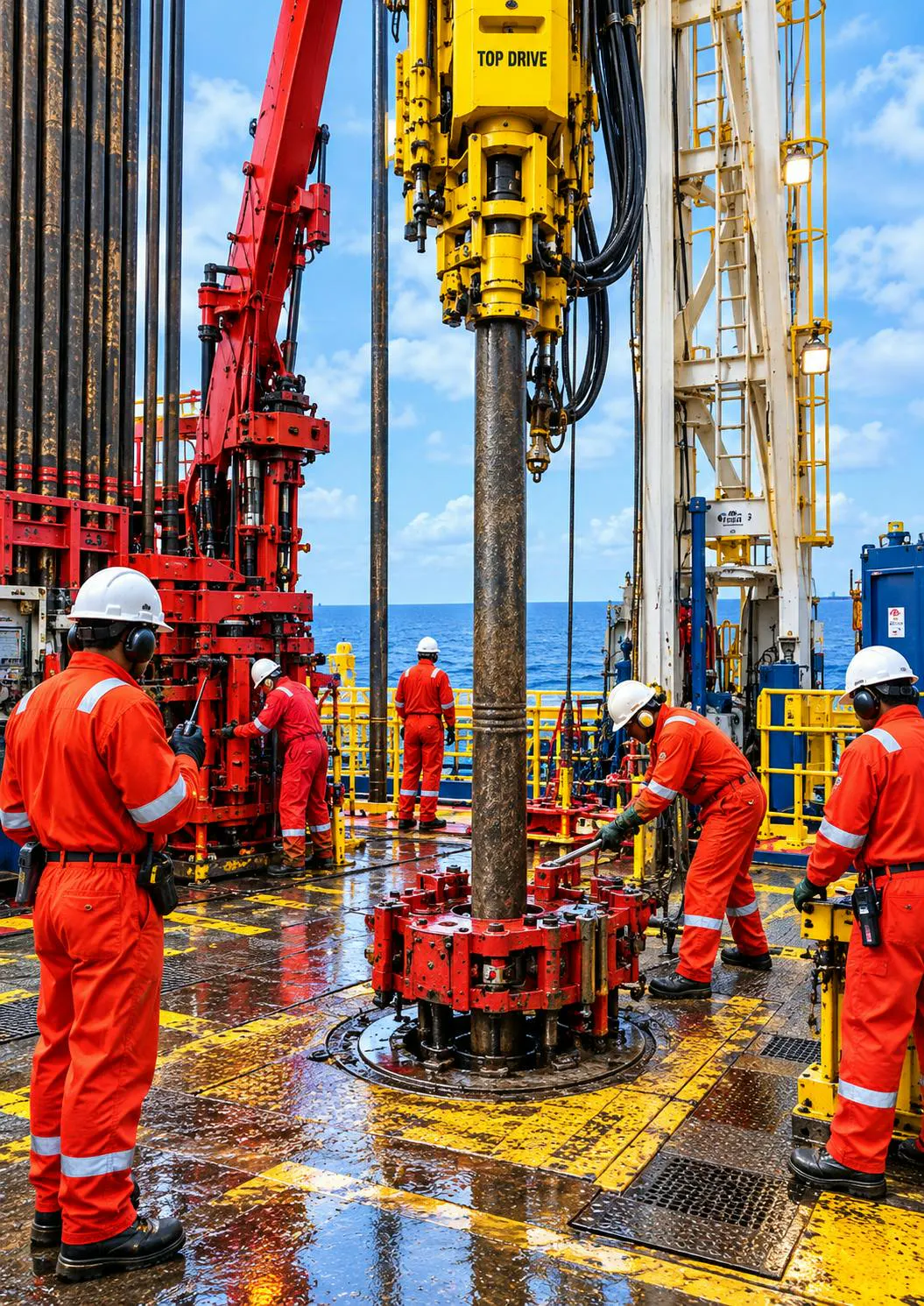
Once the redesigned fluid was in use, maintaining its properties became an ongoing part of the sidetrack operation because drilled solids could gradually change the behavior of the active system.
Density and rheology were monitored closely, using shakers and centrifuges to remove accumulating solids before they began to affect hole cleaning or circulating pressures. This allowed control of solids loading without routinely relying on chemical thinners. In addition, premix containing KCl brine, glycol and sulphonated asphalt was added to replenish active components as drilling exposed fresh shale surfaces and helped preserve the inhibition and sealing properties established in the original formulation.
Pressurized mud cap drilling created a separate offshore challenge because the operation required about 20,000 bbl of light annular mud (LAM).
The LAM was prepared at the shore base and transported about 200 nautical miles offshore in batches. Vessel availability, weather, COVID-related restrictions, water contamination and inadequate tank agitation could all affect the fluid before it reached the rig. Settling became a particular concern when vessel agitation or circulation was insufficient to keep barite suspended, and transferring weighted fluid from the vessel to the jackup created another operational constraint.
Vessel readiness, tank agitation and circulation capability in the fluids plan had to be accounted for, with close communication between vessel crews and the offshore team.
The redesigned fluid could only perform as intended if the drilling practices supported the same goal of maintaining wellbore stability. Rheology was controlled to protect hole cleaning and equivalent circulating density, with sweep pills used when additional cleaning was needed and sufficient LAM maintained for proactive bullheading.
Based on what the team had encountered in the original interval, aggressive back-reaming, which could disturb the filter cake and contribute to further instability, was minimized. The sidetrack plan incorporated these operational changes alongside the changes to the mud system.
Results from the sidetrack
The 12¼-inch sidetrack reached total depth without a recurrence of the instability that had affected the original interval.
The section was completed without stuck-pipe or hole-collapse incidents, and the improved hole condition allowed the casing to run freely and cementing to proceed with full returns.
The condition of the cuttings provided another indication that the redesigned system was performing as intended; they remained firm and intact, seepage losses were substantially reduced, and the mud maintained its rheological profile despite minor solids contamination.
Post-drill analysis also showed improved torque-and-drag signatures and lower mechanical specific energy compared with the original 12¼-inch interval.
Lessons for offshore drilling operations
The SK320 experience reinforced that fluid selection for reactive shale has to begin with formation behavior. Characterization identified the clay mineralogy and shale-fluid interaction, and the drilling response showed that filtration, mechanical sealing, solids loading and operating practices also had to be addressed.
The formulation was built around the failure mechanisms observed in the original hole and verified through laboratory testing before returning to the well.
The pressurized mud cap drilling operation also showed how closely offshore logistics can affect downhole fluid performance. With roughly 20,000 bbl of LAM prepared onshore and moved about 200 nautical miles to the rig, the condition of the fluid at the well depended on how it was handled throughout that journey. Adequate agitation and circulation had to be maintained during transport and transfer so that the LAM arrived offshore with the density, rheology and suspension characteristics required for the operation.
The exact mud formulation will change with mineralogy and downhole conditions, but the same approach can be applied to other challenging offshore wells by first understanding the failure mechanisms and testing the fluid against them.
The laboratory work then has to carry through into drilling procedures and offshore logistics so the fluid can perform as intended at the wellsite.
On this sidetrack, treating the fluid, drilling practices and offshore execution as parts of the same engineering problem allowed the team to reach total depth without repeating the original wellbore instability.
About the Author
Peter Ogunlusi
Peter Ogunlusi is a drilling and completion fluids and wellbore stability expert with nearly three decades of experience on complex well operations for major international energy companies across Africa, Asia-Pacific, South America, Europe and the Middle East. As a certified drilling and completion fluids engineer and member of the Society of Petroleum Engineers, he has worked on deepwater and ultradeepwater, high-temperature and high-pressure, extended-reach and horizontal drilling projects, with expertise spanning water- and oil-based mud systems, reservoir drilling fluids, wellbore strengthening, cementing, solids control and fluids logistics.
Related