Subsea Tieback 2026: Sensors capture and display near-real-time data on lubricant health

A new approach to lubricant condition monitoring aimed at closing a long‑standing gap in surface production equipment health management was presented at Offshore's Subsea Tieback event earlier this month.
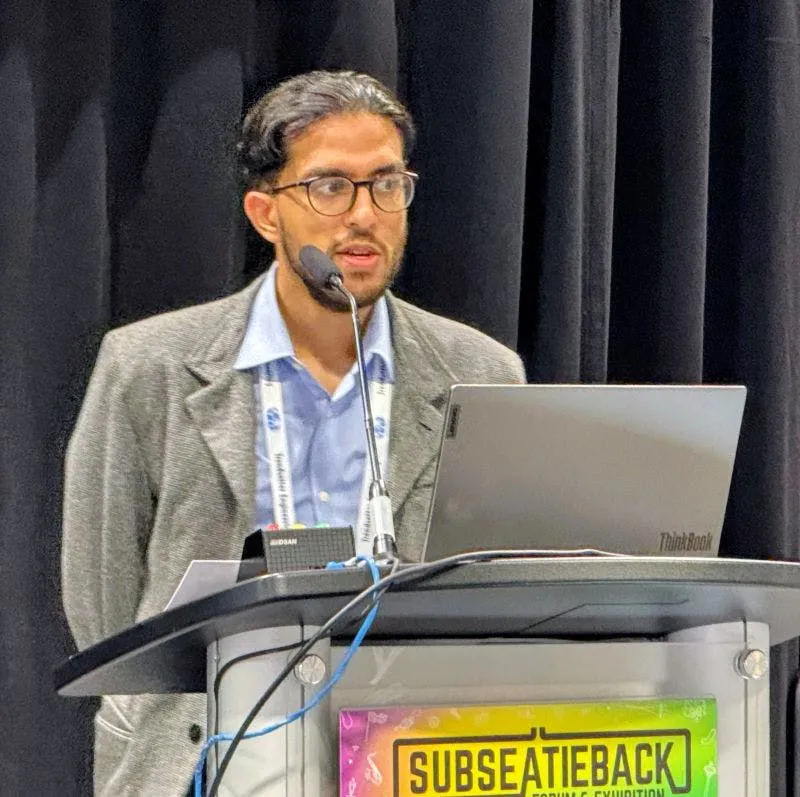
Shahzad Yasin, senior technologist at Castrol, outlined how continuous oil analysis could complement established condition monitoring practices such as vibration, pressure and temperature sensing. While those parameters are widely monitored in real time, lubricant health has traditionally relied on periodic used oil analysis (UOA), an approach Castrol argues is too slow to detect rapidly developing failure modes.
According to the company, traditional UOA typically involves quarterly or monthly sampling, with samples shipped onshore and results returned weeks later. In critical rotating equipment, particularly on FPSOs and offshore production facilities, this delay can allow issues such as water ingress, oxidation or viscosity degradation to progress unchecked.
"Logistics and analysis are slow, during which time an issue with the oil or machine may have turned into a serious situation," Leon Jones, technical service engineer at Castrol, told Offshore. "The cost of this delay can be huge, with critical equipment outages stopping production and costing millions of dollars."
The company presented its SmartMonitor system, which combines permanently installed sensors with a digital monitoring platform to provide near‑real‑time visibility into lubricant condition. Measurements are taken hourly, tracking parameters including viscosity, water content, particulates, oxidation, total acid number and antioxidant depletion. Data is trended continuously to identify early warning signs that may not be captured through periodic sampling.
During Yasin's presentation, he referenced a West of Shetland FPSO case study in which water ingress from a failed plate cooler led to catastrophic gearbox failure in an export gas compressor. The issue was not detected through routine oil analysis, resulting in a loss of about 50% of production capacity. Castrol used the example to illustrate how continuous lubricant monitoring could shorten failure development windows and enable earlier intervention.
Castrol also confirmed that the monitoring system has achieved ATEX approval for use in hazardous areas, including offshore platforms, FPSOs, drilling rigs, onshore production facilities and refineries.
A trial installation is underway on an FPSO export gas compressor, with the unit installed and feeding back data.
Jones framed continuous oil analysis as the “last link in the chain” of condition monitoring, particularly as operators face increasing availability targets, tighter budgets and reduced maintenance personnel offshore.
"When it comes to pressures, temperatures, and humidity, there are already a multitude of vibration sensor technologies available," he added. "However, what’s been lacking until recently are sensors to continuously monitor lubrication health in real time."
The Castrol team argues that greater visibility into lubricant health could support predictive maintenance strategies, help extend equipment life and reduce unplanned downtime in surface production systems.
Related content:
 castrol
 Mac Dermid Offshore Solutions
About the Author
 Ariana Hurtado
Ariana Hurtado
Editor-in-Chief
With more than a decade of copy editing, project management and journalism experience, Ariana Hurtado is a seasoned managing editor born and raised in the energy capital of the world—Houston, Texas. She currently serves as editor-in-chief of Offshore, overseeing the editorial team, its content and the brand's growth from a digital perspective.
Utilizing her editorial expertise, she manages digital media for the Offshore team. She also helps create and oversee new special industry reports and revolutionizes existing supplements, while also contributing content to Offshore's magazine, newsletters and website as a copy editor and writer.
Prior to her current role, she served as Offshore's editor and director of special reports from April 2022 to December 2024. Before joining Offshore, she served as senior managing editor of publications with Hart Energy. Prior to her nearly nine years with Hart, she worked on the copy desk as a news editor at the Houston Chronicle.
She graduated magna cum laude with a bachelor's degree in journalism from the University of Houston.