University-industry collaboration sparks disruptive technologies in offshore oil and gas
Key Highlights
- The challenge paired UT students with Noble mentors to develop innovative solutions for offshore drilling issues over an eight-week period.
- The winning team, "The Leftovers," created a digital twin and data vault system to unify operational data streams, improving decision speed and safety.
- Noble plans to extend the competition to other universities, support scaling of promising solutions, and involve industry partners for pilot testing and commercialization.
By Ariana Hurtado, Editor-in-chief
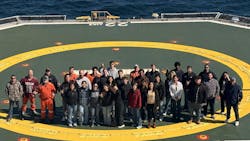
Drilling contractor Noble Corp. recently concluded its 2025 Co-Innovation Challenge at the The University of Texas at Austin (UT). During the program, UT students were paired with mentors from the company for eight weeks during the fall semester to explore ideas that would better serve offshore industry needs. The topics were related to managed-pressure drilling (MPD), non-productive time (NPT) and environmental impact.
Kiara Thomas organized the program, hosting about 100 students that formed teams of three to five for the competition. The UT IADC and AADE student organizations co-hosted the challenge alongside UT’s Department of Petroleum and Geosystems, currently globally ranked #1 for petroleum engineering.
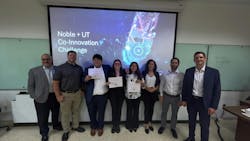
At the conclusion of the challenge, a Pitch Day event was held where Noble staff judged 15 innovative concepts choosing 1st to 4th place winners. The teams and their concepts were judged based on originality and disruption; real-world relevance; technical feasibility; and communication and teamwork.
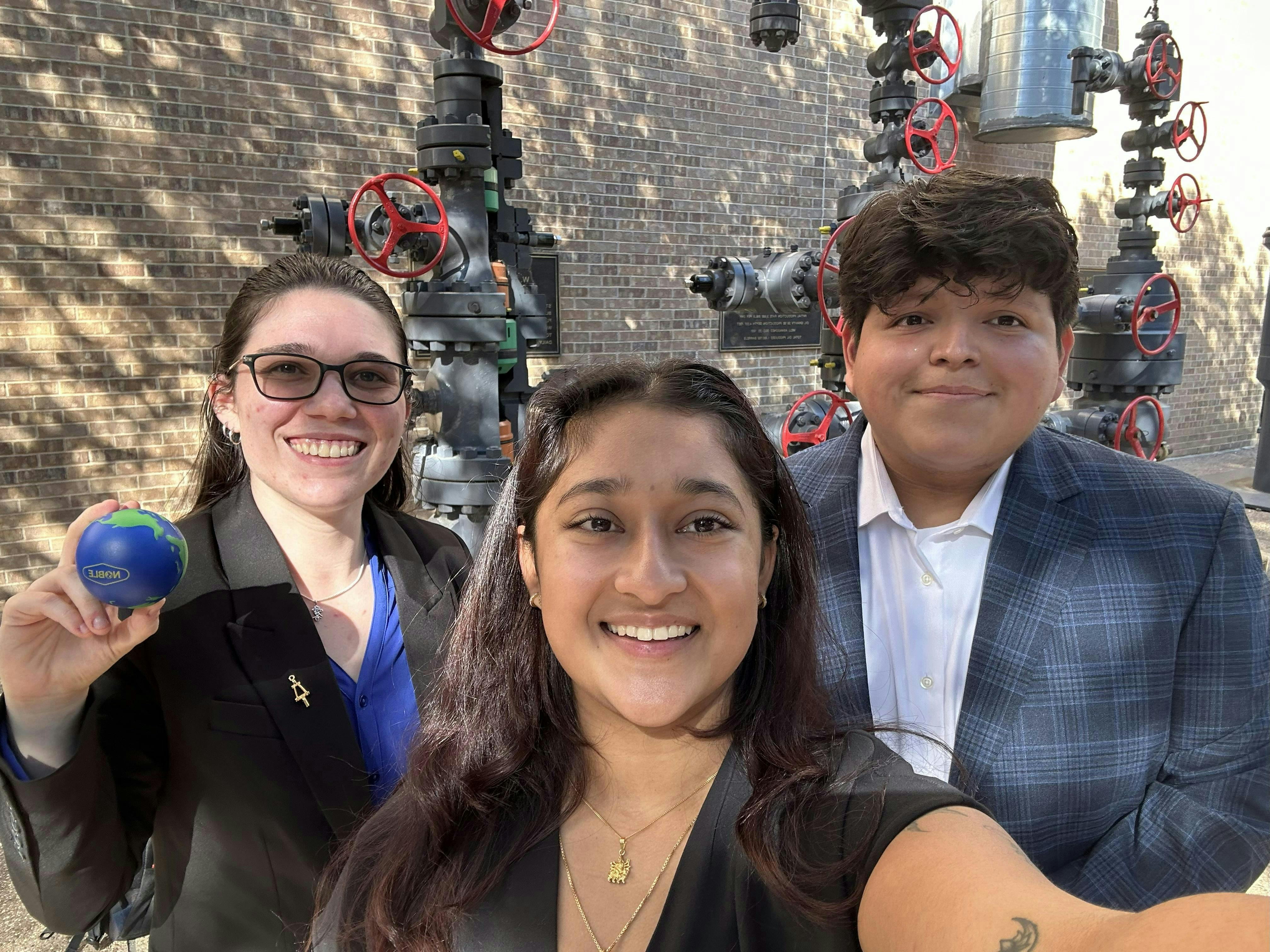
“The Leftovers” team was awarded 1st place for their work on a data storage vault and digital twin, which allows for cross-communication between several of the company's digital systems.
Team captain Xanne Joppe said, "Overall, our solution consolidates several data streams into a single efficient, customizable platform that accelerates informed decision-making and can be deployed consistently across Noble’s fleet."
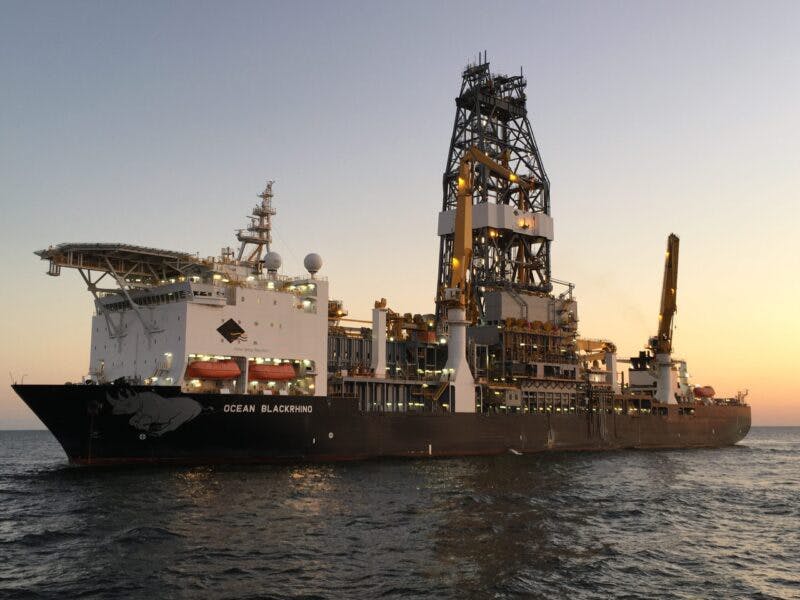
The final four teams were awarded an overnight stay aboard the Noble BlackRhino drillship, a tour of Noble's training facility, and interviews for Noble’s summer internship.
Offshore chatted with Thomas, the program creator and facilitator and Noble's innovation specialist, about the strategy behind the competition, future plans for involving other universities, and the next steps for the technology concepts presented during the challenge.
Moreover, UT senior Joppe provided insights into her team's thought process and strategies to address data accessibility issues.
Q&A with Kiara Thomas:
Offshore: What inspired the company to co-organize this competition with the University of Texas, and what was your strategic vision for the students?
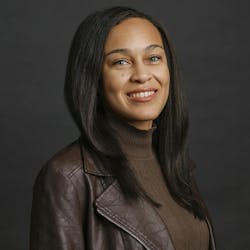
Thomas: Early in my start at Noble, our senior VP asked our innovation team to brainstorm and identify disruptive innovation. Since then, I’ve spent a large amount of my time exploring the ecosystem on university campuses. I decided that if I was going to find something that was unique, it would be there. I’ve visited many labs and spoken to university staff from different departments across campuses.
Before long I began to notice some common university barriers. Most oil and gas innovation is operator focused making it difficult to identify a direct fit for Noble. Universities mainly develop early research phase solutions, meaning they need assistance finding industry-relevant applications. University industry engagement and IP [intellectual property] departments have difficulty gaining commercial licenses from their research or spinning out startups. This means of the hundreds of inventions that universities produce, only a small fraction of them actually exit campuses and enter the ecosystem.
Within this problem scope, I was able to identify the win-win for Noble and universities. Noble could gain first-of-its-kind innovation pipeline by providing drilling-relevant guidance at the idea stage. I created two partnership models: a project-based master research agreement and a co-innovation challenge.
This partnering model is also helping to inspire new talent to join the industry. Nearly 50% of the current oil and gas workforce is over 45 years old, and many are expected to retire within the next decade, creating a major talent gap. We create an enticing dynamic by connecting student teams with mentors. Students are able to determine relevant practicalities of their ideas in the drilling industry. They find a place for their current skills and passions within the industry. That’s huge for a freshmen or sophomore student that’s searching for their place in the world.
The UT Co-Innovation Challenge opened the door for an impact that matters significantly to the future of our industry. We intend on continuing to support the students through mentorship. We will also plan to support initial scaling for select solutions.
Offshore: Are there plans to extend the competition invitation to other local universities and colleges in the future?
Thomas: Definitely. We’re establishing partnerships by way of master research agreements with several universities. I’m also discussing potential challenges and programs we can establish based upon aligned research focus areas and objectives. Additionally, we’re preparing for an improved and extended co-innovation challenge at UT next year. The improvements include a short Drilling 101 course with instructors from Noble’s staff.
Offshore: What’s next for the students' technology concepts? Are there plans for field trials or partnerships?
Thomas: I’ve developed a pre-investment scaling framework based on my startup advisory experience. Using this framework, I’ll partner with professors to assist select student teams in becoming investment ready. Our investment will support MVP development and an initial validation pilot aboard a Noble rig.
I’ll then work with the student teams to decide upon an ideal next step for their solution. They may choose a commercialization path or may want to establish a patent. The university’s avenues for these options will support a smooth transition. I’d also love to see other industry players get involved at this point.
Offshore: What advice would you give to young professionals entering the offshore energy sector?
Thomas: Get as much exposure to the industry as possible. A few of the students told me they were not certain why they chose to pursue a petroleum or geosciences engineering degree prior to this experience. Developing their ideas alongside mentors helped them understand the applications for the skills and passions in the industry. Spending time on our rig helped them gain context they could never gain from a textbook.
Q&A with Xanne Joppe:
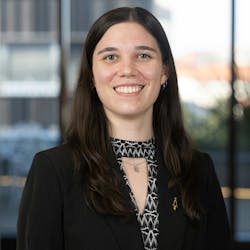
Xanne Joppe was the team captain of "The Leftovers" winning team, alongside partners Ishani Chakrabarty and Gerardo Mendoza. All three are undergraduate petroleum engineering students in the Hildebrand Department of Petroleum & Geosystems Engineering at the University of Texas at Austin.
In a conversation with Offshore, Joppe provided some additional insights into the project and concept planning.
Offshore: Can you walk us through the core concept of your solution and its technical advantages?
Joppe: The main issue we wanted to address was data accessibility for more efficient and informed decision-making to optimize offshore operations. To address this issue, we developed the concept of a data storage vault and digital twin interface to combine Noble’s third-party data platforms into a single customizable dashboard.
Currently, Noble receives much of its operational data from third-party service companies in raw nomenclature with no tags or labels, which slows down interpretation and decision-making. By building a centralized dashboard with standardized labeling and unified access, we eliminate these delays and give personnel a clearer, faster way to understand key operational information.
We also designed the dashboard to be fleet-wide and adaptable. Every drillship has its own layout and equipment variations, even vessels within the same series. Our framework allows Noble to customize the digital twin to match each individual rig design and easily add or remove applications. These applications can also serve a wide range of purposes, whether for HSE, operations, well specifications or other workflows, and process a wide range of data inputs such as digital, visual and audio formats. This modular structure ensures that the dashboard is scalable across multiple vessels without needing to rebuild the integrated system each time.
Safety is enhanced through the digital twin system, which visually pinpoints where issues occur onboard instead of relying on raw data or scattered reports. Combined with historical trend analysis, the system can help identify hazards earlier, reduce unexpected equipment failures and minimize NPT-related risks.
Overall, our solution consolidates several data streams into a single efficient, customizable platform that accelerates informed decision-making and can be deployed consistently across Noble’s fleet.
Offshore: How does your solution improve operational efficiency and safety compared to existing methods?
Joppe: Our solution aims to streamline current offshore operations into a single customizable dashboard while retaining historical data for trend analysis and troubleshooting capabilities. In short, we are building a platform that will allow for greater data accessibility.
Each vessel utilizes multiple software platforms at once, from drilling to marine operations and everything in between. The amount of data being processed at once is extensive, but segregated based on each individual application type. This can cause delays in data analysis or lack of data accessibility that would be required to make an informed decision. However, our solution can bridge the gap between these individual platforms to create a single, easily accessible data analysis platform.
For example, the NOV systems on the rig floor do not interact with the DPS systems from Kongsberg, but both are important when making decisions regarding station-keeping during sensitive drilling operations. By allowing both systems to be put on the same dashboard at the same time, the information can be analyzed more efficiently to allow for more informed and quicker decision-making. With the added feature of the data storage vault, data can be stored for historical trending purposes to identify issues and optimize safety practices.
It is our hope that with greater access to streamlined data, offshore operations can become even more safe and efficient.
Offshore launches "What Is...?" educational series
Young professionals in the offshore energy industry often encounter technical terms and acronyms that seasoned subject matter experts (SMEs) know by heart—but aren’t always clear to the next generation. Offshore’s new “What Is…?” educational series aims to bridge that gap by providing concise, practical explainers for emerging professionals.
Authored by EY, check out our first in the series: What is an FPSO?
Some of the other most-searched topics include:
- What is a subsea production system?
- What is a blowout preventer (BOP)?
- What is an offshore riser system?
- What is directional drilling?
- What is a dynamic positioning (DP) system?
- What is a subsea tieback?
If there’s an offshore energy subject you’d like to highlight in a brief explainer article, reach out to Chief Editor Ariana Hurtado at [email protected] for more information.
About the Author
 Ariana Hurtado
Ariana Hurtado
Editor-in-Chief
With more than a decade of copy editing, project management and journalism experience, Ariana Hurtado is a seasoned managing editor born and raised in the energy capital of the world—Houston, Texas. She currently serves as editor-in-chief of Offshore, overseeing the editorial team, its content and the brand's growth from a digital perspective.
Utilizing her editorial expertise, she manages digital media for the Offshore team. She also helps create and oversee new special industry reports and revolutionizes existing supplements, while also contributing content to Offshore's magazine, newsletters and website as a copy editor and writer.
Prior to her current role, she served as Offshore's editor and director of special reports from April 2022 to December 2024. Before joining Offshore, she served as senior managing editor of publications with Hart Energy. Prior to her nearly nine years with Hart, she worked on the copy desk as a news editor at the Houston Chronicle.
She graduated magna cum laude with a bachelor's degree in journalism from the University of Houston.