ROV operations advancing through remote execution and newbuild investment
Subsea ROV work is moving onshore as fleet capacity expands. DeepOcean has completed a remote-managed subsea intervention from its onshore center in Haugesund, and DOF has moved ahead with new ROV vessels to support Petrobras’ long-term deepwater programs offshore Brazil.
DeepOcean team remotely manages ROV subsea intervention at Idun Field
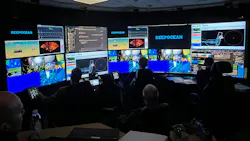
DeepOcean has conducted its first subsea intervention program remotely managed from an onshore base.
The operation, at Aker BP’s Idun Nord Field in the Norwegian Sea, involved deployment of a work-class ROV supervised from DeepOcean’s remote operating center (ROC) in Haugesund.
A second ROV was operated from a vessel in the field.
Tasks included subsea crane operations and close-proximity vessel positioning. Normally, a shift supervisor and an engineer would need to be onboard the vessel for a 14-day offshore trip.
In this case, however, the work was completed during a 12-hour shift.
“By moving key operational roles onshore, we can reduce offshore personnel requirements, with its inherent cost savings and emissions reductions, while maintaining safe and efficient execution," said Olaf A. Hansen, EVP for DeepOcean’s Northern Europe region. “It also allows us to utilize specialist competence more flexibly across campaigns.”
DeepOcean’s first remote subsea campaign took place in 2018. Last year, the company conducted subsea dredging operations remotely, demonstrating the potential for performing more complex intervention tasks without the need for personnel offshore.
The Idun remote subsea operation used Remota’s digital solutions and communication systems to assist real-time offshore execution.
 remote operations concept
DOF to order four new ROV vessels to support long-term contracts for Petrobras
DOF Group has bid successfully for 12-year charter/services contracts for ROV support vessels offshore Brazil, under a competitive tender process.
The contracts will lead to construction of four newbuild vessels outfitted to support subsea inspection, maintenance and repair programs for Petrobras’ deepwater operations. Operations should start in 2030 onward.
DOF expects the Navship yard in Brazil to manage construction of the vessels, with the first two likely delivered within four years after the contract signature.
The DP2 vessels will be 98 m long with a 20-m beam and a 6.3-m draft. Each will have an offshore subsea crane and will be designed for deepwater operations and to operate with hybrid fuel propulsion, ethanol and diesel, with battery packs.
All will have accommodation for up to 58 personnel and will carry two work ROVs.
DOF Subsea Brasil will retain sole responsibility for operation of the vessels and the full scope of services. DOF is examining alternative ownership structures for the vessels, but these would not impact contractual obligations under the charter/services agreements
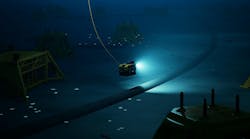 DeepOcean pipeline inspection
About the Author
 Jeremy Beckman
Jeremy Beckman
Staff Writer / Editor, Europe
Jeremy Beckman has been Editor Europe, Offshore since 1992. Prior to joining Offshore he was a freelance journalist for eight years, working for a variety of electronics, computing and scientific journals in the UK. He regularly writes news columns on trends and events both in the NW Europe offshore region and globally. He also writes features on developments and technology in exploration and production.