OTC 2026: Digital platforms are easing friction in offshore vessel chartering
By Ariana Hurtado, Editor-in-Chief
Despite years of incremental process improvements, offshore workboat chartering still relies heavily on manual coordination, particularly for near‑term and spot work, according to Jessica Bertsch, commercial consultant with Nauticworx, an offshore vessel chartering platform that launched in 2024.
“A lot of the friction still comes down to time and visibility,” Bertsch told Offshore in an OTC interview. “Operators are often chasing availability through emails and calls, especially when requirements change mid‑process, which slows things down.”

Bertsch pointed to spot and short‑notice projects as the areas where digital tools are gaining the most traction. In the US Gulf of Mexico, that activity is centered on PSVs, AHTS and AHTs, as well as utility vessels supporting drilling, production and decommissioning work.
“Digital tools are being used across most offshore vessel types, but they’re most active in spot and near‑term work where information timing is critical,” she said.
Beyond efficiency within a single basin, Bertsch noted that early users are also leveraging platforms to gain visibility into adjacent markets, particularly where vessel availability may be tighter.
“We’re also seeing more cross‑regional activity, where vessel managers gain visibility into nearby markets with tighter supply, such as Brazil, Guyana, Suriname and Argentina,” she continued.

“It’s less about volume and more about whether the process becomes more efficient,” she said. “Are operators getting to a shortlist faster? Are vessel managers filling schedule gaps? Is there less back and forth early on?”
A recurring theme among early users, including US Gulf operators, is the need to maintain flexibility while preserving confidentiality as project requirements evolve.
“Offshore work rarely follows a fixed timeline, so users need to be able to adjust quickly as requirements evolve,” Bertsch added. “There is also a clear need to reduce manual effort while maintaining control over the process.”
According to Bertsch, the ability to quietly screen options before formal engagement can lead to more focused discussions once chartering decisions begin to take shape.
“What helps is giving both sides a way to anonymously screen requirements and signal availability earlier,” she concluded. “That allows operators and vessel managers to explore options without committing too early.”
Offshore is an official media partner of OTC 2026.
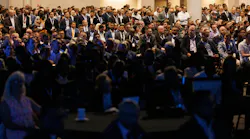 OTC 2026 Opening Ceremony
About the Author
 Ariana Hurtado
Ariana Hurtado
Editor-in-Chief
With more than a decade of copy editing, project management and journalism experience, Ariana Hurtado is a seasoned managing editor born and raised in the energy capital of the world—Houston, Texas. She currently serves as editor-in-chief of Offshore, overseeing the editorial team, its content and the brand's growth from a digital perspective.
Utilizing her editorial expertise, she manages digital media for the Offshore team. She also helps create and oversee new special industry reports and revolutionizes existing supplements, while also contributing content to Offshore's magazine, newsletters and website as a copy editor and writer.
Prior to her current role, she served as Offshore's editor and director of special reports from April 2022 to December 2024. Before joining Offshore, she served as senior managing editor of publications with Hart Energy. Prior to her nearly nine years with Hart, she worked on the copy desk as a news editor at the Houston Chronicle.
She graduated magna cum laude with a bachelor's degree in journalism from the University of Houston.