Simpler subsea boosting systems driving next phase of field life extension
Key highlights:
-
Baker Hughes sees growing opportunities for simplified subsea boosting systems in field-life extension and production enhancement projects.
-
Electrical connectivity has matured significantly, but high-power ESP components and subsea VFDs remain key technology development areas.
-
Subsea separation could reduce topside processing requirements while improving pumping efficiency and field economics.

By Ariana Hurtado, Editor-in-Chief
Subsea boosting and processing technologies have long been viewed as tools for enhancing production and improving recovery from offshore reservoirs, but their role is evolving as operators confront declining output from aging fields. While large-scale subsea processing systems have traditionally been incorporated into field developments from the outset, advances in boosting technologies, electrical connectivity and intervention strategies are opening new opportunities for brownfield redevelopment and infrastructure expansion projects.
In this exclusive Q&A with Offshore, Mike Birch, portfolio manager for Subsea Power & Processing at Baker Hughes, explained where subsea boosting is gaining traction, the reliability challenges that continue to shape system design, and how future developments in subsea separation, electrification and power distribution could shift more processing functions from topside facilities to the seabed.
Offshore: How are offshore oil and gas operators currently using subsea boosting and processing to extend field life and improve recovery in brownfield developments?
Birch: I don't believe that subsea processing is widely used in traditional brownfield applications today. In fact, due to the complexity and costs involved, subsea processing systems are typically considered as part of the field development planning at the outset. Equinor's Åsgard subsea compression station is a great example of the scale and complexity of subsea processing spreads.
That said, the industry is increasingly evaluating the impact of adding boosting solutions as part of comprehensive brownfield redevelopment campaigns, field expansion projects or new infrastructure additions. For subsea boosting, systems can be retrofitted in a brownfield environment; however, this often requires significant modifications to both topside and subsea architectures as part of a field expansion or redevelopment program.
Baker Hughes is currently developing a suite of horizontal ESP skid systems. Petrobras has already been using horizontal ESP skid systems for a few years, demonstrating how simplified boosting solutions can support production enhancement and field-life extension strategies.
Offshore: What are the most important technical or economic thresholds that determine when subsea boosting becomes viable for a field?
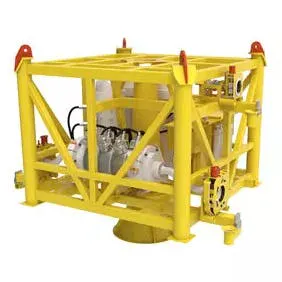
Birch: Key drivers include improved oil recovery requirements, production plateau maintenance, declining production rates, flow assurance challenges and free gas management. All these factors are closely linked to field economics and ultimately drive the key investment and development decision points.
Offshore: How is subsea electrification and power distribution evolving to support more complex boosting and processing architectures, particularly for long step-outs?
Birch: Baker Hughes' MECON electrical connection systems were originally developed in the late 1990s to deliver the world's first subsea separation and reinjection station on the Equinor Troll Pilot project. These connection systems, along with the wider market, have evolved to the point where electrical connectivity is now sufficiently mature to support subsea processing applications.
With the increasing need for subsea boosting as fields begin to deplete, the industry should be looking beyond highly complex multiphase pumps toward simplified boosting systems that can offer more cost-effective production enhancement solutions.
Key technology gaps today include high-power ESP capsule penetrators, which enable multi-megawatt pump applications. Additionally, subsea variable frequency drives (VFDs/VSDs) remain an area for further development, as they can help reduce topside footprint requirements for subsea pumping systems.
Offshore: From your experience, what are the key reliability and intervention challenges associated with subsea boosting systems, and how are these being addressed today?
Birch: Electrical connectivity and motor failures remain the key reliability challenges in subsea pumping. We are conducting significant analysis of failure modes to facilitate the development of technical solutions.
Beyond the impact of failure itself, the largest operational and economic consequences are lost production and intervention costs. Our approach is to focus on pumping systems that can be deployed and recovered using a light operations vessel, helping to reduce intervention complexity and associated downtime.
Offshore: Looking ahead, where do you see the biggest opportunities for subsea processing (e.g., separation or compression) to shift more functionality from topsides to the seabed?
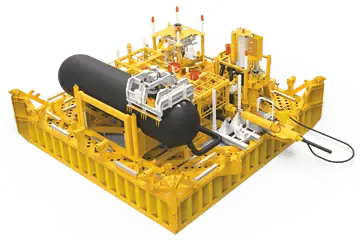
Birch: Subsea separation is a key enabler for boosting. The ability to separate and reinject produced water at source would significantly reduce the required topside processing footprint.
Additionally, subsea separation of gas from produced fluids allows for a simplified pumping system with lower cost and higher efficiency.
About the Author
 Ariana Hurtado
Ariana Hurtado
Editor-in-Chief
With more than a decade of copy editing, project management and journalism experience, Ariana Hurtado is a seasoned managing editor born and raised in the energy capital of the world—Houston, Texas. She currently serves as editor-in-chief of Offshore, overseeing the editorial team, its content and the brand's growth from a digital perspective.
Utilizing her editorial expertise, she manages digital media for the Offshore team. She also helps create and oversee new special industry reports and revolutionizes existing supplements, while also contributing content to Offshore's magazine, newsletters and website as a copy editor and writer.
Prior to her current role, she served as Offshore's editor and director of special reports from April 2022 to December 2024. Before joining Offshore, she served as senior managing editor of publications with Hart Energy. Prior to her nearly nine years with Hart, she worked on the copy desk as a news editor at the Houston Chronicle.
She graduated magna cum laude with a bachelor's degree in journalism from the University of Houston.