OTC 2026: Cloud-based seabed intelligence reshapes offshore decision-making
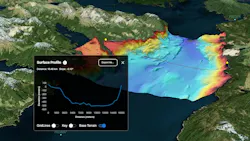
As offshore projects push into more complex environments and tighter regulatory frameworks, the ability to understand and revisit seabed conditions over time is becoming less of a technical nice-to-have and more of an operational necessity.
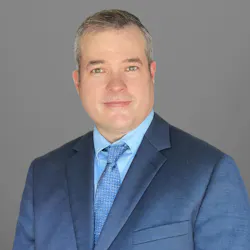
Brian Butler, vice president of business development for offshore energy at Terradepth, will address this shift during a technical presentation at the Offshore Technology Conference (OTC) titled “Digital transformation of offshore operations: Smarter, safer decisions with cloud-based seabed information.”
The session will explore how persistent, cloud-enabled seabed intelligence is changing the way offshore teams manage pipeline integrity, inspections, dredging and long-term asset planning.
Traditionally, seabed surveys have been treated as point-in-time deliverables—data captured to satisfy a single project requirement and then archived. According to Butler, that model introduces fragmentation, delays insight and increases risk as decisions are often made from incomplete or outdated information.
“The real shift occurs when seabed data becomes persistent, accessible and decision-ready,” Butler said in a pre-OTC interview with Offshore.
When subsea information is continuously available and shared across engineering, integrity, operations and regulatory teams, decision latency drops and uncertainty is reduced.
Butler points to inspection-to-repair workflows, pipeline integrity management and route engineering as areas seeing immediate operational benefit. Faster access to current seabed conditions enables earlier intervention and, in some cases, eliminates unnecessary offshore mobilizations altogether, which reduces both cost and exposure.
Equally important is integration.
“When seabed intelligence is embedded directly into engineering and integrity workflows, it reduces uncertainty, shortens response time and lowers offshore exposure," Butler said.
That alignment allows multibeam, side-scan, autonomous survey and historical data to be viewed together in a common geospatial context for both offshore and onshore operators.
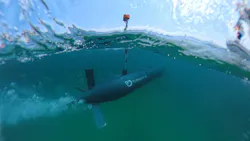
While the enabling technologies (e.g., cloud-to-edge architectures, open APIs and automated data ingestion) are largely mature, Butler noted that organizational adoption remains a key hurdle.
“Historically, seabed data has been treated as documentation: a project deliverable that answers a narrow question at a moment in time," he continued. "That model creates fragmented visibility, duplicate surveys, delayed insight and decisions made from stale snapshots.”
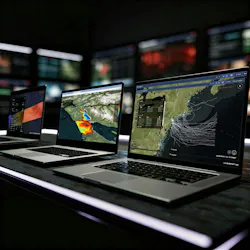
The opportunity lies in shifting the mindset from data as project documentation to data as a persistent operational asset that compounds in value over time.
The implications extend beyond efficiency and cost control. Butler said shared seabed awareness also strengthens regulatory coordination and development planning, particularly when environmental constraints, sensitive habitats and existing infrastructure can be evaluated together.
As offshore projects demand greater confidence, traceability and responsiveness, Butler argued that cloud-based seabed intelligence is becoming a foundational element of modern offshore operations and one that supports safer decisions without adding operational burden.
“The technology to maintain an accurate, shared, searchable picture of the seabed already exists," he concluded. "The transformation happens when organizations put it to work—every day, across the full offshore life cycle.”
Butler will be presenting the technical session at 10:50 a.m. on Monday, May 4, in room 602 at OTC. Terradepth is also a sponsor of the annual Hydrographic Society of America Houston OTC Crawfish Boil, which will be held from 5-9 p.m. on Tuesday, May 5, at the Karbach Brewery.
Offshore is an official media partner of OTC 2026.
 OTC 2026 Opening Ceremony
About the Author
 Ariana Hurtado
Ariana Hurtado
Editor-in-Chief
With more than a decade of copy editing, project management and journalism experience, Ariana Hurtado is a seasoned managing editor born and raised in the energy capital of the world—Houston, Texas. She currently serves as editor-in-chief of Offshore, overseeing the editorial team, its content and the brand's growth from a digital perspective.
Utilizing her editorial expertise, she manages digital media for the Offshore team. She also helps create and oversee new special industry reports and revolutionizes existing supplements, while also contributing content to Offshore's magazine, newsletters and website as a copy editor and writer.
Prior to her current role, she served as Offshore's editor and director of special reports from April 2022 to December 2024. Before joining Offshore, she served as senior managing editor of publications with Hart Energy. Prior to her nearly nine years with Hart, she worked on the copy desk as a news editor at the Houston Chronicle.
She graduated magna cum laude with a bachelor's degree in journalism from the University of Houston.