MFE forms dedicated offshore division to support outcome-driven inspections
Key highlights:
- MFE supports clients with equipment configuration, mobilization planning and technical troubleshooting across US and international offshore projects.
- Training is conducted at a dedicated facility, focusing on real-world equipment use and evolving offshore technologies to ensure teams stay current.
- The company offers both long-term and ad hoc inspection services, coordinating logistics to minimize vessel downtime and ensure proper equipment deployment.
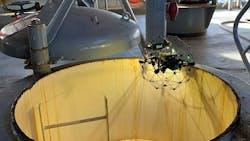
By Jeremy Beckman, Editor, Europe
Rapid advances in remote inspection technologies and deployments are bringing benefits to offshore operations. But the pace of change can be hard to keep abreast of for hard-pressed inspection teams working to tight timeframes in often hazardous conditions.
As MFE Inspection Solutions points out, many new inspection tools and workflows have been designed for laboratory or controlled environments, not necessarily for regular operation in the harsh conditions typically encountered offshore.
Increasingly, the company says, there is a shift toward outcome-driven inspections, with a need for an approach that combines appropriate tools, trained personnel and approach. In response, the company recently formed a new division, MFE Offshore, to support offshore oil and gas, offshore wind and maritime operations for clients that include the majors, independents, subsea survey and inspection specialists. The main focus is on providing equipment and technical assistance to help client teams with their deployments of various technologies in diverse offshore and subsea settings.
Offshore spoke to General Manager Wendy Post, a relative veteran with more than 25 years’ experience in the offshore industry, about how MFE plans to help inspection teams and technicians navigate the challenges ahead.
Offshore: How large is the new operation?
Post: MFE Offshore is headquartered in the Houston energy corridor, with nine locations strategically placed across the US, supporting GoM [Gulf of Mexico], East Coast and West Coast operations and international projects throughout the Americas. The division is intentionally lean, drawing from MFE’s broader technical and operational team throughout its worldwide footprint of locations. Offshore projects don’t always follow a fixed structure, so we scale support based on the scope—whether that involves equipment configuration, mobilization planning or technical troubleshooting.
Offshore: What types of training do you provide for your clients to support remote inspections?
Post: MFE provides practical knowledge focused on how to use equipment in real conditions, along with remote technical support in the mobilization of solutions as needed. At our 6,000-sq-ft training facility in Pasadena, Texas, clients’ teams can work directly with the equipment prior to deployment. As the demand for training increases, we are considering broadening the scope of services provided at the facility.
However, offshore technology, including for remote operations, continues to evolve, and it can be challenging for teams to stay current, especially when equipment isn’t used every day. We stay informed via close communications with manufacturers and via the feedback of our customers, who are professionals in the field using the technology.
Offshore: Do offshore clients use MFE’s inspection solution services on a long-term or ad hoc basis?
Post: It can be either. Some clients work with us over the long term as part of their inspection program. Others engage us for a specific offshore campaign or mobilization. It depends on the client’s timing.
Offshore schedules are tight, and vessel windows are inflexible. Our team is dedicated to ensuring that the equipment is configured properly and adheres to stringent testing procedures prior to being issued to the project. We provide remote technical support as needed to troubleshoot and pinpoint any complications reported in the field. If an asset needs to be exchanged, we coordinate with the client and our logistics team to limit any down time.
Offshore: Are you looking to expand your equipment offering to suit emerging needs?
Post: Yes. As offshore needs evolve, we do plan to expand our equipment range. What that looks like in practice is adding complementary subsea inspection sensors, positioning systems and tools that support ROV- and drone-based inspection work.
The direction is driven by what operators and service providers are actually asking for in the field. That said, adding offshore equipment isn’t just about bringing in new hardware. It has to be supportable from a logistics, technical and compliance standpoint. We move deliberately so that when new equipment is introduced, it’s ready to perform offshore, not just in theory.
Offshore: One of MFE’s stated priorities is helping its clients to identify the right technologies for their needs. How does this work in terms of remote inspections?
Post: It usually starts with a specific question. For example: Does a pipeline span need to be visually assessed? Is a mooring connection showing signs of wear? Does an FPSO tank need internal condition verification? From there, we look at what will actually work in those conditions.
Water depth, vessel motion, access limitations and the type of data required all influence the choice. An asset that works well in a calm, controlled setting may behave very differently offshore. A practical example would be choosing between a confined-space drone for internal tank inspections versus an ROV-mounted visual system for subsea structures. The right choice depends on access, stability and what the client is looking to document and report.
Our role is to support project managers prior to mobilization, so the equipment aligns with the objective and performs as expected once offshore.
Offshore: What are some of the mistakes clients have typically made prior to working with MFE, and what were the repercussions?
Post: A recurring issue we see is technology selected based on spec sheets rather than environmental reality. Offshore conditions introduce variables—sea state, vessel motion, access limitations, data requirements—that can invalidate otherwise strong technical specifications. When technology is mismatched, the consequences are significant: lost time, remobilization, delayed inspection results and additional cost. Our goal is to reduce that risk through proper qualification before mobilization. By doing this, we can align equipment capability with actual field conditions and support customers through deployment.
Another issue has to do with a lack of training: a company hires a service provider that has the right equipment but doesn’t have the formal expertise to do the work required. This mismatch ends in operators not getting the data they need, and [it] can result in blaming the technology rather than a lack of training, leading to delays in adoption.
Offshore inspections aren’t just about flying a drone or deploying an ROV—they’re about understanding what needs to be documented, why it matters and how it will be evaluated once the asset is back online. We wrote a white paper recently on how this problem arises when you have a well-trained drone pilot with no NDT [non-destructive testing] training performing industrial NDT—and how important it is to have both roles in any drone inspection program.
Offshore: Are there emerging regulations in remote subsea inspection operations that MFE can help clients address?
Post: Most regulatory requirements in offshore oil and gas, wind, or carbon capture apply to the operator and the service provider performing the work. Where we come in is when regulations affect equipment deployment—particularly export controls.
Offshore inspections often involve foreign-flag vessels or controlled technologies that require licensing or additional documentation. If those requirements aren’t addressed early, they can delay mobilization. We stay current on those compliance considerations so equipment can move when it needs to move. Broader regulatory strategy and inspection compliance decisions remain with the companies executing the work.
Offshore: Could you supply details of subsea inspection projects that the company has been involved in, and any innovative solutions or work arrangements it may have devised?
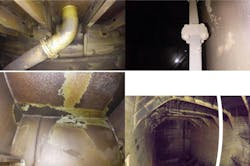
Post: MFE recently supported an FPSO cargo tank inspection offshore Labrador, Canada, where heavy North Atlantic swells meant the vessel—and the tanks inside it—were constantly in motion. Traditional manned entry and access preparation were unsafe and operationally impractical in those conditions.
The operator engaged Altomaxx, a maritime drone inspection provider certified by Lloyd’s Register, DNV and ABS, to perform confined-space inspections using Flyability’s Elios 2 inspection drone. Our role was to support the deployment with the appropriate equipment, configuration guidance and operational best practices to ensure readiness within a tight offshore weather window. Altomaxx executed short, methodical flights from each manway, timing movements with vessel motion to maintain control inside tanks that were continuously shifting with sea state.
Key outcomes included:
- Despite significant vessel motion, the Elios 2 maintained stable flight and captured usable, high-quality visual data across internal tank structures;
- Remote inspection eliminated the need for scaffolding, rope access, and personnel entry into confined spaces or work-at-height environments; and
- Visual coverage that would traditionally require extended setup and manned access was completed within one to two shifts, keeping the project on schedule despite limited offshore inspection windows.
The project shows how drone-based inspections can be executed safely and reliably offshore, even in heavy sea states.
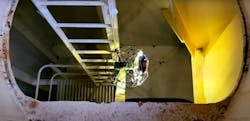
For another recent project, MFE’s client CAN USA used Flyability’s Elios 3 to improve inspection efficiency and safety on offshore drilling and production facilities for one of the world’s largest oil companies.
The work focused on assets that have traditionally required rope access and/or confined space entry for inspections, like monorail beams, bridge crane runway systems, pipe racks and internal tank spaces.
CAN USA built the program deliberately: selecting a confined-space drone suited to the environment, training pilots extensively onshore and staffing the effort with personnel who already understood offshore inspection work. The Elios 3’s collision-tolerant design and onboard LiDAR (SLAM-based mapping) supported close-range data capture and faster, more repeatable execution.

Key outcomes included:
- Reduced inspection time from 33 days to 13 days (a 60% reduction);
- Reduced reliance on confined space entry and rope access by collecting data remotely;
- Reduced staffing from three people to two (about a 30% reduction); and
- Enabled flights within two feet of the inspected surface for detailed visual capture.
The project shows how a well-trained team can use a confined-space drone to make offshore facility inspections faster, safer and more predictable—without sacrificing data quality.
About the Author
 Jeremy Beckman
Jeremy Beckman
Staff Writer / Editor, Europe
Jeremy Beckman has been Editor Europe, Offshore since 1992. Prior to joining Offshore he was a freelance journalist for eight years, working for a variety of electronics, computing and scientific journals in the UK. He regularly writes news columns on trends and events both in the NW Europe offshore region and globally. He also writes features on developments and technology in exploration and production.
Related
