Equinor ordered to address well control measures following North Sea Troll incident
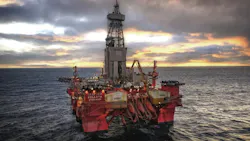
The Norwegian Ocean Industry Authority (Havtil) has issued the main findings of its investigation of a well control incident last September in the Q-21 well on the Equinor-operated Troll Field in the North Sea.
Well control incident on Deepsea Bollsta
Operations took place from Odfjell Drilling’s Deepsea Bollsta semisubmersible rig.
The incident arose during cutting of the 13 ⅜-inch casing in connection with the permanent P&A of the well. The casing was cut at a depth of 510 m, 160 m below the seabed.
Soon afterward, large volumes of water began gushing uncontrollably onto the rig, with an estimated release of about 930 kg of gas (a mixture of methane, ethane and propane).
At the time, 114 people were onboard, with one individual in the shaker room suffering minor injuries.
Under slightly different circumstances, Havtil concluded, the gas might have ignited, causing serious injury or loss of life, and substantial damage to the rig.
Root causes and barrier failures
Its team identified various underlying causes:
- A lack of barriers with regard to the reservoir;
- Use of technology and methods not qualified for the purpose; and
- Deficiencies in planning, risk assessment and communication.
In addition, faulty calibration led to misinterpretation of the log data, contributing to the failure to detect the presence of gas. So, essentially, the cut took place without functioning well control barriers.
Non-conformities and regulatory response
The investigation identified 12 non-conformities, which included:
- Inadequate design of well barriers and quality assurance during calibration of equipment for logging the 13 ⅜-inch casing;
- Use of technology not qualified for well barrier assessments;
- Missing well barriers during cutting operation;
- Failure to use differential pressure data; and
- A lack of maintenance of differential pressure gauges.
Havtil added that the scope and severity of the non-conformities suggested a need to verify whether parts of Equinor’s management system for planning and executing well workovers and permanent plugging operations are functioning as intended.
Equinor now has an order to identify measures to address the deficiencies and weaknesses and submit its report to Havtil by Sept. 17.
Equinor concluded its own investigation in March of the well control incident that occurred on the Deepsea Bollsta rig. The event, which occurred while the rig was being used to plug a well on the Troll Field, was classified by Equinor in its highest category of severity.
About the Author
 Jeremy Beckman
Jeremy Beckman
Staff Writer / Editor, Europe
Jeremy Beckman has been Editor Europe, Offshore since 1992. Prior to joining Offshore he was a freelance journalist for eight years, working for a variety of electronics, computing and scientific journals in the UK. He regularly writes news columns on trends and events both in the NW Europe offshore region and globally. He also writes features on developments and technology in exploration and production.