Equinor exits Japanese offshore wind market
Why this news matters:
- Japan’s offshore wind sector faces new headwinds as another major international developer exits the market.
- Equinor’s withdrawal reflects a broader industry trend of developers scaling back offshore wind ambitions amid cost inflation and supply chain challenges.
- Project economics remain a critical hurdle, highlighting the need for more sustainable auction and development models to keep offshore wind investment moving forward.
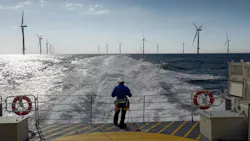
Norway’s Equinor has decided to end its offshore wind business activities in Japan and will close its Tokyo office by the end of 2026.
The company first entered the Japanese market in 2018, partnering with local firms such as JERA and J-POWER to bid in auctions, but it has failed to secure any leases in successive rounds.
This move marks another setback for Japan’s ambitions to develop a robust offshore wind sector as part of its strategy to reduce heavy reliance on imported fossil fuels and achieve carbon neutrality by 2050.
Japan has some of the world’s most ambitious offshore wind targets, yet the sector has struggled with high costs, complex permitting, supply chain issues, and challenging seabed conditions.
Broader industry challenges
Denmark’s Ørsted, the world’s largest offshore wind developer, exited Japan in 2024 amid similar difficulties. Equinor itself has scaled back or exited offshore wind development in several other markets, including Vietnam, Spain, Portugal, and France, primarily due to rising costs and persistent supply chain constraints.
Globally, the offshore wind industry has faced significant headwinds since 2022, including inflation in materials and labor, higher interest rates, supply bottlenecks for vessels and components, and aggressive early bidding that left thin margins. These pressures have led to project delays, cancellations, and strategic retreats by major developers.
Equinor’s strategic shift
“This decision reflects a reassessment of Equinor’s strategic direction, with a strengthened focus on integrated power markets,” the company stated. Equinor, whose core business remains oil and gas production, has been dialing back its broader renewables ambitions.
On June 16, 2026, it scrapped its 2030 installed renewable capacity target and said it would prioritize expanding its “integrated power” business — combining renewables with gas-to-power generation and other flexible sources to serve growing electricity demand more profitably.
In May 2026, Equinor cancelled its Bandibuli floating offshore wind project off South Korea (while remaining involved in the Donghae 1 project) and indicated it is still reviewing its overall presence in that market.
Impact on Japan
The exit comes after Mitsubishi Corp-led consortia pulled out last year (announced August 2025) from Japan’s first three major offshore wind projects (totaling around 1.7 GW off Akita and Chiba), citing surging costs and unviable economics despite low winning bids in the 2021 auctions. The government has indicated it will re-auction those sites.
Japan’s biggest power generator, JERA, began construction earlier this year on an offshore wind project in Akita, northern Japan, showing that domestic players continue to push forward.
Related content:
 DEME Sea Challenger
 offshore wind
 Huisman crane/gripper system
About the Author
 Bruce Beaubouef
Bruce Beaubouef
Senior Lead Reporter / Managing Editor
Bruce Beaubouef is Managing Editor for Offshore magazine. In that capacity, he plans and oversees content for the magazine; writes features on technologies and trends for the magazine; writes news updates for the website; creates and moderates topical webinars; and creates videos that focus on offshore oil and gas and renewable energies. Beaubouef has been in the oil and gas trade media for 25 years, starting out as Editor of Hart’s Pipeline Digest in 1998. From there, he went on to serve as Associate Editor for Pipe Line and Gas Industry for Gulf Publishing for four years before rejoining Hart Publications as Editor of PipeLine and Gas Technology in 2003. He joined Offshore magazine as Managing Editor in 2010, at that time owned by PennWell Corp. Beaubouef earned his Ph.D. at the University of Houston in 1997, and his dissertation was published in book form by Texas A&M University Press in September 2007 as The Strategic Petroleum Reserve: U.S. Energy Security and Oil Politics, 1975-2005.
Related
