Installation, surveys and port strategies advance major offshore wind projects across Europe
Offshore wind activity is progressing across Europe, from early site surveys through to full installation campaigns. Recent project updates include Hornsea 3 and Baltica 2 as well as the growing role of advanced vessels, seabed data acquisition and emerging technologies such as drone-based environmental monitoring and port-side assembly strategies.
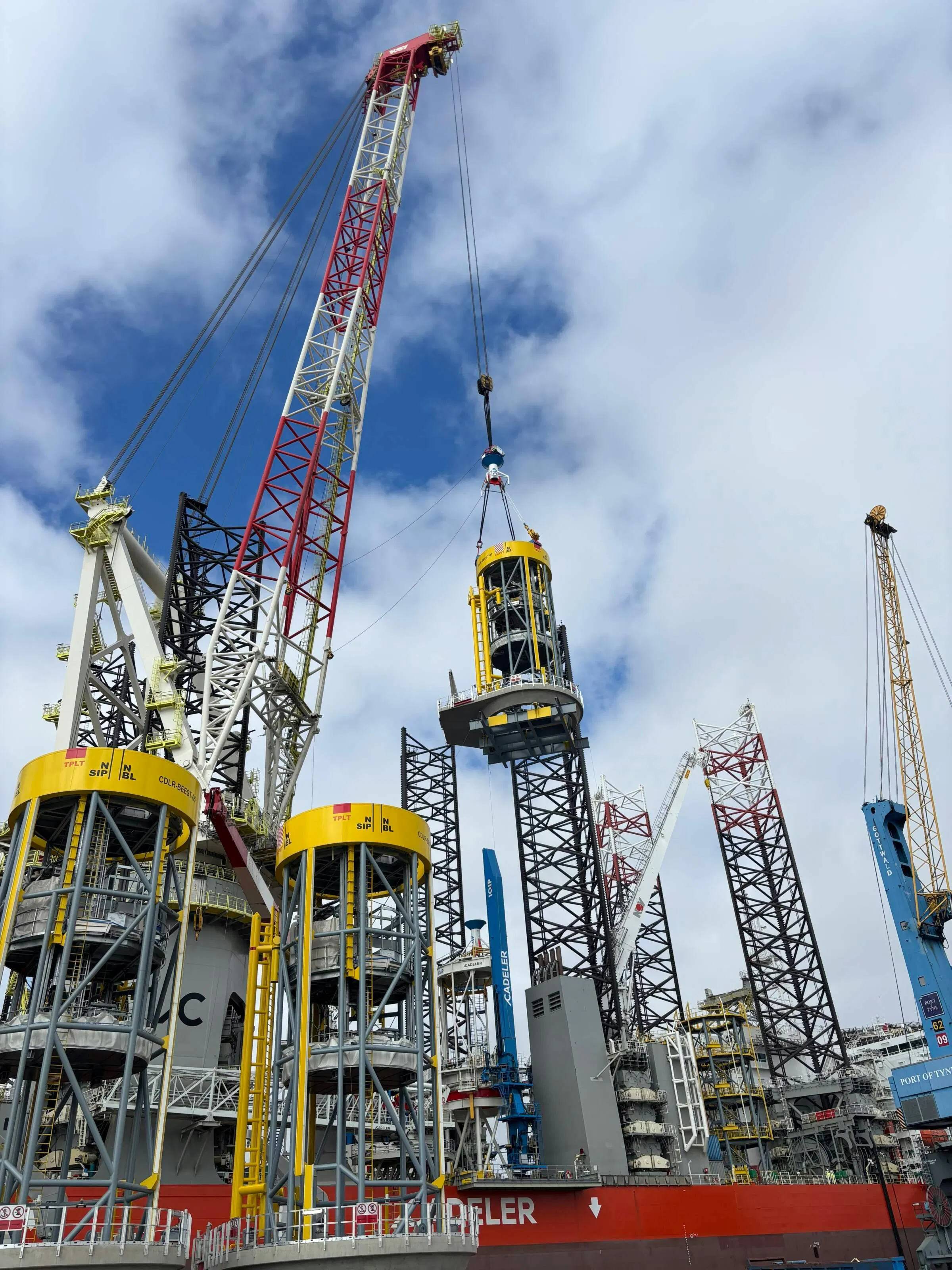
First monopile foundation in place at 2.9-MW Hornsea 3 wind farm
Cadeler’s A-class vessel Wind Ally has installed the first monopile foundation at Ørsted’s Hornsea 3 offshore wind farm development in the UK North Sea.
Another Cadeler vessel, Wind Orca, handled installation of secondary steel structures.
Altogether, the company will transport and install 197 monopile foundations for the 2.9-GW development, said to be the world’s largest offshore wind project to date.
This is also Cadeler’s first full T&I assignment for offshore monopile foundations. It follows years of planning, engineering and coordination of teams onshore and offshore, the company added.
Service operation ESVAGT FROUDE was responsible for the full commissioning scope, with Boston Energy tasked with post-installation commissioning and completion for the foundation.
For the broader Hornsea 3 installation campaign, Cadeler will deploy three of its offshore wind installation vessels. Wind Ally is designed to support T&I of XXL monopile foundations.
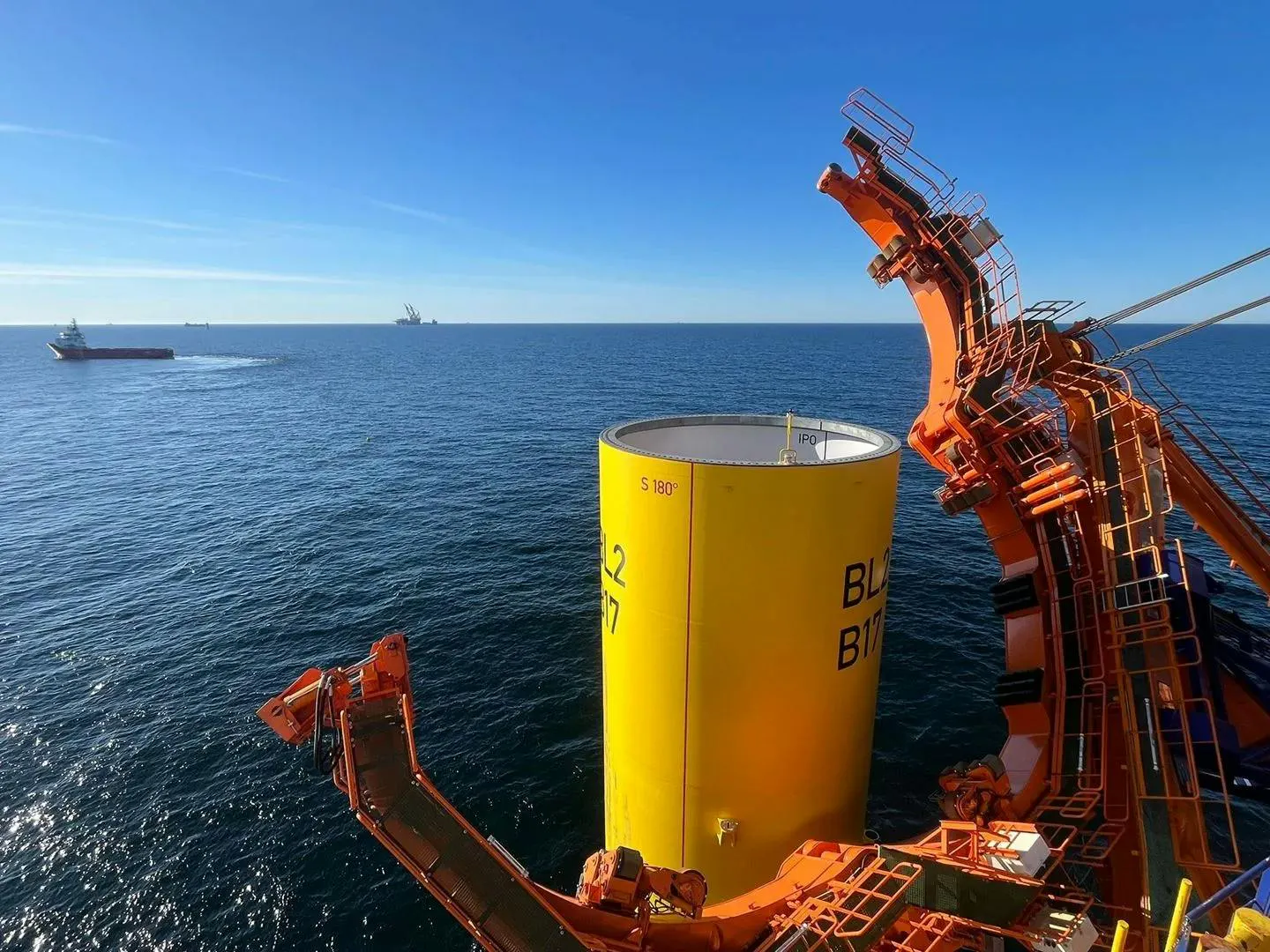
Installation of monopiles underway for Baltica 2 wind project
Van Oord has started installing the foundations for the 1.5-GW Baltica 2 offshore wind project in the Polish sector of the Baltic Sea.
The 111 monopiles are each about 100 m long, with a diameter of more than 10 m, and typically weigh about 1,500 mt. They will form the foundations for 107 turbines and four offshore substations. Installation will continue until the fourth quarter.
Each monopile is said to have has a unique geometry tailored to its location. The structures are designed to support wind turbines for up to 30 years in harsh offshore conditions.
Baltica 2 is about 40 km from the coast near Ustka, and it should be fully commissioned in 2027.
The Baltica 2 Offshore Wind Farm will be built, owned and operated in a 50:50 partnership between Ørsted and Poland’s PGE Polska Grupa Energetyczna.
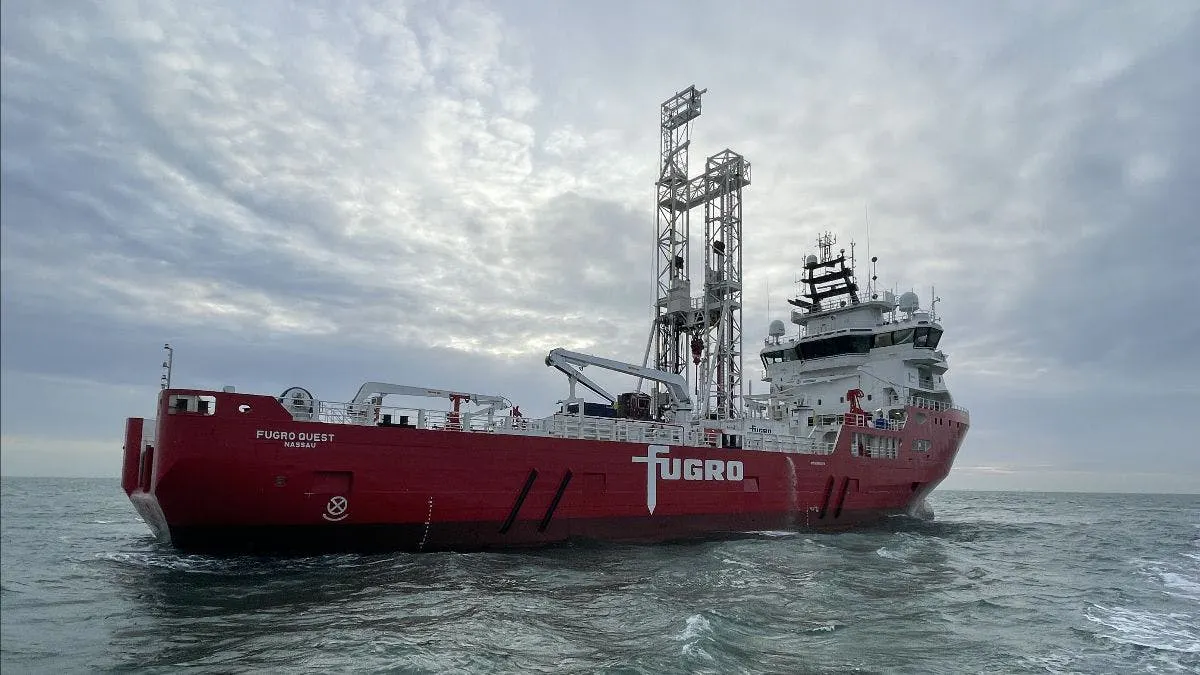
Fugro assessing seabed conditions for Berwick B wind farm
SSE has contracted Fugro to perform geotechnical investigations for the 1.4-GW Berwick Bank B offshore wind development offshore eastern Scotland in the North Sea.
This is the second of potentially three phases that could generate up to 4.1 GW of offshore wind capacity.
SSE secured a long‑term Contract for Difference in January for Berwick B through the UK’s Allocation Round 7.
Fugro’s survey will support the design of fixed‑bottom turbines at the Berwick Bank B site. The company is drilling boreholes up to 50 m below the seabed to collect soil and rock samples.
These samples will provide the geo-data for the foundations for the turbines.
The Fugro Quest and Fugro Zenith vessels are deploying both specialized and conventional sampling techniques to assess the complex ground conditions, Fugro said, helping to reduce the construction risk.
Fugro has been conducting surveys at Berwick Bank since 2019.
Drone surveys to support environmental studies for proposed Moray floating wind hub
UAV specialist Flylogix has secured its first offshore renewables contract, providing aerial survey services for the proposed Moray FLOW-park in northern Scotland, a floating wind facility developer-led by Offshore Solutions Group.
Under the deal, Flylogix will deploy drones to map wildlife in the Moray Firth, with the data supporting environmental impact assessments and consenting processes.
An initial trial flight will feed into submissions to NatureScot, with the contract running through 2026 and expected to expand into a longer-term survey program.
The Moray FLOW-park is designed to provide wet storage for floating wind foundations, helping streamline turbine assembly and deployment.
Flylogix said its drone-based approach can reduce emissions, lower costs and minimize disturbance to marine life compared with traditional aerial survey methods, while improving flexibility in offshore project planning.
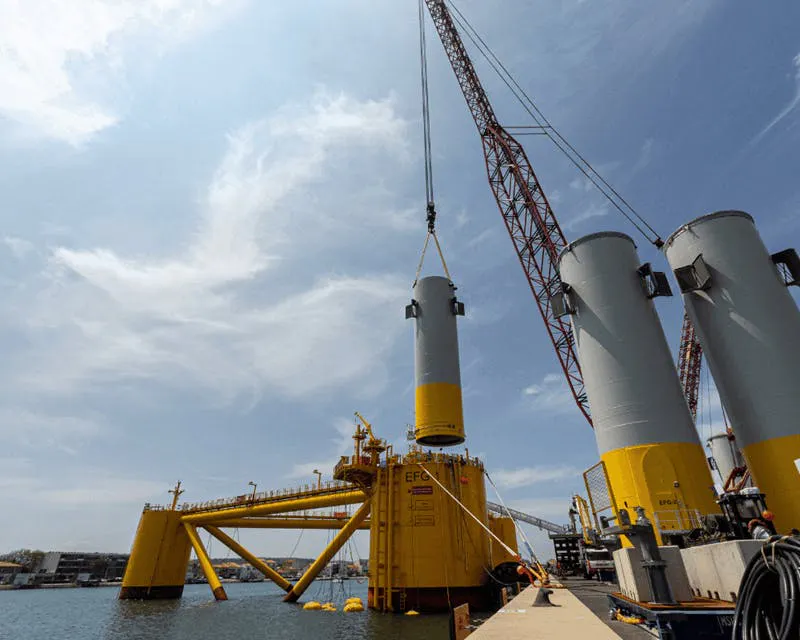
Port marshaling strategy helps de-risk floating wind turbine assembly
Heavy-lift specialist Mammoet supported the assembly of three floating offshore wind turbines for the Eoliennes flottantes du Golfe du Lion (EFGL) project at Port-la-Nouvelle, France, highlighting the logistical and weather-related challenges of next-generation floating wind deployment.
Because floating turbines must be fully assembled on buoyant foundations in sheltered port conditions before tow-out, the project required careful planning to manage high winds and increasingly large components, Mammoet reported. The company worked with Euroports from the early planning stages, ensuring all turbine components were delivered in advance to mitigate delays caused by frequent wind speeds exceeding 10 m/s.
The company also deployed a 1,600-metric-ton crawler crane (CC8800-1) alongside mobile cranes and self-propelled modular transporters (SPMTs) to handle lifts, including a 380-metric-ton nacelle. Turbines were assembled sequentially, from tower sections to nacelle and blades, before being moved for final quay-side work and eventual tow-out.
Mammoet says the project illustrates how advanced marshalling strategies, reinforced quay infrastructure, and pre-staging of components can minimize downtime and improve safety when constructing larger floating wind systems in challenging, high-wind port environments.
About the Author
 Jeremy Beckman
Jeremy Beckman
Staff Writer / Editor, Europe
Jeremy Beckman has been Editor Europe, Offshore since 1992. Prior to joining Offshore he was a freelance journalist for eight years, working for a variety of electronics, computing and scientific journals in the UK. He regularly writes news columns on trends and events both in the NW Europe offshore region and globally. He also writes features on developments and technology in exploration and production.
 Ariana Hurtado
Ariana Hurtado
Editor-in-Chief
With more than a decade of copy editing, project management and journalism experience, Ariana Hurtado is a seasoned managing editor born and raised in the energy capital of the world—Houston, Texas. She currently serves as editor-in-chief of Offshore, overseeing the editorial team, its content and the brand's growth from a digital perspective.
Utilizing her editorial expertise, she manages digital media for the Offshore team. She also helps create and oversee new special industry reports and revolutionizes existing supplements, while also contributing content to Offshore's magazine, newsletters and website as a copy editor and writer.
Prior to her current role, she served as Offshore's editor and director of special reports from April 2022 to December 2024. Before joining Offshore, she served as senior managing editor of publications with Hart Energy. Prior to her nearly nine years with Hart, she worked on the copy desk as a news editor at the Houston Chronicle.
She graduated magna cum laude with a bachelor's degree in journalism from the University of Houston.