Offshore wind roundup: Newbuild deliveries, O&M wins and project milestones drive sector activity
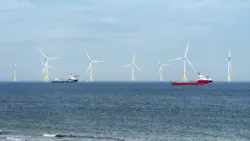
Offshore wind activity continues to gather pace as vessel operators, shipyards and developers advance newbuild programs, secure operations and maintenance (O&M) work, and move key projects toward execution.
Recent developments include vessel deliveries, expanded O&M campaigns, progress on floating wind demonstration structures, and early‑stage engineering work for large‑scale wind farms.
Ulstein Verft delivers newbuild CSOV to BSO
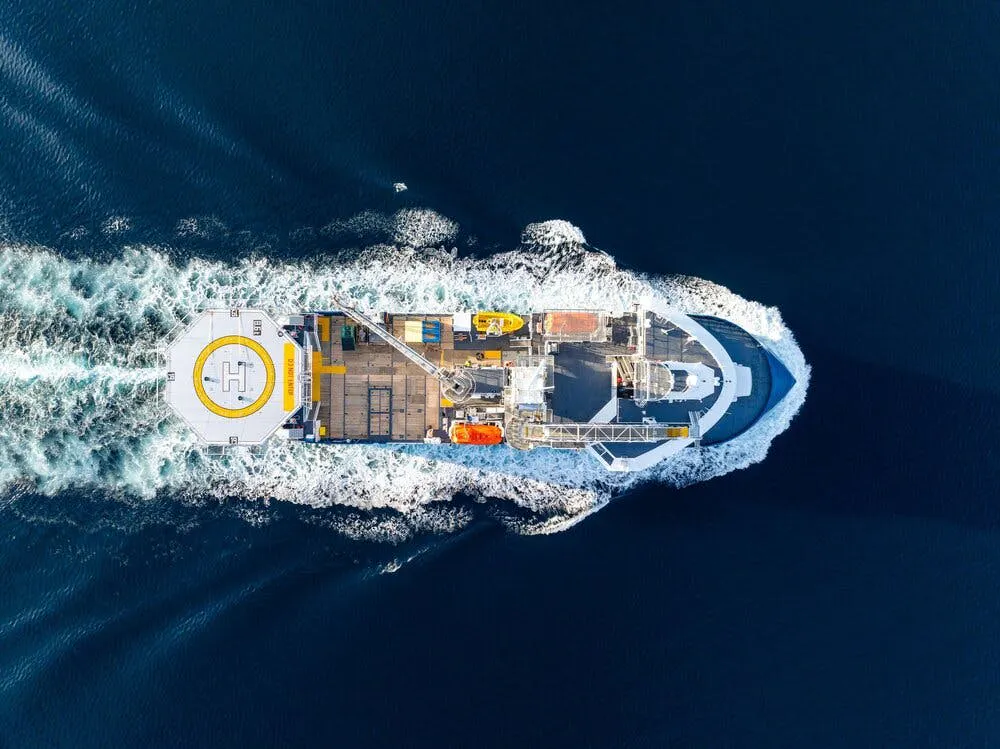
Ulstein Verft has delivered the newbuild Windea Carnot commissioning service operation vessel to Bernhard Schulte Offshore (BSO).
This is the third of three sister ships built by Ulstein in Norway for BSO, which now has a six-strong fleet available to support offshore energy operations globally.
Windea Carnot features Ulstein’s TWIN X-STERN design, which is designed to reduce vessel motions and improved fuel efficiency for operations and maintenance as well as construction support tasks. In addition, the ship has hybrid battery propulsion and is prepared for future methanol fuel use.
Other features include single cabins for up to 90 charterers’ offshore personnel; a centrally positioned, height-adjustable walk-to-work gangway and elevator tower for personnel and cargo transfers; a helideck for helicopters with a maximum take-off weight of up to 8.6 mt; and a 3D motion-compensated crane with a lifting capacity of up to 5 mt for offshore handling operations.
It also has a height-adjustable boat-landing system to facilitate stepless transfer between Windea Carnot and smaller crew transfer vessels close to offshore wind farms.
First two Supa Swath vessels delivered to Mainprize Offshore
Singapore-based Strategic Marine has delivered the first two of six Supa Swath vessels to Mainprize Offshore, all based on a design developed by Walker Marine Design to support stability and operational efficiency in harsh offshore wind environments.
Features are said to include improved seakeeping performance and fuel efficiency (via the propulsion systems), and modern navigation and communications technologies.
First steel cut for energy support vessel
At the Jiangmen Hangtong shipyard in China’s Guangdong Province, first steel has been cut for Aberdeen-based Cyan Sentinel’s latest energy support vessel.
The 65-m-long emergency response/rescue/field support vessel, the 15th in the company’s fleet, is due to be delivered in second-quarter 2027, with options for the same yard to build up to three further vessels.
Its duties will include supporting offshore oil and gas, decommissioning, fixed and floating offshore wind developments, carbon capture and offshore hydrogen, both in the North Sea and elsewhere.
Cadeler awarded O&M contract for offshore Taiwan wind farm
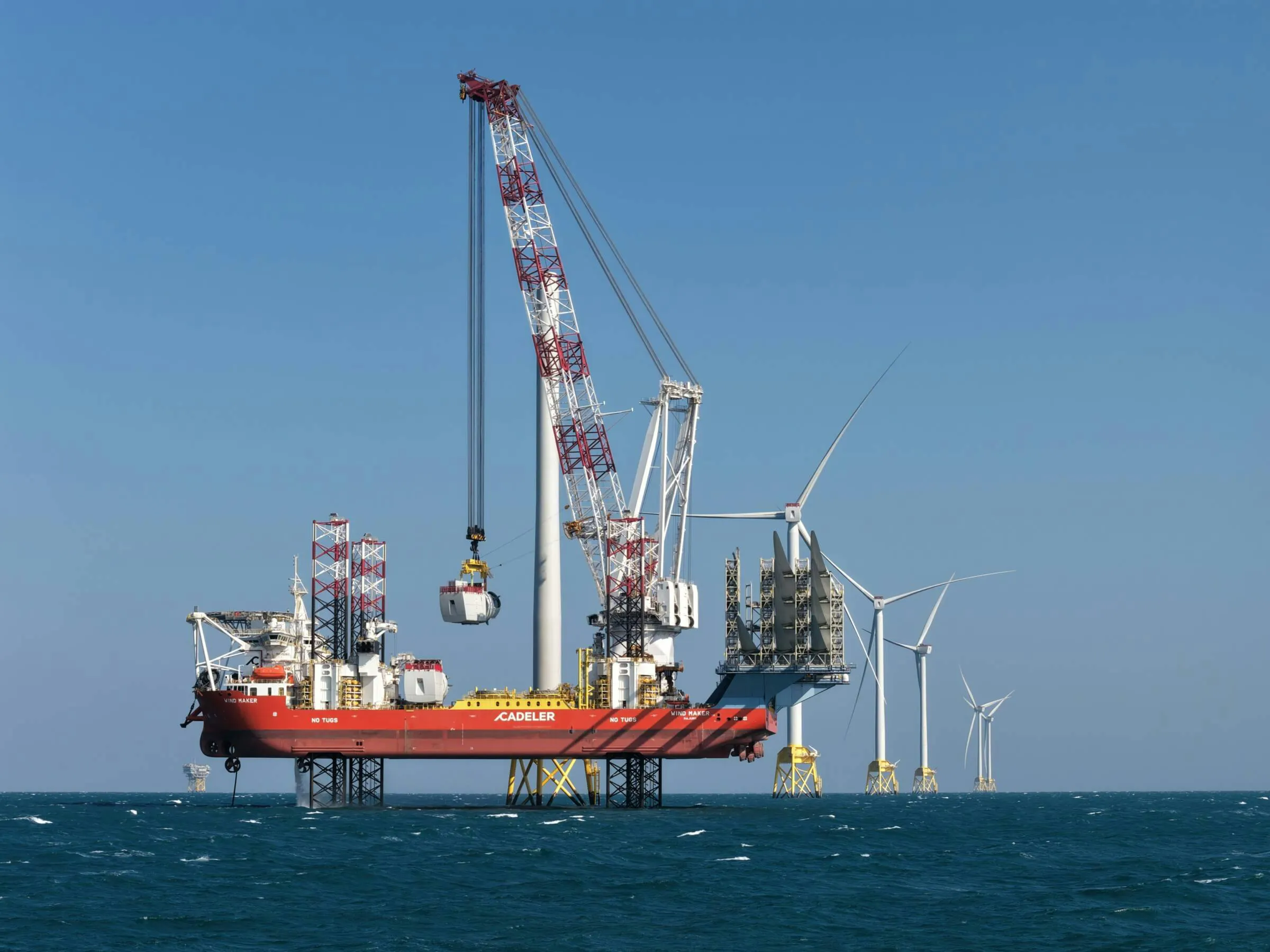
Cadeler’s Nexra division has secured a contract for an operations and maintenance (O&M) campaign later this year at two wind farms offshore Taiwan.
The Wind Maker wind installation vessel will perform the work for the undisclosed client over a three- to four-month period.
Nexra is the dedicated O&M service division that Cadeler formed last year to support the global offshore wind aftermarket, as more turbines are installed notably in the larger 10- to 15-MW segment.
The service, the company added, combines technical expertise, suitable vessels and life-cycle support to satisfy the evolving service requirements.
O&M work accounted for about one-fifth of the company’s revenue in 2025.
Miniaturized floating offshore wind BayFloat demo substructure taking shape in Portugal
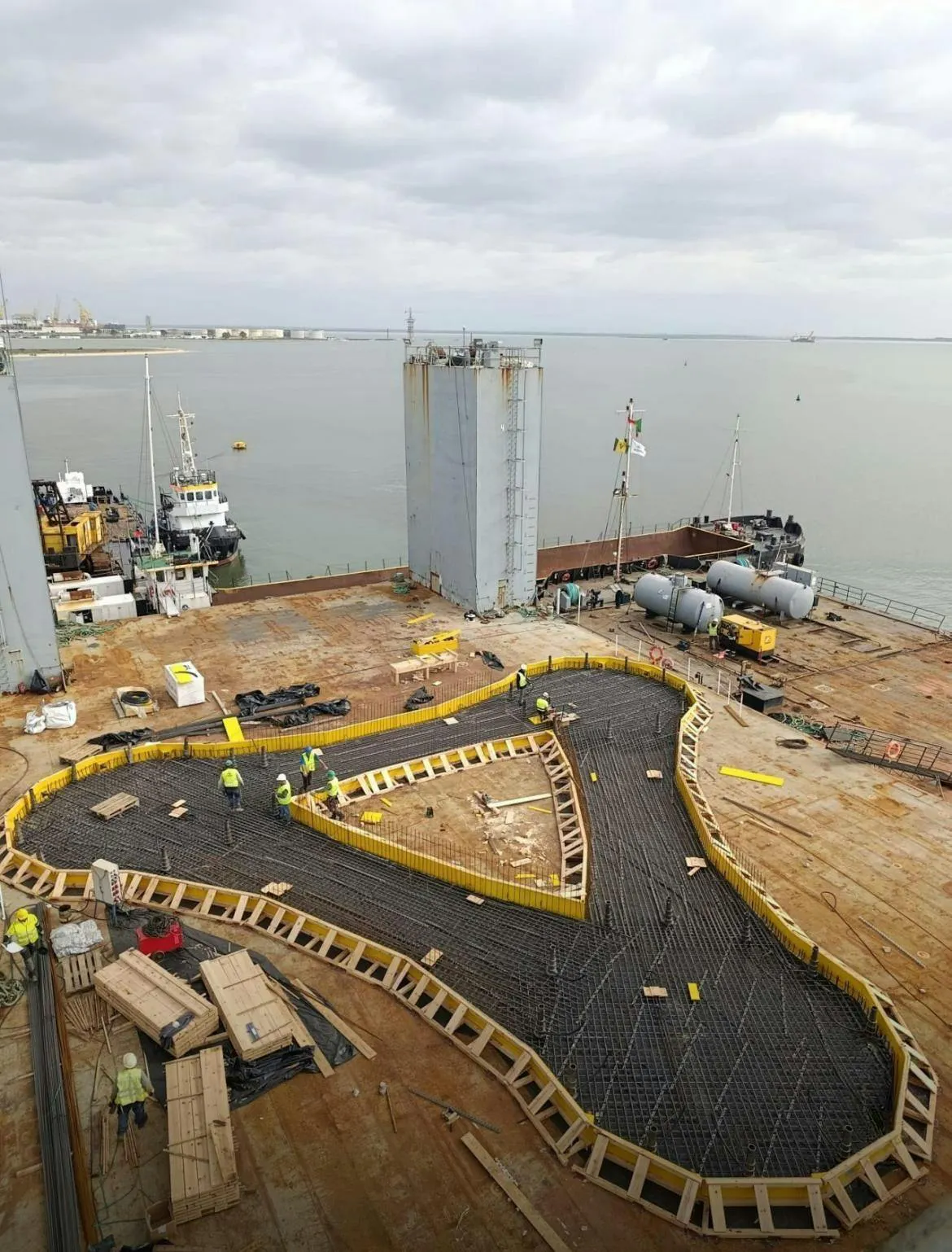
Etermar Energia is constructing a small‑scale prototype of BayFloat, BayWar.e.’s floating offshore wind platform in the Port of Setúbal, Portugal.
The structure should be completed in July. Etermar’s program is a collaboration with WavEC, INESC TEC and Fórum Oceano.
BayWa r.e. provided a reduced-scale design of its BayFloat reinforced concrete semisubmersible floating wind foundation concept for the prototype.
The 22-MW substructure concept and mooring system design is certified in accordance with DNV-SE-0422:2021-09 "Certification of Floating Wind Turbines" and DNV-ST-0119:2021-06 "Floating Wind Turbine Structures."
The concept, said to have been developed to improve project reliability, efficiency and sustainability, allows for adaptation to existing port infrastructure and locally available supply chains.
This in turn could lead to deployment of commercial-scale floating offshore wind projects both in Portugal and elsewhere in Europe.
Etermar’s structure will be fitted with sensors that will allow the creation of a digital twin for monitoring the foundation’s real-time geographical position, its interaction with the environment, and its behavior during the fabrication, launching and wet storage processes.
The two‑year monitoring period will start after the foundation has been anchored offshore.
Ricardo Rocha, BayWa r.e.’s Offshore Wind technical director, said, “These learnings will be extremely valuable for demonstrating the design's constructability and industrialization, addressing the main challenges identified during the concept certification phase, and paving the way for large-scale deployment while contributing to consolidate Etermar’s position in the European offshore wind supply chain.”
Consortium formed for Baltic East offshore wind farm studies
PROJMORS ASE Group, Ramboll Polska and Enprom are jointly working on the preliminary design, front end engineering and design (FEED) technical parameters and obtain construction permits for the 900-MW Baltic East offshore wind farm in Polish waters, according to a March 9 ORLEN Neptun news release.
The joint program includes preparing the technical documentation and a cost estimate for the investment, which will support planning of further stages of the project and reduce the risks associated with potential delays and unforeseen cost increases during construction.
Other Polish entities supporting the process will include Geofizyka Toruń, the archeological company Glesum, the Maritime University of Szczecin, the National Institute of Telecommunications, the Polish Naval Academy, Squadron Sp, and ASE Offshore.
The project consortium will conduct analyses of geotechnical, hydrological and wind conditions at the selected location, also developing technical specifications for the wind turbines, foundations, substations and offshore wind cable infrastructure.
Results from the FEED should support development of building permit designs and the application for construction permits for the entire wind farm infrastructure.
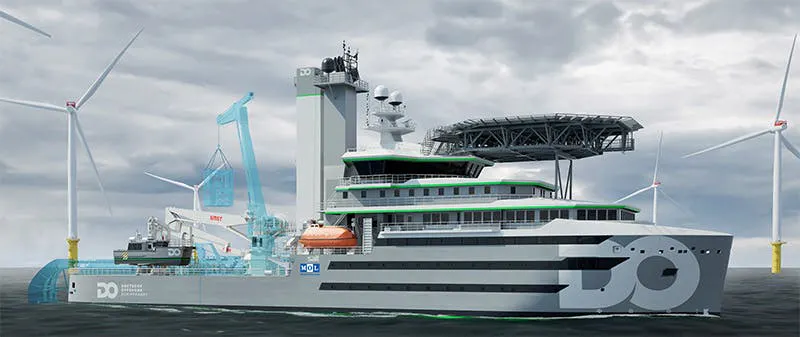
MOL acquires stake in Deutsche Offshore, plus four vessels
Japan’s Mitsui O.S.K. (MOL) is acquiring a stake in Hamburg-based Deutsche Offshore Schifffahrt (DO), a joint venture (JV) with Schoeller Holdings, along with shares in the four construction commissioning service operation vessels (C-CSOVs) currently under construction for the JV.
These will be marketed to international offshore energy markets, under DO’s operatorship.
All the new vessels will have an enlarged and modular working deck, claimed to provide more than 850 sq m of unobstructed multipurpose space. Their 50-mt AHC cranes with integrated 3D motion compensation, will allow them to take on conventional offshore wind turbine installations, cable repairs (via modular cable repair spreads), IMR and light construction work above and below water.
Offshore gangway systems will provide access to platforms between 12 m and 30 m above the waterline. The new ships are also designed for deployment of ROVs.
About the Author
 Jeremy Beckman
Jeremy Beckman
Staff Writer / Editor, Europe
Jeremy Beckman has been Editor Europe, Offshore since 1992. Prior to joining Offshore he was a freelance journalist for eight years, working for a variety of electronics, computing and scientific journals in the UK. He regularly writes news columns on trends and events both in the NW Europe offshore region and globally. He also writes features on developments and technology in exploration and production.