Trump administration suspends five wind projects off the East Coast
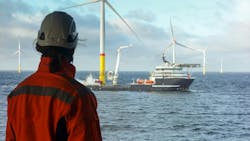
The Trump administration has suspended leases for five large-scale offshore wind projects under construction along the East Coast due to what it said were national security risks identified by the Pentagon.
The administration said leases are paused for the Vineyard Wind 1 project under construction in Massachusetts, Revolution Wind in Rhode Island and Connecticut, Coastal Virginia Offshore Wind, and two projects in New York: Sunrise Wind and Empire Wind 1.
The suspension, or “pause,” is effective immediately, and comes two weeks after a federal judge struck down President Donald Trump’s executive order blocking wind energy projects, calling it unlawful.
The Interior Department said unclassified reports from the US government have long found that the movement of massive turbine blades and the highly reflective towers create radar interference called “clutter.” The clutter caused by offshore wind projects can obscure legitimate moving targets and generate false targets in the vicinity of wind projects, the Interior Department said.
Developers of US offshore wind energy projects include Denmark-based Orsted, Norway-based Equinor and a subsidiary of Spanish energy giant Iberdrola. Orsted, which owns two of the projects affected, saw stock prices decline by more than 11% Monday.
Orsted, which is helping to develop the Sunrise Wind and Revolution Wind projects, confirmed that it had received orders from the Bureau of Ocean Energy Management (BOEM) instructing them to suspend all ongoing activities on the outer continental shelf for the next 90 days, adding that BOEM reserves the right to extend the 90-day suspension.
The administration said that the pause will give the Interior Department time to work with the Defense Department and other agencies to assess the possible ways to mitigate any security risks posed by the projects.
“The prime duty of the United States government is to protect the American people,” Interior Secretary Doug Burgum said in a statement. “Today’s action addresses emerging national security risks, including the rapid evolution of the relevant adversary technologies, and the vulnerabilities created by large-scale offshore wind projects with proximity near our east coast population centers.”
Wind proponents slammed the move, saying it was another blow in an ongoing attack by the administration against clean energy. The administration’s decision to cite potential national security risks could complicate legal challenges to the move, although wind supporters say those arguments are overstated.
The administration’s action comes two weeks after a federal judge struck down Trump’s executive order blocking wind energy projects, saying the effort to halt virtually all leasing of wind farms on federal lands and waters was “arbitrary and capricious” and violates US law.
On that occasion, Judge Patti Saris of the US District Court for the District of Massachusetts vacated Trump’s Jan. 20 executive order blocking wind energy projects and declared it unlawful.
Richmond-based Dominion Energy, which is developing Coastal Virginia Offshore Wind, said that its project is essential for national security and meeting Virginia’s dramatically growing energy needs, driven by dozens of new data centers.
Orsted said that Revolution Wind and Sunrise Wind are both in “advanced stages of construction,” and added that Revolution Wind was expected to begin generating power in January.
A spokesperson for Equinor, the company behind the Empire Wind project, acknowledged the department’s action and said the company was looking for more information, in a written statement.
“We are aware of the stop work order announced by the Department of Interior involving five wind projects under offshore construction in the US. We are evaluating the order and seeking further information from the federal government,” said Equinor spokesperson David Schoetz.
The National Ocean Industries Association (NOIA), a trade group representing both offshore oil and offshore wind, said the administration should end the pause on the leases.
“Offshore wind improves our national security by shifting economic, infrastructure, and geopolitical advantages to the US through increased shipbuilding, enhancements to our ports, greater energy security to power surging electricity demand, more manufacturing and good-paying jobs, additional business for the oil and gas supply chain, and collaborative opportunities for our military,” NOIA President Erik Milito said in a written statement. “In short, offshore wind helps the U.S. achieve its energy dominance goals.”
“We urge the administration [to] end this pause and to resist taking further action that may harm jobs and investment, as well as undermine our economic and geopolitical competition with China,” Milito said.