OTC 2026 panel highlights HP/HT challenges, advances
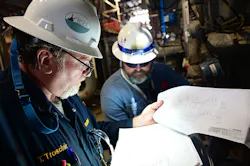
Industry leaders convened at the Offshore Technology Conference (OTC) on Tuesday, May 5, for an insightful panel on high-pressure, high-temperature (HP/HT) developments, a frontier pushing the boundaries of offshore engineering while demanding sharp commercial discipline.
Titled “Offshore HP/HT: Aligning Technical Excellence with Business Strategy,” the session explored proven business strategies for HP/HT projects and the path forward amid evolving market conditions. The panelists – including officials from Chevron, Shell and bp – discussed the latest equipment, materials, and next-generation solutions for extreme environments.
Parth Pathak, Manager of New Technology Development at SLB, moderated the panel. The discussion highlighted how HP/HT projects—typically involving pressures exceeding 15,000 psi and elevated temperatures—can unlock significant reserves in the Gulf of Mexico’s Lower Tertiary (Paleogene) and other deep plays, but require seamless integration of cutting-edge technology with rigorous risk management and cost control.
Business strategies and capex discipline
Panelists emphasized that successful HP/HT developments hinge on standardization, replication, and phased approaches to de-risk investments. John Boyle, Kaskida Project General Manager at bp, shared insights from bp’s Kaskida project, sanctioned in 2024 with first oil targeted for 2029. The development features a new semisubmersible floating production unit with 80,000 b/d capacity in its initial phase. Boyle noted how replicable designs and strong partnerships help manage multibillion-dollar commitments while navigating regulatory approvals.
Boyle highlighted the Paleogene’s strategic importance: “Over 500,000 barrels of oil per day are [currently] produced from the Paleogene in the Gulf, from three projects—Anchor, Shenandoah and Salamanca. Paleogene production could represent half of the production in the US Gulf by the 2030s.” He added that bp has sanctioned two 20k projects—Kaskida and Tiber—with first oil in 2029 and 2030, respectively. Advances in seismic, completions, artificial lift, and multiphase pumping have been “huge” for the play, and 20k technology is now “off the shelf.” Boyle concluded, “The Paleogene is the future growth engine in the Gulf of Mexico.”
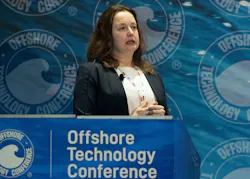
Aleksandra Dominik, Technology Manager for Shell’s Sparta Project, discussed Shell’s HP/HT strategy, and its standardized project philosophy. Sparta, with peak production expected around 90,000 boe/d and first oil in 2028, builds on standardized designs from prior hosts like Whale and Vito. This approach has driven down costs and delivery timelines for 20k-psi capable infrastructure.
Dominik drew lessons from Shell’s Appomattox, the first high-temperature (HT) project to achieve BSEE approval, which came online in 2019. She noted that 2019 was a pivotal year: Appomattox began delivering HT production data, BSEE codified its HP/HT regulations, and Chevron sanctioned Anchor. While developing Appomattox, “the issue of 20k became an important topic for the industry.”
Sparta has proven to be different from Appomattox. “With the Sparta project, the heat has not been so bad, but the pressure of the reservoirs is intense,” Dominik said. This required fresh looks at materials, fluid dynamics, and equipment. “We had to design for what we really needed, but not be too conservative… But we’ve got it now. We have repeatable solutions and a shorter lifecycle.”
She emphasized that lessons from Appomattox to Sparta showed high pressure is more challenging than high temperature alone, driving advanced 20-ksi equipment qualification. Dominik also stressed that “the first article matters” — referring to the critical qualification of the very first production unit of new equipment. “We have three HT or HP assets producing now. We will have six by the end of the decade.”
Richard White, Senior Subsea Engineer for Chevron, discussed the company’s Anchor project, which achieved first oil in 2024 as the industry’s first 20k-psi ultra-deepwater development. Anchor’s semisubmersible FPU (75,000 b/d gross capacity) has performed well, with early wells exceeding expectations and additional wells planned through 2027.
White recounted the early challenges: When Anchor was discovered in 2006, “there was no technology or equipment available that was capable of producing HP/HT reserves. The industry had advanced to 15k psi but not 20k. There were no HP/HT codes and specs.” Chevron invested in two joint industry projects—one with FMC on subsea trees and one with OneSubsea on valves—to close the gap. “HP/HT technology has now matured,” White said. “The industry now has a significant body of HP/HT knowledge and experience. HP/HT equipment is installed and operating.”
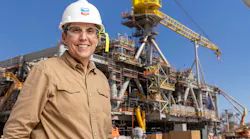 Tim Mitchell Anchor Project Fab Yard A
The road ahead
The discussion also covered technical challenges such as metallurgy selection, seal reliability, thermal management, and long-term integrity in corrosive environments. Innovations in subsea processing, modular designs, and digital monitoring were highlighted as key to controlling costs. A recurring theme was balancing technical ambition with business realities. A digital poll of the attendees at the end of the session indicated that 53% to 55% of remaining HP/HT challenges in the Gulf will not be technical or equipment-related, but center on attaining regulatory approvals. With Anchor already online, Kaskida and Sparta advancing, and more HP/HT opportunities ahead, panelists agreed that continued collaboration between operators and suppliers will be essential.
Offshore is an official media partner of OTC 2026.
 OTC 2026 Opening Ceremony
About the Author
 Bruce Beaubouef
Bruce Beaubouef
Senior Lead Reporter / Managing Editor
Bruce Beaubouef is Managing Editor for Offshore magazine. In that capacity, he plans and oversees content for the magazine; writes features on technologies and trends for the magazine; writes news updates for the website; creates and moderates topical webinars; and creates videos that focus on offshore oil and gas and renewable energies. Beaubouef has been in the oil and gas trade media for 25 years, starting out as Editor of Hart’s Pipeline Digest in 1998. From there, he went on to serve as Associate Editor for Pipe Line and Gas Industry for Gulf Publishing for four years before rejoining Hart Publications as Editor of PipeLine and Gas Technology in 2003. He joined Offshore magazine as Managing Editor in 2010, at that time owned by PennWell Corp. Beaubouef earned his Ph.D. at the University of Houston in 1997, and his dissertation was published in book form by Texas A&M University Press in September 2007 as The Strategic Petroleum Reserve: U.S. Energy Security and Oil Politics, 1975-2005.